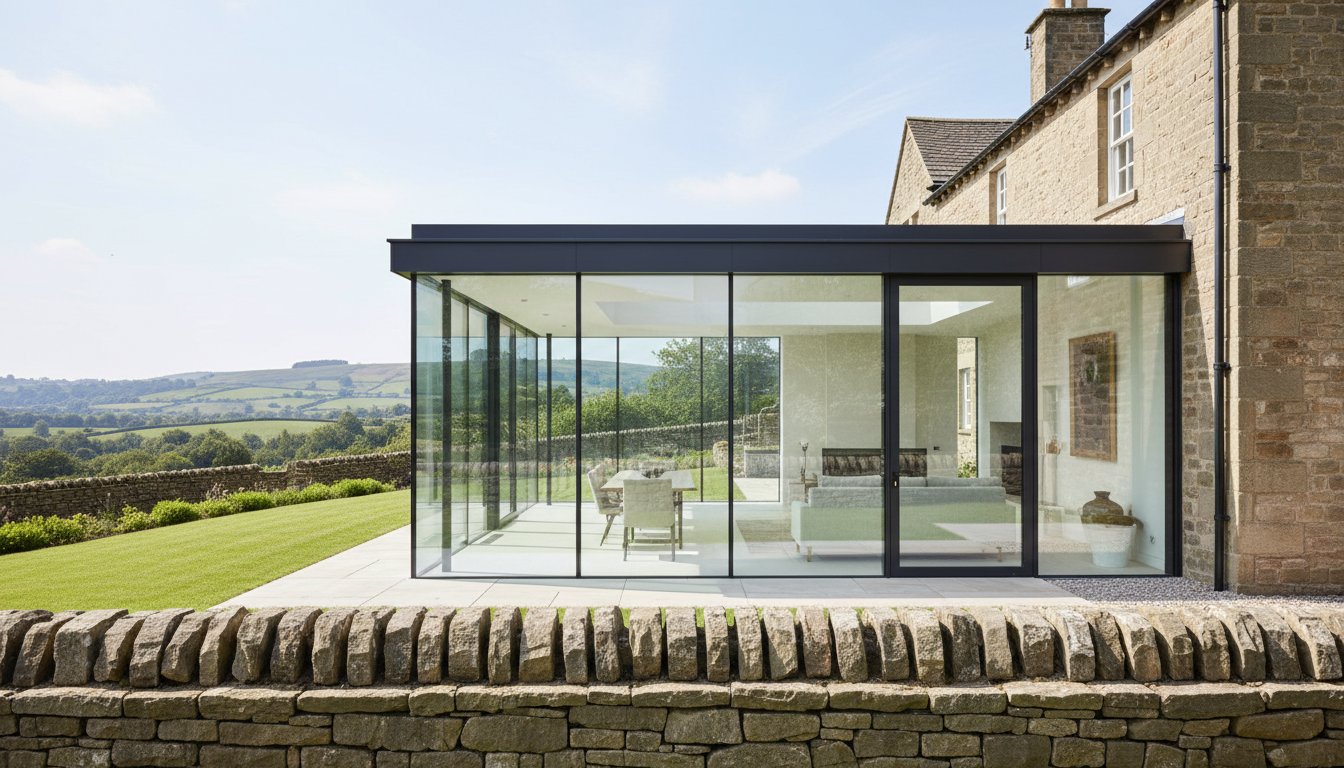
Why do so many homeowners in the Dales settle for a cold, draughty extension when they could be bathing in natural light without losing a single degree of warmth? You likely worry that a glass roof'll turn your living space into an icebox by December or a furnace in the height of summer. It's a valid concern, especially given our unpredictable weather and the risk of choosing a bulky, low-quality system. This roof lanterns Yorkshire homeowners guide 2026 provides the clarity you need to choose a high-performance system that balances rugged resilience with sensitive regional aesthetics.
You'll learn how to secure a stunning architectural feature that actually lowers your energy bills through precision-engineered glazing. We'll explore the current Part L building regulations as of May 2026, which mandate a maximum U-value of 2.2 W/m²K for rooflights. This guide also simplifies the complex planning rules found in our local conservation areas, helping you avoid costly structural mistakes. We'll walk you through the latest trends in slimline aluminium and heritage styling to ensure your home remains a bright, thermally efficient sanctuary for years to come.
Key Takeaways
- Maximise natural light and transform your living space with architectural glass structures that provide up to three times more brightness than standard vertical windows.
- Ensure year-round thermal comfort by selecting high-performance glazing that meets the 2026 Part L Building Regulations for energy efficiency.
- Discover why ultra-slim aluminium frames and heritage-style aesthetics are the leading design trends for period properties across the Dales this year.
- Avoid the "7 costly mistakes" of home improvement by understanding specific Permitted Development rules and Article 4 Directions for Yorkshire conservation areas.
- Follow this roof lanterns Yorkshire homeowners guide 2026 to master the technical survey and installation process for a stress-free home transformation.
What is a Roof Lantern? Brightening Yorkshire Homes in 2026
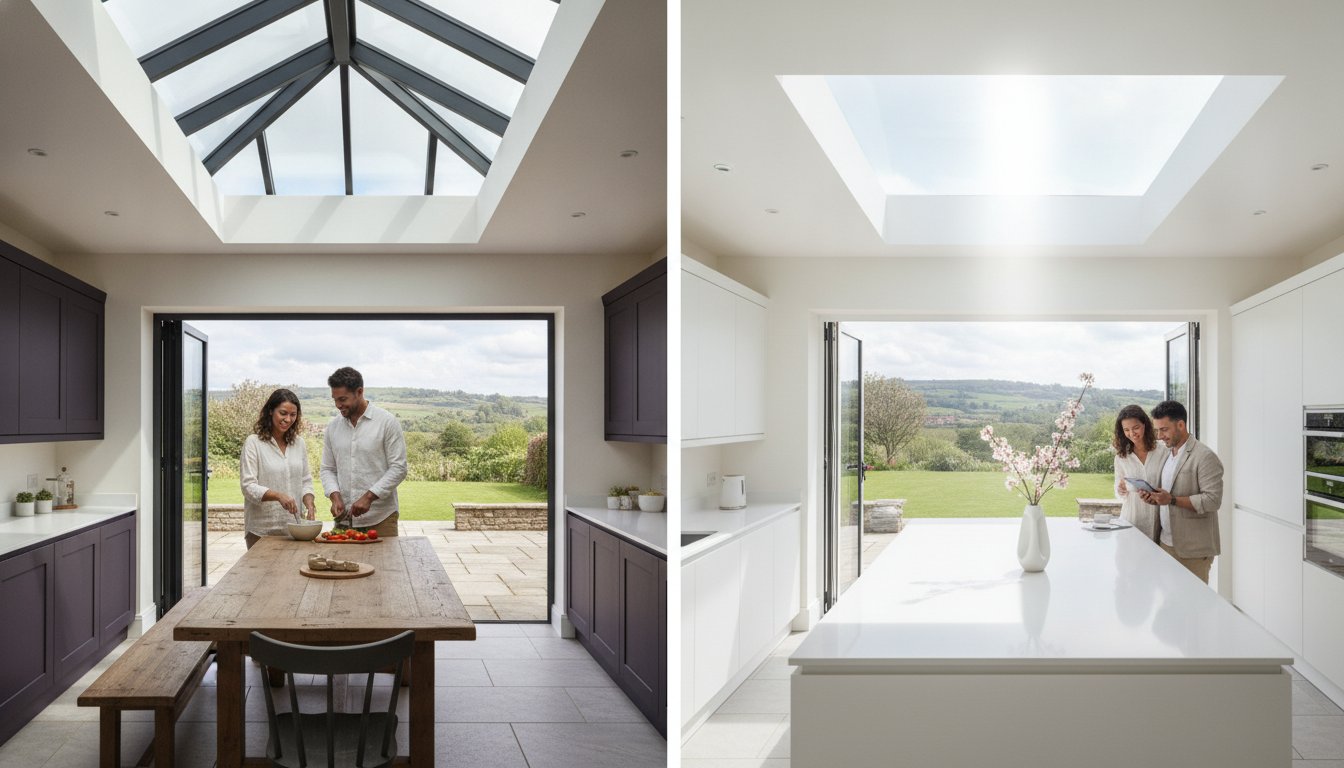
A roof lantern is a raised glass structure designed to sit on a flat roof, pulling natural light deep into the heart of a home. If you are researching the best way to transform a dark extension, this What is a Roof Lantern? guide clarifies how these features differ from standard windows. In 2026, the shift is away from bulky, dated uPVC frames toward precision-engineered aluminium. This roof lanterns Yorkshire homeowners guide 2026 highlights that a well-placed lantern can flood a room with up to three times more natural light than vertical glazing alone. For a Yorkshire kitchen-diner, it creates a bright, airy focal point that makes the space feel twice as large. It's a sophisticated way to turn a standard extension into a bespoke glass room.
Roof Lanterns vs. Flat Rooflights: Which Suits Your Extension?
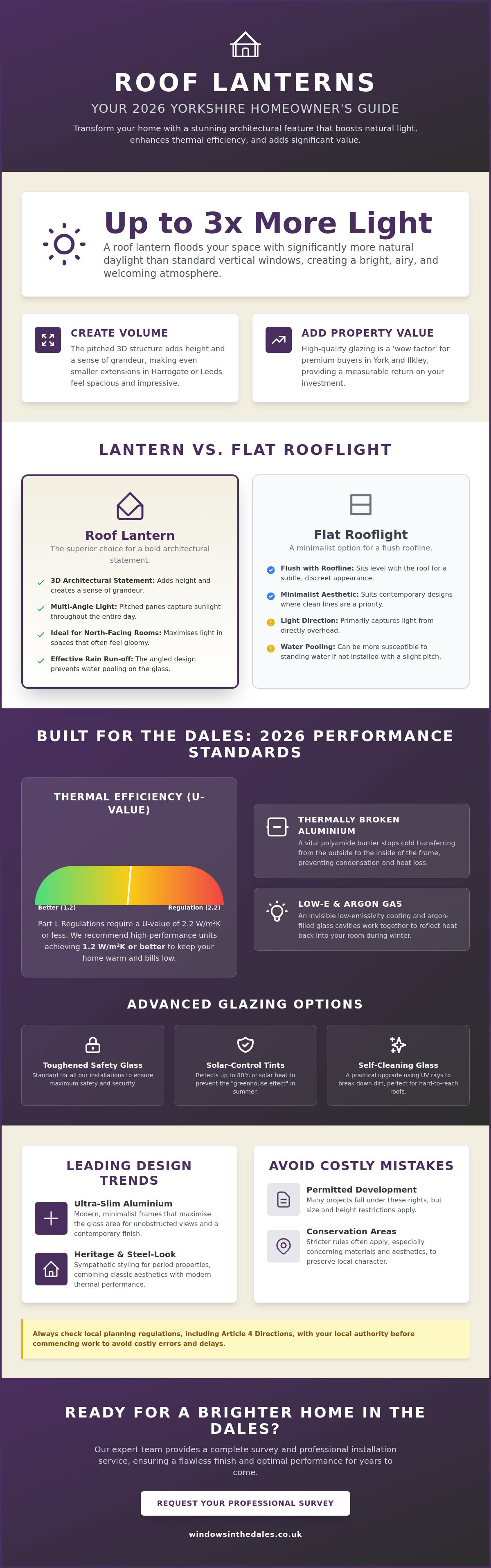
While flat rooflights sit flush with the roofline, a lantern makes a bold 3D architectural statement. They are particularly effective in Leeds terraces or smaller Harrogate extensions where ceiling height feels restricted. The pitched glass panes create an immediate sense of volume and grandeur. You must consider the structural capacity of your existing roof, as a lantern requires a robust opening. Unlike flat glass, the angled design of a lantern captures the sun from multiple directions throughout the day. This makes them a superior choice for North-facing rooms that often feel gloomy during the Yorkshire winter. Their elevated design also helps to channel rain away more effectively, reducing the risk of pooling on the glass surface.
The Aesthetic Impact on Property Value
High-quality glazing acts as a primary "wow factor" for premium buyers in areas like York and Ilkley. A bespoke lantern doesn't just add light; it adds measurable market appeal. Integrating your lantern with aluminium bifold doors creates a cohesive, modern aesthetic that blurs the line between your interior and the garden. This "maximising light" strategy is essential for combatting the grey skies of the Dales. It's an investment in your mental well-being as much as your property’s valuation. By May 2026, energy-efficient glazing has become a non-negotiable requirement for savvy buyers looking for sustainable, high-end homes. Choosing a slimline system ensures your home looks contemporary whilst remaining sympathetic to the rugged Yorkshire landscape.
Choosing the Right Specification: Thermal Efficiency and Sizing
Selecting the technical specification for your glass roof is where many homeowners make their most expensive mistakes. In the rugged Yorkshire climate, a lantern must do more than just look good; it has to withstand biting winds and heavy snowfall whilst keeping your heating bills manageable. This roof lanterns Yorkshire homeowners guide 2026 stresses that thermal performance is now the primary benchmark for quality. Under the updated Part L Building Regulations for 2026, all new rooflights must achieve a maximum U-value of 2.2 W/m²K. We recommend aiming even lower. High-performance units often reach 1.2 W/m²K or better, ensuring your extension remains a usable room rather than a seasonal storage space.
The frame material is equally critical. Modern aluminium systems must be "thermally broken" to be effective. This involves a polyamide bridge between the internal and external layers of the frame. It acts as a barrier, stopping the freezing North Yorkshire air from "bridging" through the metal and causing condensation inside. For the glazing itself, we specify toughened safety glass as standard. You should also consider solar-control tints. These clever coatings reflect up to 80% of the sun's heat, preventing the "greenhouse effect" during those rare but intense British summer days. If your roof is difficult to reach, self-cleaning glass is a practical upgrade that uses UV rays to break down organic dirt.
U-Values and Winter Performance in the Northern Climate
Winter in the Dales can be unforgiving. To keep your home cosy, your lantern should utilise argon-filled cavities and Low-E (low-emissivity) coatings. These features work together to bounce heat back into your living space. Professional installation is vital here. A DIY fit often leaves tiny gaps that lead to "cold spots" and dampness. Before you finalise your design, it's worth checking the official GOV.UK guidance on Planning Permission to ensure your high-performance project meets all local technical standards.
Proportion and Symmetry: Sizing Your Lantern
Getting the size right is a balancing act. A lantern that's too small looks like an afterthought, whilst one that's too large can make a room feel exposed. You need to distinguish between the "structural opening" (the hole in your roof) and the "upstand footprint" (the base the lantern sits on). For a harmonious look, align the lantern with your existing French doors or the centre of a kitchen island. Symmetry creates a sense of architectural intent that adds significant value to your property. If you're unsure which dimensions will work best for your specific layout, you can request a technical consultation with our local team to see what's possible for your home.
Design Trends: Aluminium, Heritage, and Steel-Look Lanterns
The aesthetic landscape of Yorkshire home extensions has shifted significantly. In 2026, homeowners are moving away from heavy, dated frames toward ultra-slim sightlines that prioritise the view. This roof lanterns Yorkshire homeowners guide 2026 identifies aluminium as the undisputed material of choice for our region. Its inherent strength allows for much thinner profiles than uPVC, which means you get more glass and less bulk. Aluminium is also exceptionally durable against the heavy rain and frost common in the Dales; it won't warp, rot, or peel over time. This longevity is why we consider it a protective investment for your home rather than just a cosmetic upgrade.
Colour choice is another area where design has evolved. While Anthracite Grey remains the dominant trend for modern extensions, we are seeing a rise in bespoke RAL shades. Many clients now choose to match their lantern to their existing heritage windows or even the specific stone tones of their property. Bespoke powder-coating ensures a finish that stays vibrant for decades despite the harsh northern sun. Before you settle on a bold design, it is wise to consult the Official Government Guidance on Permitted Development. This ensures your chosen height and style don't inadvertently breach local planning restrictions, particularly in sensitive areas like conservation zones where visual impact is strictly monitored.
Heritage Styling for Traditional Dales Cottages
Stone-built properties in Skipton and Ripon require a delicate touch. You don't want a hyper-modern box clashing with centuries-old masonry. The "steel-look" trend solves this by using industrial-style glazing bars to mimic traditional metal-framed rooflights. This approach provides an authentic period-sensitive design whilst utilising the thermal technology mentioned in previous sections. It allows you to maintain the character of a cottage extension without sacrificing the warmth of high-end glazing. These bars add a structural rhythm to the glass that feels solid and dependable, echoing the craftsmanship found in historic Yorkshire architecture.
Bespoke Configurations for Unique Spaces
Not every extension is a standard rectangle. We often design elongated lanterns for large dining areas or pyramid shapes for square garden rooms. Temperature control is equally important. You can integrate manual or electric actuators to allow for ventilation on warmer days, often controlled by rain sensors that close the glass automatically at the first sign of a drizzle. If your project involves an accessible flat roof or a "roof garden," the addition of glass balustrades can create a safe, stylish perimeter. This configuration maximises the utility of your roof space whilst keeping the interior below flooded with light. It's about creating a multi-functional architectural feature that serves your lifestyle throughout the year.
Planning Permission and the 7 Costly Mistakes to Avoid
Understanding the legalities is your first line of defence against a project that stalls or requires expensive remedial work. This roof lanterns Yorkshire homeowners guide 2026 highlights that most installations fall under Permitted Development rights. However, strict criteria apply to avoid a full planning application. Your lantern must not extend more than 150mm from the roof plane. It must also remain lower than the highest part of your existing roof. If you live in a Grade II listed property in York or Beverley, these rights are often removed. You'll likely need a full planning application and a sensitive Heritage Statement to proceed. Our role is to act as a guardian of your investment, ensuring every design meets these rigorous local standards.
To protect your home, you must avoid the "7 costly mistakes" that catch out many northern homeowners. These include ignoring Article 4 directions in conservation areas and failing to check if your roof joists can handle the weight of high-performance glazing. Other pitfalls involve choosing non-thermally broken frames that lead to condensation or selecting a system that looks bulky and dated. We've seen projects fail because homeowners overlooked the 1.7m height rule for opening side windows. Skipping building regulations approval is another major error. It can prevent you from selling your property in the future. We provide a structured, logical path to ensure your installation is fully compliant and stress-free.
Navigating Yorkshire Planning Authorities
Projects within the Yorkshire Dales National Park face some of the strictest scrutiny in the UK. The authorities here prioritise the preservation of the traditional skyline. This requires a more sensitive approach than a standard suburban extension. Historic centres in Harrogate and Ripon often have specific colour palettes you must adhere to, such as specific greys or black finishes. Beyond aesthetics, building regulations approval is essential for structural integrity. A qualified surveyor must assess your roof to ensure it can support the lantern. Proper drainage is equally critical to prevent water ingress during the heavy downpours common across the county.
Weatherproofing for the Yorkshire Climate
Winter storms are a reality here. Don't let a poor seal ruin your home. High-quality EPDM gaskets and weather-resistant seals are vital for preventing draughts when the wind whistles across the moors. "Cheap" quotes often hide a lack of structural reinforcement. This is a dangerous gamble in the Dales, where heavy snow loading can put immense pressure on a glass roof. A premium aluminium system is designed to distribute this weight safely whilst maintaining its slimline appearance. If you want to ensure your home remains a dry, warm sanctuary, request a technical survey from our local specialists to verify your roof's capacity.
The Windows in the Dales Professional Installation Journey
We don't just sell products; we deliver a complete architectural transformation. Our consultative approach begins with your initial inspiration and moves through a rigorous technical survey to ensure structural compatibility. By choosing our comprehensive "supply and fit" service, you gain a single point of accountability. This is a significant advantage over hiring separate trades, as it eliminates the risk of communication gaps between the manufacturer and the installer. You can explore our local case studies to see how we have transformed homes in Skipton and Ilkley with precision-engineered glass. Every project we undertake is grounded in regional pride and a commitment to craftsmanship.
Site organisation is a priority for our team. We understand that a home improvement project can feel invasive, so we work to minimise disruption to your daily life. Our installers are seasoned experts who are deeply rooted in the community. They treat every property with the respect it deserves, ensuring the workspace remains tidy and safe. This roof lanterns Yorkshire homeowners guide 2026 serves as your roadmap, but our local team provides the hands-on expertise to bring the vision to life. We bridge the gap between technical building regulations and stunning aesthetic results.
What to Expect During Your Installation
Most installations are completed within a structured 2-to-3-day window once the structural opening is prepared. We follow a strict timeline from the final technical survey to the reveal of your new glass space. Quality control is paramount; we test all seals and verify thermal performance before the final handover. To keep your aluminium and glass looking pristine, we recommend a simple maintenance routine. A quick wipe of the frames every six months with soapy water is usually enough to maintain the factory finish. This ensures your investment remains a high-performance feature for decades.
Start Your Transformation Today
A generic online price list can't account for the structural nuances of a Victorian terrace in York or a stone cottage in the Dales. This is why a bespoke quote is always more accurate than a rough estimate. We invite you to book a home consultation where our specialists can assess your property in Leeds, York, or Harrogate. We'll help you navigate the 2026 energy standards and planning rules specific to your postcode. If you are ready to maximise light and open up your home, Request a Quote for Your Yorkshire Roof Lantern and take the first step toward a brighter living space.
Transform Your Yorkshire Home with Precision-Engineered Light
Investing in a high-performance glass roof in 2026 requires a balance of thermal science and regional design. You now understand that meeting the May 2026 Part L Building Regulations is just the baseline for comfort. True energy efficiency comes from thermally broken aluminium and solar-control glazing that withstands the Dales' weather. This roof lanterns Yorkshire homeowners guide 2026 has shown how slimline frames and heritage aesthetics protect your property value whilst improving your daily environment.
Since 2021, Windows in the Dales has been proudly serving Yorkshire homes. We are specialists in heritage and steel-look aesthetics, providing a dedicated supply and fit service across Leeds, York, and Harrogate. Our team acts as your local guardian, helping you avoid the 7 costly mistakes that compromise many northern extensions. Ready to flood your home with natural light? Book a Free Yorkshire Design Consultation to discuss your bespoke project with our technical experts. We look forward to helping you create a stunning architectural feature that stands the test of time.
Frequently Asked Questions
Do I need planning permission for a roof lantern in Yorkshire in 2026?
Most projects fall under Permitted Development rights as of May 2026. You don't need full planning permission if the lantern doesn't extend more than 150mm from the roof plane or exceed the highest part of the existing roof. Homeowners in conservation areas or Grade II listed buildings in York must still check for Article 4 Directions that might override these standard rights.
Are roof lanterns energy efficient during a cold Yorkshire winter?
Modern systems are highly efficient. This roof lanterns Yorkshire homeowners guide 2026 confirms that units meeting the 2.2 W/m²K U-value standard keep extensions warm during sub-zero Dales winters. Thermally broken aluminium frames prevent the cold bridging that plagued older designs; this keeps the heat inside your home where it belongs.
What is the best material for a roof lantern: aluminium or uPVC?
Aluminium is the superior choice for modern extensions. It offers much slimmer sightlines than bulky uPVC, which allows for a larger glass area and a more contemporary aesthetic. The material's inherent strength is essential for handling the high wind speeds and heavy snow loads often found across the rugged Yorkshire landscape.
How do I clean a roof lantern on a flat roof extension?
Specify self-cleaning glass to reduce maintenance significantly. This coating uses UV rays to break down organic dirt, which then washes away during rainfall. For deeper cleans, use a telescopic pole with a soft brush and mild detergent from the safety of a stable ladder. Avoid using abrasive chemicals that could damage the high-performance seals.
Can a roof lantern be installed on an existing flat roof?
You can install a lantern on an existing roof after a professional structural assessment. A qualified surveyor must confirm the joists can support the weight of the new glazing. In many cases, reinforcing the opening with steel beams or additional timber is necessary to ensure the structural integrity of your extension remains intact.
How much does a bespoke roof lantern cost in Yorkshire?
Bespoke pricing depends entirely on the dimensions and glazing specifications of your project. Because every Yorkshire home has unique architectural requirements, we provide tailored quotes rather than generic price lists. This ensures you pay for the exact performance levels and safety ratings needed for your specific property type and location.
Will a roof lantern make my room too hot in the summer?
Solar-control glazing prevents overheating during the summer months. These coatings reflect up to 80% of the sun's heat whilst allowing natural light to pass through the glass. Integrating manual or electric ventilation actuators also helps to manage airflow; this ensures your room remains a comfortable temperature throughout the year.
What is the difference between a roof lantern and a skylight?
A roof lantern is a pitched, 3D structure that adds height and volume to a room. A skylight or flat rooflight sits flush with the roofline and offers a more minimalist look. Lanterns are generally preferred for creating a dramatic architectural focal point in open-plan kitchen extensions or orangeries.