Many homeowners treat their conservatory like a seasonal storage room because it's either a furnace in July or a freezer in January. You likely built this space to feel closer to the garden, yet you're currently separated by heavy, clunky doors that block the view and steal your floor space. It's frustrating to invest in square footage you can't comfortably use. A modern bifold door conservatory changes this dynamic by replacing outdated barriers with slimline glazing that slides away entirely.
You deserve a home that feels open and connected, regardless of the unpredictable British weather. This guide shows you how to choose high-performance doors designed for the unique demands of a conservatory environment in 2026. We'll look at the latest thermal break technology to keep your energy bills low and explain how to avoid the three most common installation errors that ruin a room's potential. From maximising natural light to selecting durable aluminium frames, you'll learn everything needed to transform your living space into a seamless bridge between your home and the outdoors.
Key Takeaways
- Learn why a bifold door conservatory provides a 90% clear opening, far surpassing standard sliding doors to create a truly immersive connection with your garden.
- Understand the critical structural requirements for aluminium glazing, including why a specialist lintel is essential to support your roof and ensure long-term safety.
- Discover how to choose the perfect configuration, from odd-numbered panels for better traffic flow to stacking options that maximise your interior floor space.
- Protect your investment by learning how to avoid seven costly renovation mistakes, such as prioritising the cheapest quote over FENSA certification and thermal performance.
- Gain professional insight into the consultative approach required to transform your home with high-performance architectural glazing designed for the Yorkshire landscape.
What is a Bifold Door Conservatory and Why Choose One?
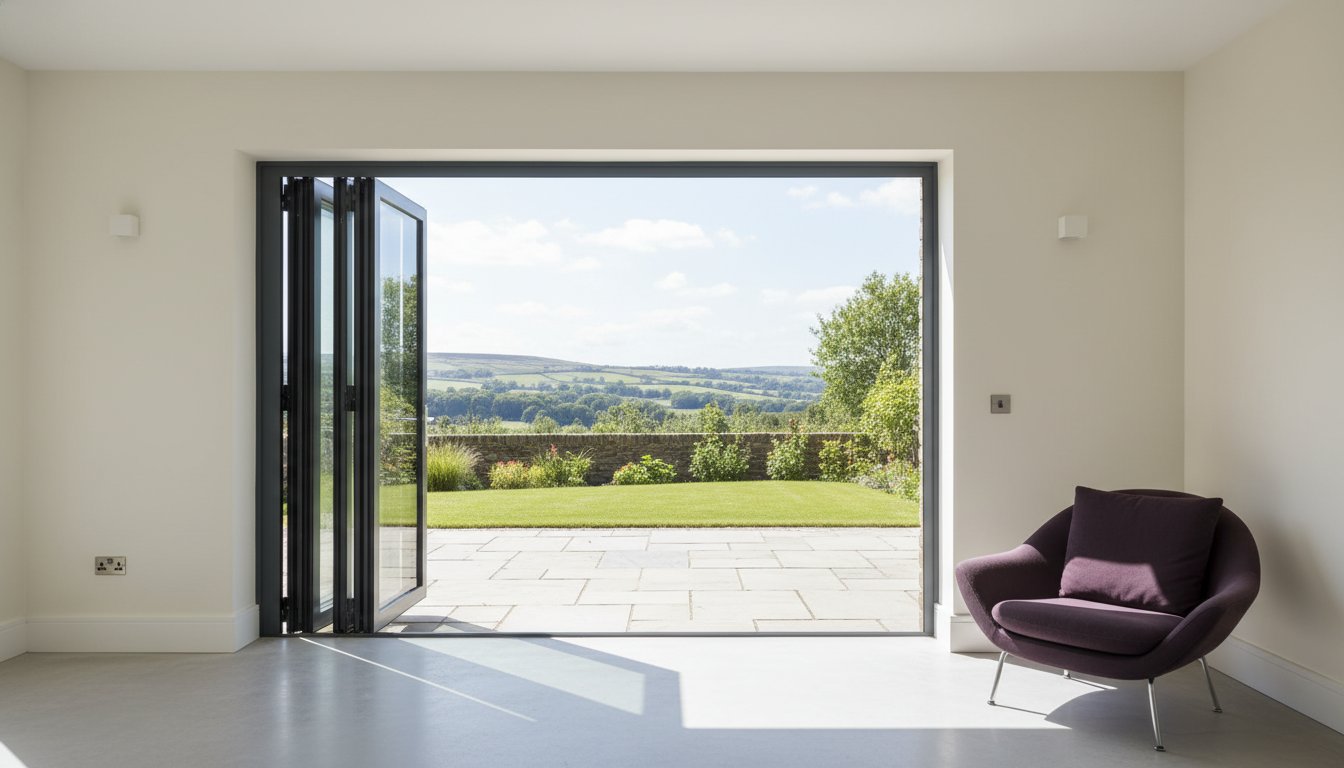
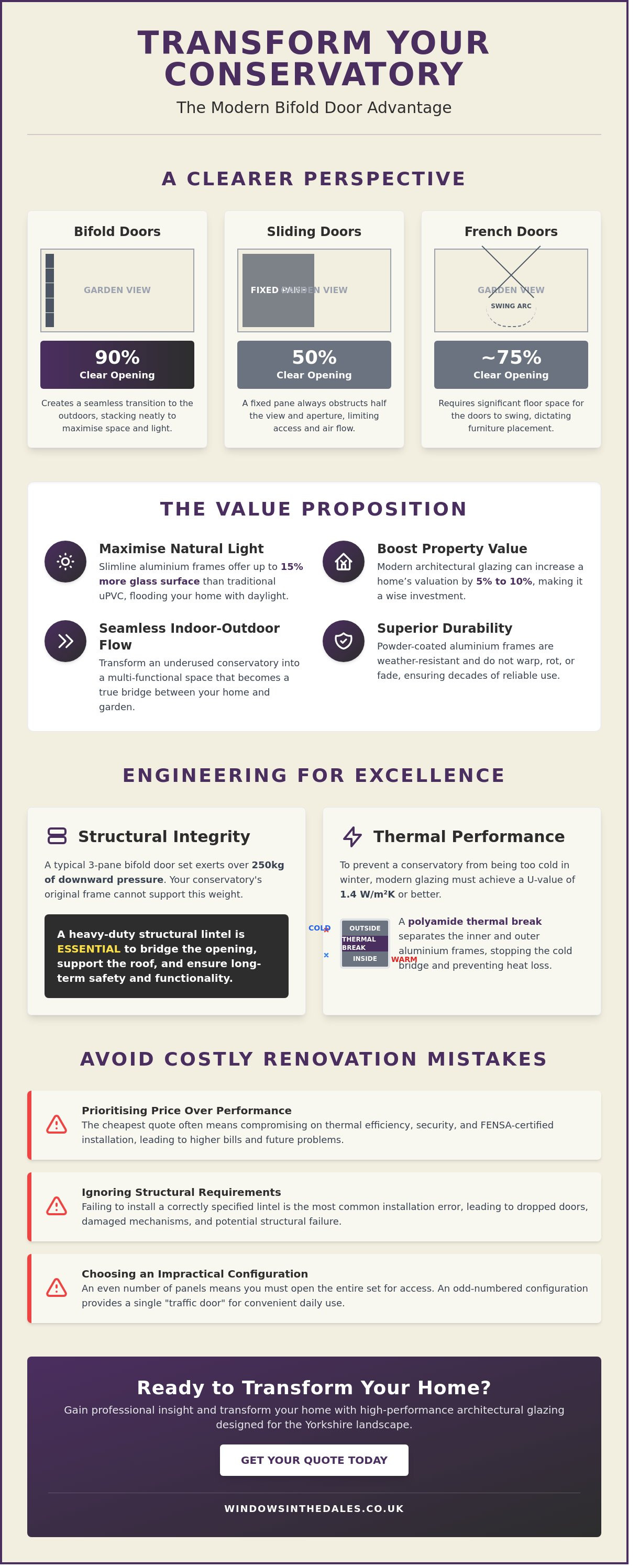
A bifold door conservatory represents a modern architectural fusion of folding glass walls and light-filled structures. Unlike traditional extensions that rely on standard patio doors, this design replaces entire walls with expansive, retractable glazing. The primary benefit is the sheer scale of the opening. While a standard sliding door leaves 50% of the aperture blocked by a fixed pane, a bifold system folds back to provide a 90% clear opening. This creates a seamless transition between your living space and the Yorkshire landscape.
Integrating these systems modernises traditional Victorian or Edwardian conservatory styles. Older designs often feel closed off by high brick plinths or thick uPVC frames. If you are researching What is a Bifold Door?, you'll find they are defined by their ability to fold back in neat sections. This floor-to-ceiling glazing creates a powerful psychological impact. It brings the outside in. Maximising natural light is proven to enhance well-being, making your home feel larger and more connected to your garden.
Bifold Doors vs. French and Sliding Doors
Bifolds provide a distinct advantage for narrow conservatories where space is at a premium. French doors require a wide swing arc that dictates where you can place furniture. Sliding doors always have a "dead" pane that never moves, obstructing the breeze and the view. Bifolds stack neatly to the side, either internally or externally. Choosing slimline aluminium frames over bulkier uPVC alternatives provides 15% more glass surface area on average. This ensures your view remains unobstructed even when the doors are closed, avoiding the "heavy" look of older conservatory components.
The Value Proposition: ROI and Lifestyle
High-quality architectural glazing significantly boosts property marketability. A 2023 survey of UK estate agents suggests that modern extensions with seamless indoor-outdoor flow can add between 5% and 10% to a home's total valuation. It's an investment that transforms an underutilised, draughty "sunroom" into a multifunctional dining area or lounge.
Modern aluminium systems offer superior durability compared to the conservatory materials used in the 1990s. They don't warp, rot, or require frequent painting. At Windows in the Dales, we focus on these high-performance systems to help homeowners avoid the costly mistake of choosing "cheap" fixes that fail after a few seasons. Investing in quality glazing ensures your conservatory remains a comfortable, usable room every day of the year.
Structural Integrity and Thermal Efficiency Requirements
Aluminium bifolds provide the slimline aesthetics every Yorkshire homeowner desires, yet they introduce significant engineering challenges. A standard three-pane bifold door conservatory installation can exert over 250kg of downward pressure. Most original uPVC conservatory frames lack the inherent strength to support this weight. You must install a heavy-duty structural lintel to bridge the opening and support the roof. This ensures the weight is distributed to the side pillars rather than resting on the door gear itself. Referencing Structural Integrity and Building Regulations is vital to ensure your renovation meets UK safety standards and avoids the structural sagging that plagues DIY attempts.
Thermal performance is equally critical. Current Part L regulations require a U-value of 1.4 W/m²K for replacements, but the 2026 Future Homes Standard targets even higher efficiency levels to reduce domestic carbon footprints. We combat heat loss using a "thermal break," which is a high-density polyamide strip placed between the internal and external aluminium profiles. This barrier stops the cold bridge, preventing condensation and keeping your living space warm during bitter Dales winters. Choosing high-performance frames is the only way to avoid the "costly mistake" of a room that's unusable for six months of the year.
Engineering the Perfect Opening
Modern design often calls for a "floating corner" bifold, where two sets of doors meet at a 90-degree angle without a fixed post. This requires a cantilevered roof structure to support the weight when the doors are open. For standard upgrades, we conduct a professional site survey to calculate wind load and structural stress. We often find that reinforcing existing frames is insufficient; a partial rebuild is frequently the most durable path forward. If you're unsure about your current structure, request a technical survey from our Yorkshire team to assess your options.
High-Performance Glazing Options
The glass you choose dictates the comfort of your bifold door conservatory. We recommend specific configurations to balance light and temperature:
- Solar Control Glass: Reflects up to 78% of solar heat to keep the room cool in summer.
- Argon-Filled Units: Uses inert gas between panes to provide 30% better insulation than air-filled units.
- Low-E Coatings: A microscopic metal oxide layer that reflects heat back into the room.
- Self-Cleaning Glass: Uses UV rays to break down organic dirt, making it a practical luxury for hard-to-reach conservatory elevations.
Investing in these technical specifications ensures your home remains energy-efficient and structurally sound for decades. Quality engineering isn't just about looks; it's about protecting your investment from the elements.
Designing Your Configuration: Panels, Colours, and Thresholds
Selecting the right layout for your bifold door conservatory determines how you'll actually live in the space. We recommend odd-numbered configurations like three, five, or seven panels. These setups allow for a single "traffic door" that operates independently from the rest of the system. You can nip out to the garden without sliding the entire wall back. It's a practical choice for Yorkshire winters when you want to let the dog out without losing all your heat. External stacking is usually the superior option for conservatories. It keeps the folded panels outside, preserving your interior floor space for furniture and decor. Once your space is ready, you can find inspiration for styling it at livingchic.co.uk, which specialises in contemporary furniture and homeware, or explore Wool sweaters from Himalayan Wool to stay cozy while enjoying your garden views.
For 2026, design trends continue to favour bold, architectural finishes. Anthracite Grey remains the industry standard for modern extensions, but Heritage Black is rapidly gaining ground. These darker tones frame the Yorkshire landscape beautifully, acting as a "picture frame" for your garden views. Choosing a high-quality powder-coated finish ensures your frames won't fade or peel over time. Aluminium frames provide slim sightlines, which prioritises glass area and helps in maximising light throughout the darker months. Avoid the "cheapest quote" trap by ensuring your colour choice includes a long-term guarantee against salt spray and UV damage.
The Importance of Threshold Design
Your threshold choice bridges the gap between your conservatory and the outdoors. A weathered threshold includes a small upstand that creates a physical seal against wind and rain. It's the safest bet for exposed Dales locations. If you're looking for a seamless transition, a non-weathered flush threshold sits level with your floors. This requires expert drainage planning to prevent water ingress. We often install hidden drainage channels to ensure your home stays dry while maintaining that sleek, trip-free aesthetic. Understanding Thermal Efficiency Requirements helps you balance these design choices with the need for a warm, draught-free room.
Hardware and Security Features
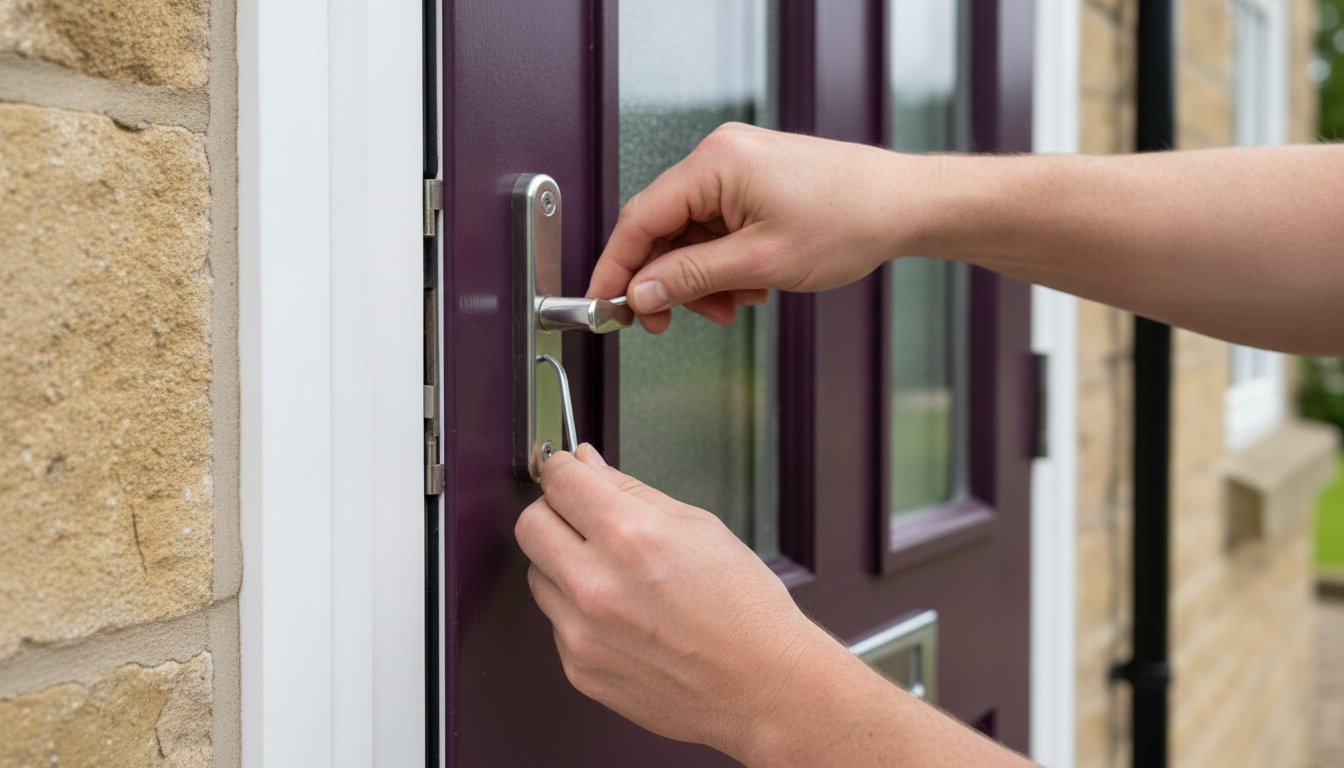
Security shouldn't be an afterthought. Every bifold system we install features multi-point locking mechanisms to meet strict UK home insurance standards. Look for high-security cylinders featuring anti-snap technology. These prevent common forced entry methods, protecting your investment and your family. Handle aesthetics range from minimalist contemporary levers to traditional heritage styles. A well-chosen handle serves as the final touch on a high-performance door system. We recommend choosing hardware that complements your interior decor while providing the robust feel of quality craftsmanship.
Avoiding the 7 Costly Mistakes in Conservatory Renovations
Renovating a Yorkshire home requires more than an eye for design; it demands technical precision. Many homeowners prioritise the lowest initial price, yet this often leads to expensive remedial work within 24 months. Installing a bifold door conservatory is a significant investment that should last 30 years or more, provided you avoid these common industry pitfalls.
- Mistake 1: Ignoring Building Regulations and FENSA: Every external door replacement or conservatory upgrade must comply with thermal efficiency standards. Without a FENSA certificate, you'll face legal hurdles when selling your property.
- Mistake 2: Choosing the "Cheapest" Quote: Low-cost options often sacrifice thermal breaks. This results in a room that's a greenhouse in summer and an icebox in winter.
- Mistake 3: Poor Threshold Planning: A flush threshold looks sleek but requires expert drainage. Without it, heavy rain common in The Dales can lead to water ingress.
- Mistake 4: Underestimating Glass Weight: Triple glazing offers superior insulation but adds roughly 30kg per square metre to the frame. Standard conservatory headers often sag under this pressure without structural reinforcement.
Planning Permission and Regulations
Most bifold door conservatory modifications fall under Permitted Development, but exceptions exist for listed buildings or homes in conservation areas. Building Regs Part L is the critical standard here. By 2026, these regulations will tighten further to ensure "zero carbon ready" homes. You must ensure your installer provides a structural engineer’s report if you're removing a large section of a supporting wall to fit wide-span bifolds. This ensures the roof remains stable and the doors don't bind over time.
Maintenance and Longevity
Cheap uPVC bifolds often warp in high-sun environments because the material expands and contracts at a different rate than the internal steel reinforcements. Powder-coated aluminium is the superior choice for Yorkshire homes. It's a "fit and forget" material that won't rot, rust, or require painting. To keep your doors gliding perfectly, clean the bottom tracks every 12 weeks to remove grit. Apply a silicone-based lubricant to the stainless steel rollers twice a year to maintain that signature effortless motion. This simple routine prevents the hardware from straining and extends the life of the locking mechanism.
Don't risk your home's structural integrity with a cut-price installation. Contact Windows in the Dales for a professional assessment of your conservatory renovation.
Why Windows in the Dales is the Expert Choice
Selecting the right partner for your bifold door conservatory project is a decision that impacts your home's thermal efficiency and aesthetic value for decades. At Windows in the Dales, we've built our reputation on architectural glazing excellence. We don't believe in high-pressure sales. Instead, we offer a consultative approach that treats your home as a unique architectural project. While we provide national coverage, we retain the precision and accountability of a specialist workshop. We guide you through the entire process, ensuring every detail meets FENSA-certified standards. This professional oversight protects you from the common mistakes that often plague low-quality installations.
Our team understands that a conservatory is more than just an extension. It's a bridge between your interior comfort and the natural beauty of your garden. We use high-end materials that are built to last, moving away from "quick-fix" solutions toward sustainable quality. By focusing on premium craftsmanship, we ensure your investment is protected against the UK's unpredictable weather patterns. From the initial design phase to the final sign-off, we act as your protective advocate in the glazing industry.
Our Premium Aluminium Bifold Range
Our aluminium systems represent the pinnacle of British engineering. These systems use slimline profiles that reduce visible frame width, allowing significantly more natural light into your home than standard uPVC alternatives. Every system is bespoke. You can select from a palette of over 200 RAL colours, including textured and metallic finishes, to perfectly match your property's character. These frames are designed to withstand decades of use without warping or sticking. Because aluminium is inherently strong, we can create larger glass spans that provide uninterrupted views of your garden while maintaining exceptional thermal performance.
Start Your Transformation Today
The transformation of your living space starts with a free, no-obligation architectural glazing consultation. Our experts evaluate your property to discuss structural openings and thermal requirements. We provide a clear, transparent quote that accounts for every technical necessity. Once you're ready, our professional installation team takes over. They work to a strict schedule, ensuring your home remains secure and tidy throughout the build. We manage the final sign-off, providing you with all the necessary FENSA certification for your records.
Enquire about our Bifold Door systems today to take the first step toward a brighter, more modern home. Our team is ready to help you navigate the technical details and deliver a result that exceeds your expectations.
Secure Your Home’s Future with Architectural Excellence
Investing in a bifold door conservatory is about more than just adding floor space; it's a strategic move to maximise natural light and bridge the gap between your interior and the Yorkshire landscape. By prioritising high-performance thermal break technology, you ensure your new room remains a comfortable sanctuary throughout the 1,493 hours of sunshine the UK averages annually according to Met Office records. Avoiding the seven common pitfalls of poor configuration or substandard glazing protects your property value and prevents the maintenance headaches that often plague lower-quality builds.
As expert architectural glazing specialists, Windows in the Dales brings professional authority to every installation. We're a FENSA Registered Installer, which means your project adheres to strict UK building regulations for safety and energy efficiency. Our team focuses on delivering durable, low-maintenance solutions that stand up to the local climate while looking spectacular. It's time to turn your vision into a reality with a partner who values craftsmanship over shortcuts. You can trust us to guide you through every design choice with transparency and local pride.
View our range of premium Aluminium Bifold Doors and start planning your 2026 home transformation today.
Frequently Asked Questions
Can I put bifold doors on an existing conservatory?
You can install bifold doors on an existing conservatory provided the structure can support the weight. Most standard conservatory frames aren't designed for the lateral loads of a bifold system. You'll likely need a structural engineer to assess the foundations and dwarf walls before proceeding. Adding these doors can transform your space, but skipping the structural check is a costly mistake that leads to sagging frames.
Do bifold doors make a conservatory cold in winter?
Modern bifold doors won't make your conservatory cold if you choose high-specification glazing. Look for units with a U-value of 1.4 W/m²K or lower to meet current Part L Building Regulations. These systems use polyamide thermal breaks to stop heat escaping. This ensures your Yorkshire home stays warm during the winter months whilst reducing energy bills.
Will I need a structural lintel for bifold doors in my conservatory?
You'll almost always require a structural lintel when installing a bifold door conservatory setup. Unlike French doors, bifolds are often top-hung, meaning the entire weight of the glass sits on the head of the frame. A steel lintel ensures the roof doesn't sag or crush the door mechanism over time. Proper support is essential for smooth operation and long-term reliability.
How much do bifold doors for a conservatory cost?
According to 2024 industry data from Checkatrade, a standard three-pane aluminium bifold door costs between £3,450 and £4,500 including VAT and installation. Larger five-pane systems can exceed £6,000 depending on the glazing specifications. We recommend prioritising quality over the cheapest quote to ensure long-term durability. Bespoke colours or integrated blinds typically add 15% to 25% to the total project cost.
Are bifold doors secure enough for a conservatory?
High-quality bifold doors are incredibly secure and often surpass the safety of traditional sliding doors. Ensure your doors feature multi-point locking systems and are tested to PAS 24:2022 standards. Toughened safety glass comes as standard. This makes the conservatory a robust and protected part of your home that deters intruders effectively.
What is the best material for conservatory bifold doors?
Aluminium is the superior material for a bifold door conservatory due to its incredible strength-to-weight ratio. It allows for slimline frames that maximise light and provide 20% more glass area than bulky uPVC alternatives. This durability is vital for the Yorkshire climate. Aluminium won't warp or expand in direct sunlight or freezing temperatures, making it a practical long-term investment.
Do I need planning permission to swap conservatory doors for bifolds?
You generally don't need planning permission to replace existing doors with bifolds under Permitted Development rights. However, you must comply with Building Regulations regarding thermal efficiency and structural integrity. If your conservatory is part of a listed building, you'll need to consult your local planning authority before starting any work. Always check with your local council if you live in a Conservation Area.
Can I have a flush threshold between my conservatory and garden?
You can achieve a seamless flush threshold, but it requires careful planning of the floor levels. A weathered track is recommended for external doors to prevent water ingress during heavy rain. If you choose a completely flat track, you'll need an external drainage channel to meet UK weather-rating standards. This setup creates a beautiful flow between your indoor and outdoor living spaces.