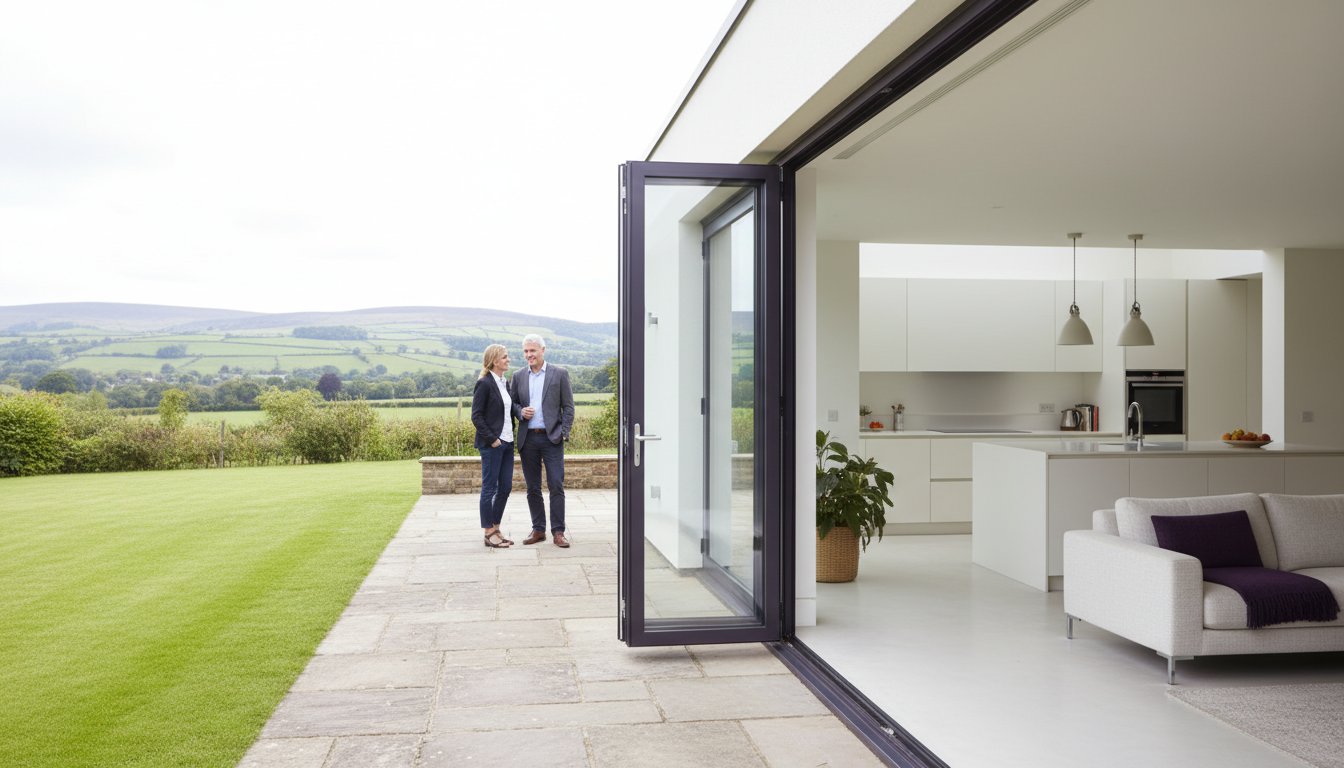
The lowest quote you receive for your home renovation might actually be the most expensive mistake you make this decade. Whilst a bargain price looks tempting on paper, it often masks shortcuts in thermal breaks or sub-standard hardware that fail within the first three years of use. You've likely spent weeks looking at brochures and feeling frustrated by the massive price gaps between quotes that seem identical. It's difficult to know whether you're paying for genuine architectural quality or just a salesperson's commission.
Our guide reveals the realistic aluminium bifold door cost 2026, providing a transparent breakdown of what you should budget for premium slimline systems and expert installation. We'll help you navigate the technical specifications that protect your home from the harsh UK weather and ensure your investment adds lasting value to your property. You'll learn exactly how to compare quotes fairly and why the 2025 Part L building regulation updates continue to influence pricing for the year ahead. We'll cover everything from structural requirements to the heritage styling that defines our work at Windows in the Dales, ensuring your project avoids common industry pitfalls.
Key Takeaways
- Discover the definitive 2026 pricing landscape for 3-panel systems and learn how raw material stability impacts the current aluminium bifold door cost 2026.
- Decode your quote by identifying the "hidden" engineering and slimline aesthetics that separate premium architectural systems from budget alternatives.
- Understand the "threshold effect" to see how wider configurations and complex structural supports will influence your total project budget.
- Protect your investment by identifying the "7 costly mistakes" common in budget fittings and learn the breakdown of professional installation fees.
- Maximise your home's long-term value by comparing the 45-year lifespan of premium aluminium against traditional uPVC or timber options.
Aluminium Bifold Door Cost 2026: The National Pricing Landscape
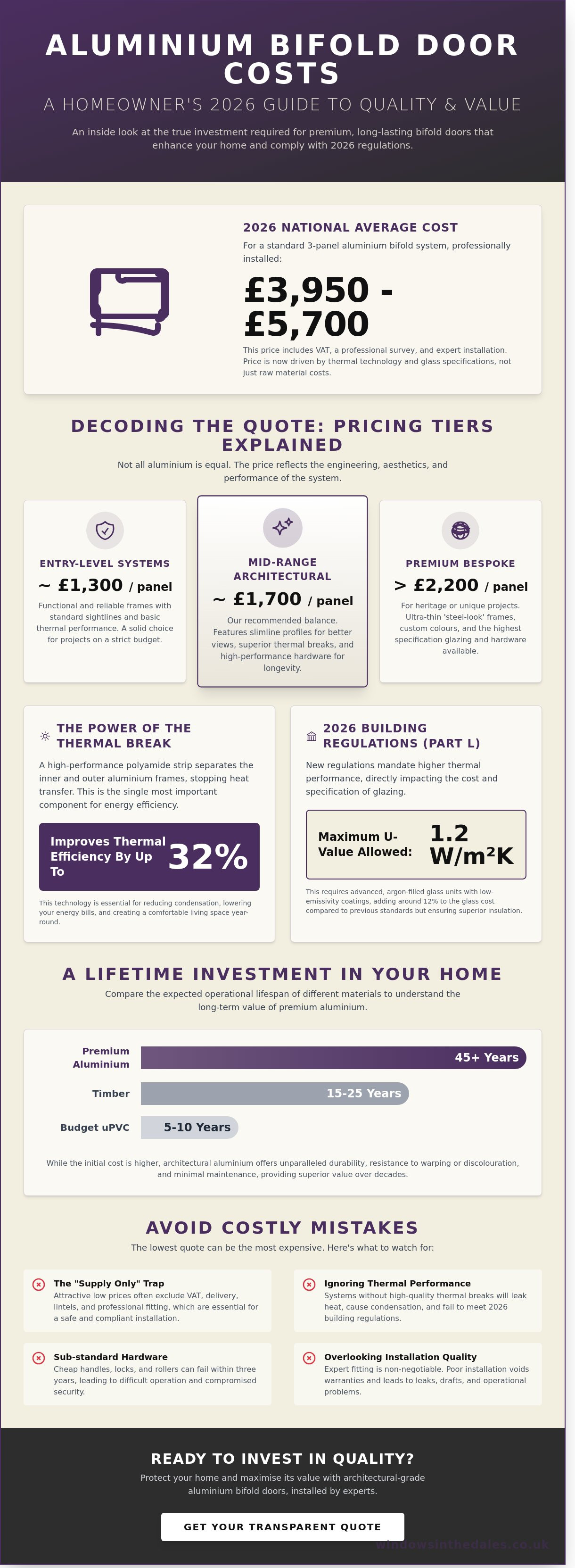
Homeowners across Yorkshire and the Dales are increasingly looking to transform their living spaces with modern glazing. In 2026, a standard 3-panel aluminium bifold system typically costs between £3,950 and £5,700 including VAT and professional installation. This range reflects a market that has stabilised following the volatile material spikes of previous years. While raw aluminium costs found a plateau in late 2025, the aluminium bifold door cost 2026 is now primarily driven by advanced thermal technology and high-performance glass specifications.
You must distinguish between "Supply Only" quotes and the "Total Project Cost" to avoid one of the most common financial pitfalls. A supply-only price of £2,800 might look attractive, but it excludes VAT, specialist delivery, structural lintels, and expert fitting. We believe in transparency; a total project budget should account for every detail from the initial survey to the final plaster finish. Before committing to a quote, it helps to understand What are bifold doors? and how their complex tracking systems require precise engineering compared to standard patio doors.
The 2026 market is divided into three distinct pricing tiers:
- Entry-level systems: Functional, reliable frames with standard sightlines, costing roughly £1,300 per leaf.
- Mid-range architectural: Slimline profiles like our signature Dales range, offering better views and costing £1,700 per leaf.
- Premium bespoke: Heritage or steel-look aesthetics with ultra-thin frames, often exceeding £2,200 per leaf.
Average Price Per Leaf in 2026
Budgeting by the "leaf" or panel is a reliable rule of thumb for Yorkshire homeowners. In 2026, expect to pay £1,350 to £1,900 per door panel. The first three panels always carry a higher base cost because they include the primary master door hardware, locking mechanisms, and the main track system. Adding a fourth or fifth panel is often cheaper per unit than the initial three. Since 2024, architectural glazing inflation has hovered around 4.5% annually, making 2026 prices approximately 9% higher than two years ago.
The Impact of 2026 Building Regulations on Price
Updated Part L requirements have fundamentally changed glass specifications. Standard double glazing is no longer the default for many high-end extensions, as manufacturers now use argon-filled units with low-emissivity coatings to meet strict energy targets. These components add roughly 12% to the glass cost compared to 2023 standards. From June 2026, all new bifold door installations must achieve a maximum U-value of 1.2 W/m²K to comply with thermal efficiency regulations. This shift ensures your home stays warmer, but it requires a higher initial investment in quality glazing technology.
Achieving these energy goals often involves more than just glazing; it requires a coordinated effort across all home systems. For homeowners also looking to upgrade their heating infrastructure to meet modern standards, Plumbing & Boilers London serves as a prime example of the specialist services that ensure your property remains efficient and fully compliant with the latest building regulations.
Aluminium Bifold Doors: Maximise light and protect your Yorkshire home with expert installation.
Decoding the Quote: Why Aluminium Bifold Prices Vary
Understanding your aluminium bifold door cost 2026 requires looking past the surface aesthetics. While two systems might look identical in a brochure, the engineering hidden inside the frames creates a vast price gap. Our "Yorkshire quality" ethos prioritises professional-grade architectural aluminium because it outperforms mass-market uPVC in every measurable metric. Cheap uPVC alternatives often warp or discolour within five years, whereas a high-specification aluminium system is a lifetime investment for your home.
Thermal Break Technology and Energy Efficiency
The primary driver of performance is the polyamide thermal break. This is a reinforced plastic strip that separates the inner and outer aluminium profiles; it effectively stops the "bridge" that allows heat to escape and condensation to form. High-performance thermal breaks cost more to manufacture, but they can improve thermal efficiency by 32% compared to basic insulation. According to standards promoted by the Glass and Glazing Federation, these barriers are essential for meeting the UK's increasingly strict building regulations. Investing in superior insulation reduces monthly energy bills, which helps the system pay for itself over its projected 25-year lifespan.
Slimline Profiles vs Standard Frames
Maximising light is a core goal for homeowners in The Dales. Achieving ultra-slim sightlines of 100mm to 120mm requires higher-grade aluminium alloys to maintain structural integrity without bulky frames. This precision engineering carries a price premium, often 15% to 20% higher than standard profiles. The aesthetic value of "more glass, less frame" significantly boosts property resale desirability. A home that feels bright and connected to the outdoors is consistently more attractive to future buyers in the UK market.
Hardware, Security, and Marine-Grade Finishes
Security and durability should never be compromised to save a few pounds. Professional systems include multi-point locking and PAS 24 certification as standard, which often leads to lower home insurance premiums. Customisation options also impact the final invoice:
- Marine-Grade Finishes: A 60-micron thick powder coating is vital for properties exposed to harsh weather or coastal air to prevent corrosion.
- Integrated Blinds: These add convenience but can increase the cost by £300 to £500 per panel depending on the control mechanism.
- High-Security Hardware: Upgraded cylinders and handles provide peace of mind and meet "Secured by Design" specifications.
Getting the right balance between these features ensures you don't make any costly mistakes during your renovation. By choosing professional-grade components, you ensure your aluminium bifold door cost 2026 reflects a long-term gain in home value and comfort.
Configuration and Sizing: How Panel Count Impacts Your Budget
The number of panels you select is the primary driver of your aluminium bifold door cost 2026. Each additional leaf requires a dedicated set of high-grade rollers, hinges, and weather seals. A 3-panel system is typically the most cost-effective solution for openings between 2.4 and 3 metres. Moving to a 4-panel or 5-panel configuration increases the hardware count and extends the installation timeline. It's a common trap to choose more panels than necessary; fewer, wider leaves often provide better views and lower costs.
Wider openings trigger what we call the "threshold effect." Once your span exceeds 4 metres, you'll likely require heavy-duty structural support. This involves installing steel lintels to prevent the aperture from sagging over time. Ensuring your project adheres to UK Building Regulations regarding structural integrity and thermal efficiency is vital for long-term value. Neglecting these standards is one of the most costly mistakes a homeowner can make during a renovation.
Height also plays a significant role in pricing. Standard 2.1-metre heights are the industry benchmark for affordability. If you're designing a grand-scale extension with 2.5-metre or 3-metre doors, you'll pay a premium. These taller sets require reinforced "stiffener" profiles to handle wind loading in exposed Yorkshire locations. Similarly, "open corner" bifold designs create a stunning architectural statement by removing the corner post. These require a cantilevered roof and specialist engineering, which can increase the glazing budget by 30% or more compared to a standard straight run.
Choosing the Right Opening Direction
Your choice of "traffic doors" significantly affects hardware costs. A traffic door acts like a standard back door, allowing you to nip into the garden without folding back the entire system. This requires independent locking cylinders and handles. You must also decide between internal and external folding. External stacking is the preferred choice for most Yorkshire homes as it keeps the "stack" outside, preserving your internal floor space for furniture. Your choice of track also matters. A weathered track offers the best protection against the elements, whilst a flush threshold creates a seamless transition but often requires additional drainage channels that add to the installation fee.
Bespoke vs Standard Sizing
Off-the-shelf sizes are increasingly rare in high-end aluminium glazing. Most premium projects now utilise made-to-measure configurations to ensure a perfect fit. While you might pay a 10% to 15% premium for bespoke units, the investment is usually justified. Bespoke sizing often saves money on structural masonry adjustments because the doors are engineered to fit your unique opening exactly. This eliminates the need for expensive "make-up" pieces or additional brickwork, ensuring a cleaner finish and better thermal performance.
The True Cost of Installation: Professional Fitting vs DIY Mistakes
Investing in a premium door system is only half the battle. Your aluminium bifold door cost 2026 is heavily influenced by the precision of the fit. A specialist two-person installation team typically commands between £500 and £800 per day. While a general builder might offer a lower rate, bifold doors require millimetre-perfect alignment that standard doors do not. Expert fitters ensure the weight of the glass is distributed correctly through a process called "toe and heeling," which prevents the doors from dropping and dragging over time.
Cutting corners during installation often leads to the "7 costly mistakes" our team frequently rectifies in Yorkshire homes. These include poor sub-sill drainage leading to internal damp, misaligned tracks that cause premature roller wear, and inadequate thermal breaks that negate the energy efficiency of the glazing. Professional installation: secure your investment and ensure a lifetime of smooth operation.
FENSA or CERTASS certification provides more than just peace of mind. It confirms the installation complies with Building Regulations without you needing to pay for a separate inspection from the local authority. This paperwork is vital when selling your property. Missing certificates can delay house sales or force you to purchase expensive indemnity insurance, often costing upwards of £300 per transaction.
Structural Preparation and Lintels
An aluminium bifold door is only as good as the aperture it sits in. If you are creating a new opening in a Yorkshire stone wall, a structural engineer must specify a steel lintel. Installing a new steel lintel typically adds between £900 and £2,400 to your project, depending on the span and masonry type. Survey accuracy is the most critical stage. A 5mm error in measurement can result in a door that either won't fit or leaves a gap too wide for weather-tight sealing.
Disposal, Making Good, and Finishing Touches
Hidden costs often hide in the "making good" phase. Removing and disposing of old timber or uPVC doors usually incurs a skip hire or waste removal fee of £150 to £250. Internal plastering around the new frame and "trimming out" the exterior to match your patio are essential for a professional finish. We insist on high-modulus professional sealing. This is non-negotiable for preventing water ingress during heavy Dales rainfall. Poor sealing is the primary cause of frame leaks in 15% of budget installations.
Protect your home with a precision fit from a trusted local specialist. Request a Free Installation Quote
Maximising Your Investment: Why Quality Glazing Pays for Itself
Investing in your home requires a long-term perspective. While the initial aluminium bifold door cost 2026 might seem higher than budget alternatives, the return on investment is measured in decades. Aluminium frames typically boast a lifespan of 45 years or more. Contrast this with uPVC, which often requires replacement after 15 to 20 years, or timber, which demands rigorous and expensive maintenance to prevent rot and warping. Aluminium's structural integrity ensures the tracks remain smooth and the frames stay millimetre-perfect despite the fluctuating British weather.
The aluminium bifold door cost 2026 reflects a commitment to a lifelong architectural feature. High-performance glazing reduces energy bills by trapping heat during Yorkshire winters. It's a practical choice that pays for itself through durability and thermal efficiency. You aren't just buying a door; you're securing a permanent upgrade to your property's envelope.
Adding Tangible Value to Your Home
Leading UK estate agents report that a seamless "indoor-outdoor" flow is a primary requirement for modern buyers. Industry data suggests that high-quality bifold installations can increase a property's valuation by 5% to 10%. This "lifestyle dividend" is hard to ignore. Better light and improved ventilation transform dark living rooms into vibrant, healthy spaces. In the 2026 housing market, premium slimline glazing is a key selling point that sets a home apart from standard listings. It signals to buyers that the property has been maintained to a high standard with no expense spared on quality, particularly when you explore Aluminium Pergola systems as part of a cohesive and luxurious outdoor living area.
The Windows in the Dales Difference
Choosing the right partner is just as vital as the product. At Windows in the Dales, we act as a trusted local specialist for homeowners across the region. We've built our reputation on professional installation and an refusal to cut corners. Whether you're restoring a period property with heritage steel-look frames or completing a clean, modern extension, our expertise ensures a flawless finish. We help you avoid the costly mistakes that often plague DIY or budget-focused projects. Our process is transparent and designed to give you total peace of mind:
- Initial Enquiry: We discuss your vision and provide expert advice on configurations.
- Technical Consultation: We explore glazing options to meet your specific thermal and acoustic needs.
- Professional Survey: Our surveyors take precise measurements to ensure a perfect fit.
- Expert Installation: Our team carries out the work with minimal disruption to your daily life.
Ready to transform your living space? Request a transparent, no-obligation quote for your 2026 bifold project and take the first step toward a brighter, more valuable home. We're proud to serve Yorkshire homes with glazing solutions that stand the test of time.
Invest in Your Yorkshire Home’s Future
Navigating the aluminium bifold door cost 2026 requires more than a glance at a sticker price. You've seen how configuration choices and panel counts directly dictate your budget. Recent industry data shows that high-performance architectural glazing can improve thermal efficiency by up to 30% compared to older specifications. This makes the initial investment a savvy move for long-term energy savings. Don't risk your home's integrity with DIY attempts; professional installation is the only way to avoid "costly mistakes" and ensure your slimline frames operate smoothly for decades. We're committed to helping you maximise light whilst maintaining the heritage or modern aesthetic of your property.
Our team provides transparent pricing with no hidden extras, ensuring you stay in control of your project from start to finish. Every installation features high-performance architectural glazing and is expertly fitted by professional installers who take pride in their craft. We're ready to help you transform your living space with confidence and clarity.
Request a Free Professional Quote
Your dream home renovation is within reach, and we can't wait to help you bring that vision to life with quality that lasts.
Frequently Asked Questions
How much do 3-panel aluminium bifold doors cost in 2026?
A standard 3-panel aluminium bifold door cost in 2026 typically starts from £3,200 for high-quality slimline models according to current industry price trends. This figure varies based on your chosen dimensions and thermal specifications. For homeowners in the Dales, choosing a 3-panel configuration is the most popular way to bridge the gap between your garden and living space while maintaining structural efficiency.
Are aluminium bifold doors more expensive than sliding doors?
Aluminium bifold doors are usually 10% to 15% more expensive than sliding doors due to the complex folding hardware and multiple frame sections required. While sliding doors offer larger glass panes, bifolds provide the unique benefit of a 90% clear opening. This investment adds value to Yorkshire homes by creating a seamless transition to outdoor patios during the summer months.
Do I need planning permission to install bifold doors?
You don't usually need planning permission for bifold doors as they fall under Permitted Development rights for most UK properties. However, if you live in a Conservation Area or a Grade II listed building, you must consult your local planning authority before starting work. We always recommend checking for Article 4 directions that might restrict changes to your home's exterior aesthetic.
Is triple glazing worth the extra cost for bifold doors in 2026?
Triple glazing is a smart investment in 2026 because it can reduce heat loss by up to 35% compared to standard double glazing. With the UK's focus on the Future Homes Standard, opting for triple-glazed units helps your home meet stricter energy efficiency targets. This choice keeps your living room warmer during harsh Yorkshire winters and reduces external noise by approximately 3 decibels.
How long does it take to install a set of bifold doors?
A professional team can typically install a standard set of bifold doors within one working day. This timeframe includes the removal of your old doors and the full weather-sealing of the new aluminium frame. Larger projects involving structural alterations or new lintels can extend the process to 3 days, depending on the complexity of the site and the weather conditions.
Does the colour of the aluminium frame affect the price?
Standard colours like Anthracite Grey, Black, and White are the most cost-effective options because manufacturers keep them in constant stock. Choosing a bespoke RAL colour can increase the aluminium bifold door cost 2026 by roughly 10% to 20% and may add 14 days to the lead time. These custom finishes allow you to match your frames perfectly with your home's unique heritage character or modern styling.
What is the difference between supply-only and fully fitted bifold prices?
Supply-only prices cover the physical door unit and glass, whereas fully fitted prices include the professional survey, expert installation, and a long-term insurance-backed guarantee. Choosing a fully fitted service protects your investment from the costly mistakes of poor alignment or weatherproofing issues. Our Yorkshire customers often find that the peace of mind provided by a specialist installer outweighs the initial savings of a DIY approach.
Can bifold doors be fitted to an existing conservatory?
You can fit bifold doors to an existing conservatory provided the structure has a reinforced corner post or a suitable lintel to support the weight. Aluminium is a lightweight material, but the folding action exerts lateral pressure that a standard conservatory frame might not handle without modification. A structural survey is essential to ensure your conservatory remains safe and functional after the upgrade.