Last winter, a homeowner in Leeds discovered that their front door wouldn't latch properly just as a cold snap hit the region. It's a scenario many of us face when a door begins to sag under its own weight. If you've noticed your door scraping the frame or felt a sudden chill from the hallway, you're likely searching for how to adjust a dropped uPVC door hinge before the problem becomes a security risk. A misaligned door isn't just a nuisance; it can compromise the seal of your home and affect compliance with security standards like PAS 24:2022.
We understand that your property is a significant investment, and keeping it draught-free is essential for your comfort. You shouldn't have to struggle with a handle or force a lock every time you leave the house. This guide will show you how to identify, adjust, and realign your hardware to restore smooth operation and improve thermal efficiency. We'll walk through the specific requirements for flag and butt hinges, ensuring you have the expert knowledge to maintain your home's aesthetic and functional value.
Key Takeaways
- Learn how to use the "pencil test" to pinpoint exactly where your door has misaligned before beginning any mechanical work.
- Discover how to adjust a dropped uPVC door hinge using a basic toolkit of Allen keys and a spirit level to restore smooth, effortless operation.
- Master the distinction between lateral and vertical adjustments to effectively clear frame obstructions and prevent the door from scraping your floor.
- Identify the warning signs of perished rubber gaskets versus mechanical drops to ensure your home remains thermally efficient and draught-free.
- Understand the "toeing and heeling" technique and when professional intervention is required to safeguard your door’s security and long-term warranty.
Identifying a Dropped uPVC Door and Why it Happens in Yorkshire
Yorkshire's varied landscape, from the gritstone of the Pennines to the clay soils of the Vale of York, presents a unique challenge for homeowners. Your uPVC doors are designed to be resilient. However, the weight of the double glazing combined with local environmental factors often leads to a physical drop over time. Recognising the early warning signs is the first step in learning how to adjust a dropped uPVC door hinge before permanent damage occurs to the frame or the locking mechanism.
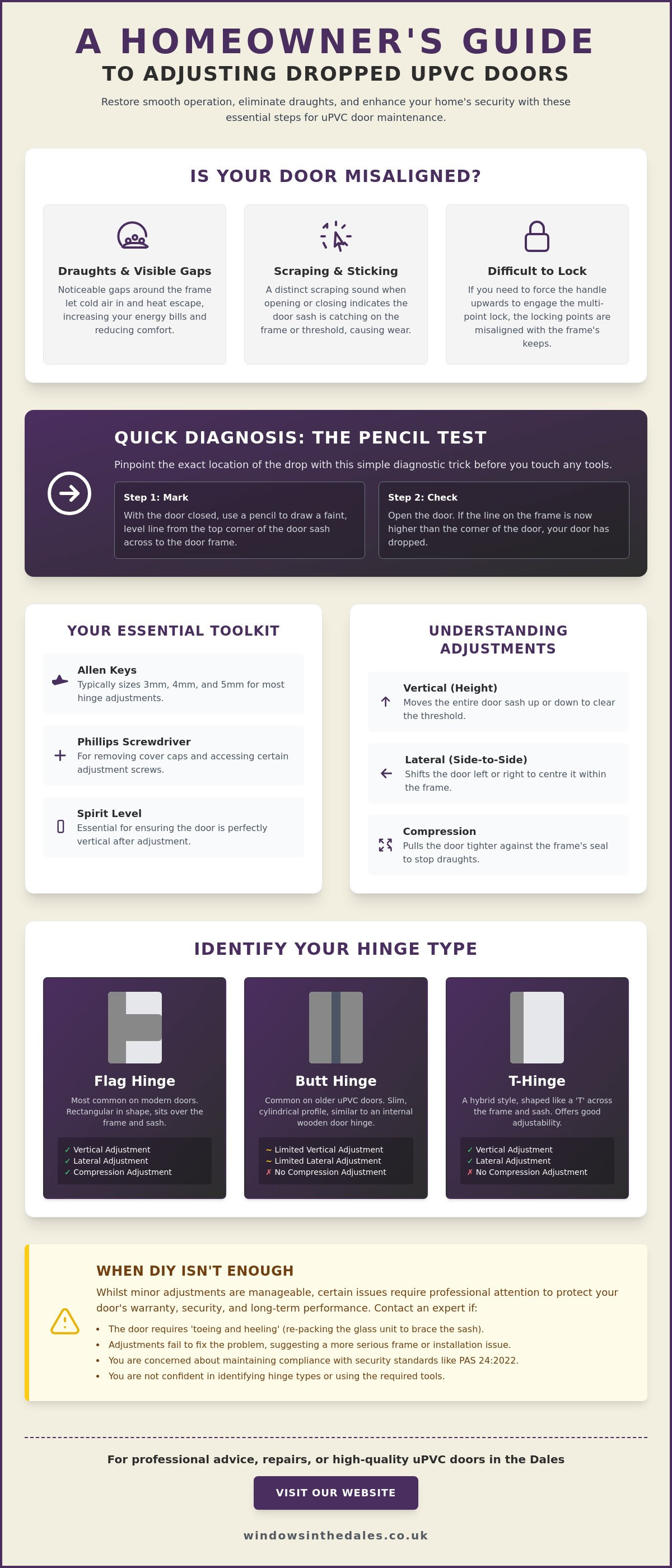
One of the most reliable ways to confirm a misalignment is the "pencil test." Close your door and draw a light, horizontal line across the frame using the top corner of the door as a guide. Open the door and check the position of the line. If the line is no longer level with the door's edge, or if it slants significantly, the door has shifted. This simple diagnostic tool helps you track exactly where the drop has occurred, providing a clear starting point for your adjustments.
Signs Your Door Has Dropped or Misaligned
A dropped door rarely goes unnoticed for long. You might hear a distinct scraping sound as the bottom of the sash catches on the uPVC threshold. This friction doesn't just damage the finish; it puts immense strain on the hinges. You should also look for "mitre misalignment" where the diagonal joints at the corners of the door sash no longer line up perfectly with the corners of the frame.
Visible gaps are another red flag. These openings allow heat to escape, directly impacting your home's energy efficiency during the cold winter months. Perhaps most critically, misalignment affects your home's security. When a door drops, the hooks and bolts of the multi-point locking system may not align with the keeps in the frame. If you find yourself having to lift the handle with extra force to engage the lock, your door requires immediate attention.
Common Causes of Movement in Yorkshire Properties
Properties across our region, from modern developments in Harrogate to historic terraces in York, are subject to building settling. Local soil conditions can cause subtle shifts in the foundations, which in turn slightly distort the door frames. Because the main entrance door sees the heaviest usage, it's typically the first to show these signs of movement.
The weather in the Dales also plays a significant role. uPVC profiles naturally expand and contract with temperature changes. Whilst modern materials are built to handle this, the frequent cycle of driving rain and sharp temperature swings can accelerate the "settling" of the hinges. Knowing how to adjust a dropped uPVC door hinge allows you to counteract these natural environmental shifts, preserving the sleek aesthetics and protective seal of your home's entrance.
Tools and Hinge Identification: Knowing Your Hardware
Before you begin, you must gather the correct equipment. Using the wrong size tool can strip screw heads, turning a simple maintenance task into an expensive repair. You'll typically need a set of Allen keys; sizes 3mm, 4mm, and 5mm are standard for most domestic hardware. A Phillips screwdriver and a spirit level are also essential to ensure the door sash is perfectly vertical once your work is complete. Accurate tools lead to accurate results.
The Three Main uPVC Hinge Types
Identifying your hardware is the most critical step in learning how to adjust a dropped uPVC door hinge. Most modern installations use Flag Hinges. These are rectangular and allow for "3D" adjustment, meaning you can move the door for height, compression, and lateral position. If your door is older, you might see Butt Hinges. These are cylindrical and often lack the sophisticated adjustment screws found on flag models. Sometimes, these require you to remove a pin to make significant changes.
Finally, T-Hinges are a hybrid style common in various uPVC doors across North Yorkshire. They offer both lateral and vertical adjustment but are shaped like a "T" across the frame and sash. Accurate identification ensures you turn the correct screw to achieve the desired movement without destabilising the door's weight. Turning the wrong screw can often make a minor drop significantly worse.
Preparing Your Workspace for Adjustment
Preparation is often overlooked by DIY enthusiasts. In our region, doors are frequently exposed to grit and Yorkshire road salt, which can accumulate inside the hinge mechanism over time. Clean the hardware thoroughly with a soft brush or cloth before you start. This prevents debris from grinding into the threads as you turn them. Check for any existing "stripped" or loose screws that might indicate the hinge itself is failing rather than just needing a minor tweak.
Don't attempt this alone. A standard uPVC door is heavy. Having a second person to support the sash weight while you turn the adjustment screws prevents the hinges from taking the full load during the process. This collaborative approach helps you reduce heat loss by ensuring the seals align perfectly once the job is done. Taking these small precautions protects your investment and maintains the architectural integrity of your home's entrance.
Step-by-Step: How to Adjust Flag, Butt, and T-Hinges
Precision is the foundation of a long-lasting door alignment. When you begin the process of learning how to adjust a dropped uPVC door hinge, you must adopt the "quarter-turn" rule. Small, incremental rotations are safer than large turns. Over-adjusting can strip internal threads or put unnecessary tension on the door sash, leading to a mechanical failure that is difficult to reverse. Always test the door's movement after every single adjustment to ensure the weight is distributing correctly across the frame.
Adjusting Flag Hinges for Maximum Precision
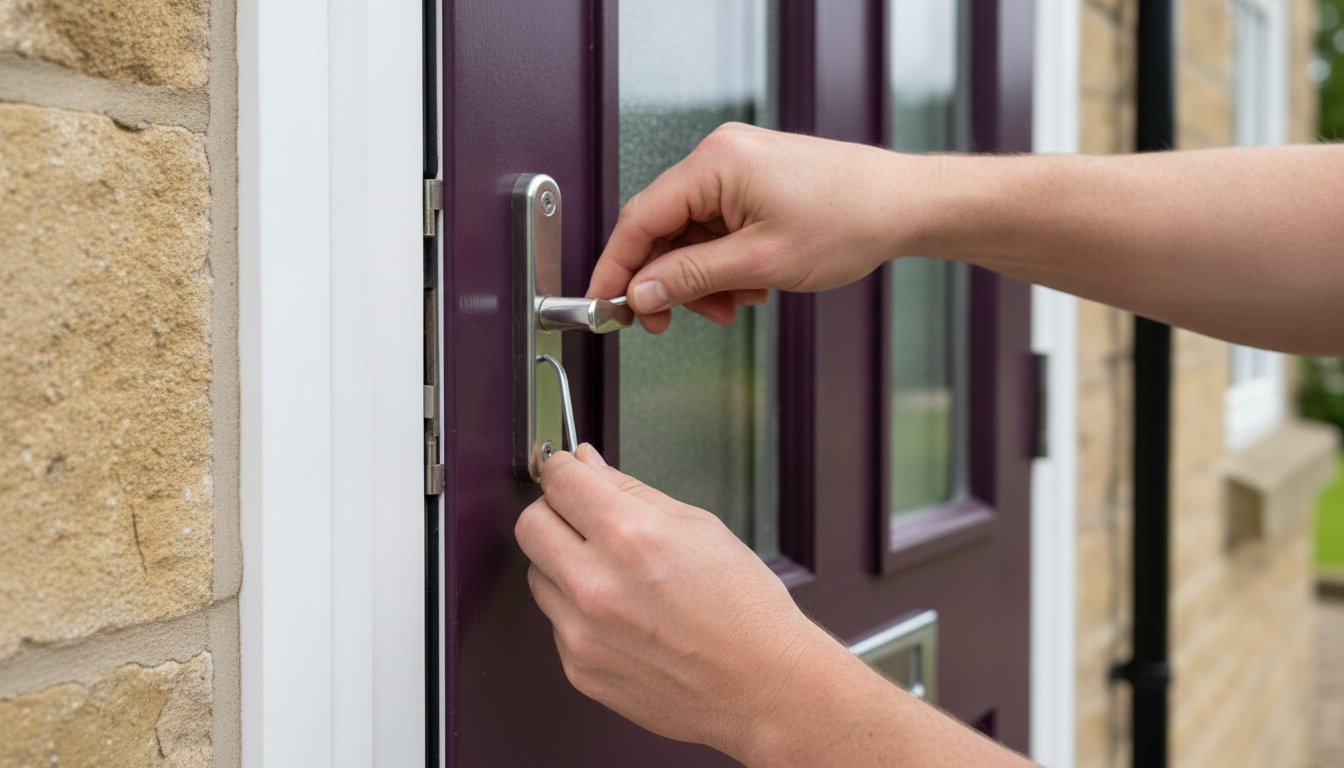
Flag hinges are the most adjustable hardware found on modern uPVC windows and doors. First, remove the plastic caps. Use a flat-head screwdriver gently to avoid scratching the uPVC finish. The screw on the side of the flag controls lateral movement, shifting the door closer to or further from the frame. The screw located at the bottom of the hinge adjusts the height. For a comprehensive overview of tool placement, you can refer to this guide on How to Adjust UPVC Door Hinges. Remember to adjust all three hinges equally. This balances the load and prevents a single hinge from snapping under the weight of the double glazing.
Realigning Butt and T-Hinges
Realigning older styles requires a bit more patience. Butt hinges often have hidden screws behind the main cover or tucked under a pin cap. If your door is clashing on the lock side, use the lateral screw to pull the sash back toward the hinge side. T-hinges offer a hybrid approach, combining the strength of a butt hinge with the adjustability of a flag. Once you've made your changes, use your spirit level. The door must be perfectly plumb. A slight tilt can cause the door to swing open or shut on its own, which is a common complaint in older Yorkshire properties with uneven floors.
Compression is the final piece of the puzzle. Most T-hinges and some flag models allow you to pull the door sash tighter against the frame seals. This adjustment is vital for eliminating the biting winter draughts that often plague North Yorkshire homes. By mastering how to adjust a dropped uPVC door hinge, you ensure that the natural illumination in your home isn't accompanied by a cold breeze. A well-adjusted door should glide shut with a satisfying, airtight click, requiring no force on the handle.
Troubleshooting Draughts and Closing Issues After Adjustment
Once you have mastered how to adjust a dropped uPVC door hinge, the door should sit squarely within its frame. However, physical alignment is only half the battle. You must also check the "pull" of the door to ensure the seals are making full, airtight contact. A door that looks straight can still allow cold air to whistle through if the compression isn't set correctly. This is particularly noticeable in the exposed valleys of the Dales. Wind pressure there can find the smallest gap in your home's defences.
Misalignment often puts undue stress on the multi-point locking system. If the hooks and rollers don't glide smoothly into their keeps, you'll feel resistance when lifting the handle. Forcing the handle can snap the internal gearbox, leading to a costly repair. Proper hinge adjustment ensures these components meet perfectly. This protects your home's security and extends the life of the hardware. Use the "paper test" to locate specific draught points. Place a sheet of paper between the sash and the frame, then close the door. If you can pull the paper out with no resistance, the seal is failing. If the problem persists after adjustment, inspect the rubber gaskets. Over time, these can become flattened or perished; a common issue in older uPVC windows and doors.
Solving Compression Problems
Adjusting the "cams" or rollers on the door edge can solve many compression issues. These components are often eccentric. You can turn them with an Allen key to pull the sash tighter against the frame. This is a vital step after you learn how to adjust a dropped uPVC door hinge, as it creates the final airtight seal. If the door still catches, the frame itself might have "bowed." This often happens if the door was poorly installed or if dark-coloured uPVC has absorbed too much heat during a rare Yorkshire heatwave, causing the profile to warp slightly.
Yorkshire Climate: Seasonal Maintenance Tips
Our local climate demands a bi-annual maintenance schedule. Check your doors in spring and autumn. During these checks, lubricate all moving parts. Use a silicone-based spray; never use WD-40. WD-40 can strip away factory-applied grease and attract grit, which accelerates wear. Clear the drainage holes at the bottom of the frame. Blocked holes lead to water ingress, which can damage your flooring and the internal steel reinforcements of the uPVC profile.
If your door continues to struggle despite these efforts, it might be time to consider a high-performance replacement. Request a quote from our specialist team to ensure your home remains secure and thermally efficient for the long term.
When DIY Isn’t Enough: Protecting Your Home’s Security and Warranty
While mastering how to adjust a dropped uPVC door hinge is a valuable skill for any homeowner, there is a point where mechanical adjustments reach their limit. uPVC hardware is durable, but it is not indestructible. Forcing a screw past its natural stop can lead to stripped threads or, in extreme cases, a snapped hinge casting. If you find yourself repeatedly making the same adjustments every few weeks, the issue likely isn't the hinge itself, but the structural integrity of the door sash or the way the glass is supported.
One of the most common reasons a door continues to sag is a failure in the "toeing and heeling" process. This technical glazing method uses internal plastic packers to brace the glass diagonally against the frame. This ensures the weight of the double glazing is transferred back to the hinge side. If these packers have shifted, no amount of hinge turning will provide a permanent fix. Attempting to resolve a structural drop through hinge adjustment alone puts immense strain on the screws and can lead to a total door failure. A professional realignment by a specialist glazing engineer addresses these internal issues, restoring the door's geometry without compromising the hardware.
The Limits of Hinge Adjustment
You must also consider the health of your multi-point locking system. If a door remains misaligned, the locking hooks will continue to strike the keeps at the wrong angle. This friction causes the internal gearbox to wear prematurely. If you feel a "gritty" sensation or significant resistance when lifting the handle, stop immediately. Forcing the mechanism can lead to a "lock-out" where the door cannot be opened at all. At this stage, the risk to your home's security outweighs the benefits of a DIY fix. It's also vital to check your original installation paperwork. Many modern uPVC windows and doors come with long-term guarantees. Attempting a complex repair yourself could potentially invalidate your installer’s warranty, leaving you responsible for the full cost of future replacements.
Finding Expert Support in Yorkshire
When a simple tweak isn't enough to restore smooth operation, reaching out to a local specialist like Windows in the Dales is the safest course of action. Our team understands the specific challenges faced by properties in North Yorkshire, from the impact of building settling to the effects of extreme weather. A professional "tune-up" doesn't just fix a single hinge; it ensures your entire glazing suite is functioning at peak efficiency. We prioritise consumer education and transparency, helping you decide whether a repair is viable or if an upgrade to high-specification aluminium or heritage doors would better serve your home’s long-term value. Protecting your investment requires a balance of regular maintenance and knowing when to call in the experts to safeguard your home's security and thermal performance.
Restore the Performance and Security of Your Yorkshire Home
Maintaining your property's entrance is a vital part of protecting your long-term investment. By learning how to adjust a dropped uPVC door hinge, you can eliminate frustrating draughts and ensure your multi-point locking system engages with effortless precision. Remember that successful maintenance relies on accurate hinge identification and the "quarter-turn" rule to avoid stripping delicate threads. Whilst many minor misalignments are solvable with an Allen key, persistent sagging often signals deeper structural issues like shifted glass packers that require a specialist's touch.
As Yorkshire-based glazing specialists since 2021, Windows in the Dales provides professional repair services across Leeds, York, and Harrogate. We focus on craftsmanship and consumer education to keep your living space secure and thermally efficient. Get a professional door health check from Windows in the Dales today to ensure your high-performance uPVC or aluminium doors remain in peak condition. Take control of your home's comfort and enjoy a draught-free entrance that stands up to the unique demands of the North Yorkshire climate.
Frequently Asked Questions
How do I know which screw on my uPVC door hinge to turn?
You identify the correct screw by its position on the hinge body. On a standard flag hinge, the lateral adjustment screw is located on the side of the rectangular flag, whilst the vertical height screw is found at the base. T-hinges often hide these behind plastic covers. Always consult your specific hardware manual or look for directional arrows etched into the metal to avoid turning the compression screw by mistake.
Can I adjust a uPVC door without taking it off its hinges?
You can absolutely adjust your door without removing it from the frame. Modern uPVC hardware is specifically engineered for 3D adjustment whilst the door remains hung. This allows you to fine-tune the lateral, vertical, and compression settings using only an Allen key. Removing the door is a complex task usually reserved for full glass replacement or when a hinge has suffered a total mechanical failure.
What size Allen key do I need for a standard uPVC door?
Most domestic uPVC doors require a 4mm or 5mm Allen key for primary adjustments. Some smaller security screws or cover caps might use a 3mm key. It's best to have a full metric set available before you begin. Using the wrong size can strip the internal hex head, making future maintenance impossible. Always ensure the key is fully seated in the screw head before applying any rotational force.
Why does my uPVC door only catch in the summer?
Your door catches in summer because uPVC profiles naturally expand when exposed to direct sunlight and rising temperatures. This physical swelling can cause a perfectly aligned door to rub against the frame or threshold. Darker colours absorb more heat and are more prone to this seasonal movement. Learning how to adjust a dropped uPVC door hinge helps you compensate for these minor environmental shifts without permanent damage.
Will adjusting my hinges fix a draughty door?
Adjusting your hinges will fix a draught if the air leak is caused by a gap between the sash and the frame. By increasing the compression or realigning the door vertically, you ensure the rubber gaskets make a continuous, airtight seal. However, if the draught persists after adjustment, you should inspect the gaskets themselves. Perished or flattened rubber seals cannot be fixed by hinge tweaks and will require physical replacement.
How often should I need to adjust my uPVC door hinges?
You should ideally check your door's alignment twice a year, typically during the change of seasons in spring and autumn. Regular maintenance prevents minor drops from becoming significant mechanical issues. If you find yourself needing to learn how to adjust a dropped uPVC door hinge every few weeks, it suggests a structural problem. This usually indicates that the internal glass packers have shifted or the frame was incorrectly installed.
What should I do if the adjustment screw is stuck or spinning?
Stop turning immediately if the screw feels mushy or spins without resistance. This usually indicates that the internal threads are stripped or the screw head is rounded off. If the screw is seized due to Yorkshire road salt or grit, apply a small amount of silicone-based penetrant. Never force a stuck screw, as snapping the hinge casting will require a full hardware replacement that often necessitates professional intervention.
Is it possible to adjust the height of an old uPVC door?
You can adjust the height of older doors, though the process is less intuitive than with modern flag hinges. Older butt hinges often have a vertical adjustment screw hidden under the bottom pin cap. You may need to remove the cap and turn the internal screw clockwise to lift the sash. If no screw is visible, the door might require toeing and heeling to lift the lock side through structural re-glazing instead.