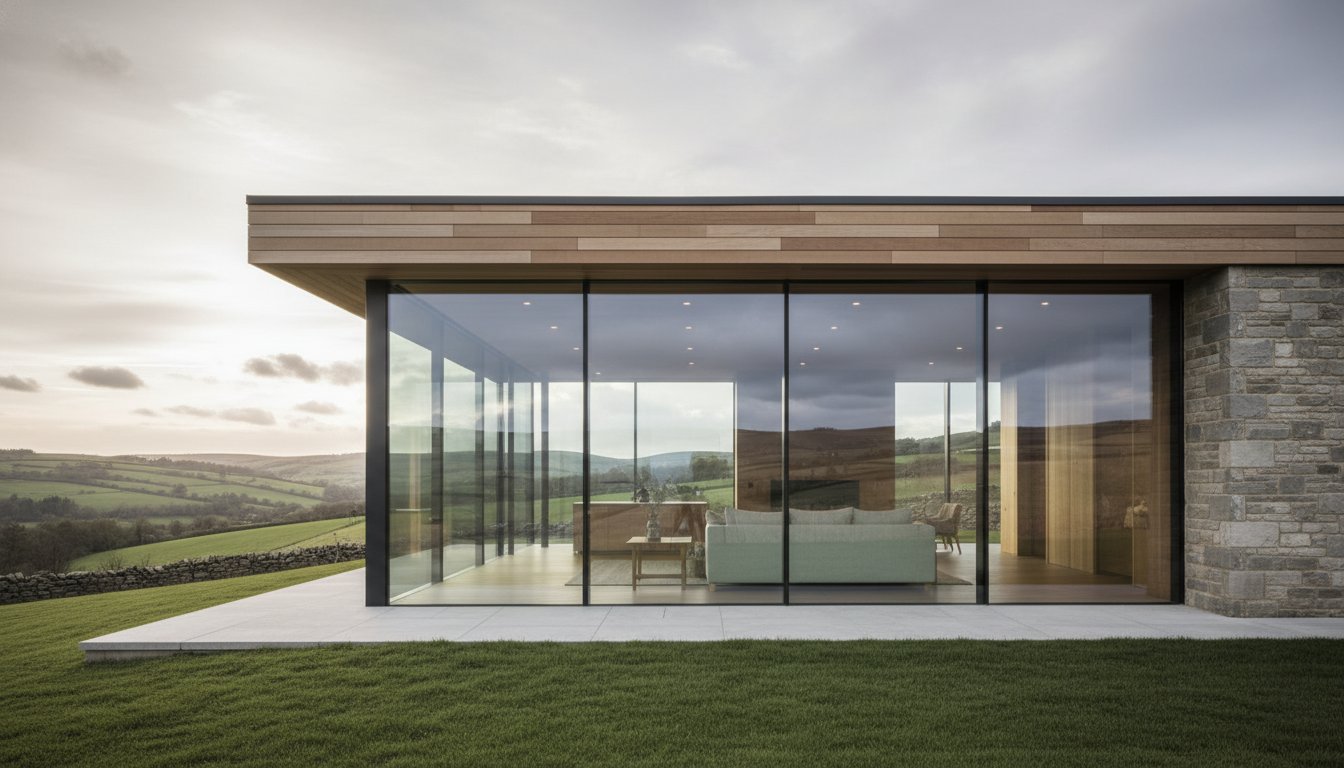
What if your next home improvement wasn't just a repair, but a legacy that outlasts your mortgage? While standard uPVC often begins to fade or warp within two decades, a premium aluminium installation is engineered to endure for nearly half a century. You're likely asking the critical question: how long do aluminium windows last when faced with the relentless wind and rain of the Yorkshire Dales? It's a valid concern for any homeowner looking to protect their investment from the high costs of frequent replacements.
We understand that the initial price of aluminium can feel daunting, especially when you're balancing aesthetic goals with practical budgets. This 2026 guide proves why these frames are a genuine 45-year investment for local properties, offering a sophisticated blend of contemporary style and unmatched durability. You'll discover how to maximise their lifespan through the latest thermal technology and local installation precision. We also preview the essential 2026 Building Regulations, from Part L thermal efficiency to mandatory ventilation standards, ensuring your home remains a warm, light filled sanctuary for decades to come.
Key Takeaways
- Discover why high-quality aluminium frames are now considered a 45 to 50 year architectural investment for your home.
- Learn how the superior weight-to-strength ratio of aluminium prevents the warping and structural fatigue commonly seen in uPVC or timber alternatives.
- Understand how local environmental factors in Leeds and the Dales influence the answer to "how long do aluminium windows last?" and how to mitigate weather-related wear.
- Identify the specific maintenance cycles required for glass units and hardware to ensure your windows perform optimally well beyond the first two decades.
- See why professional installation and specific 2026 thermal standards are the deciding factors in securing a lifetime of natural light and security.
The Lifespan of Modern Aluminium Windows: What to Expect in 2026
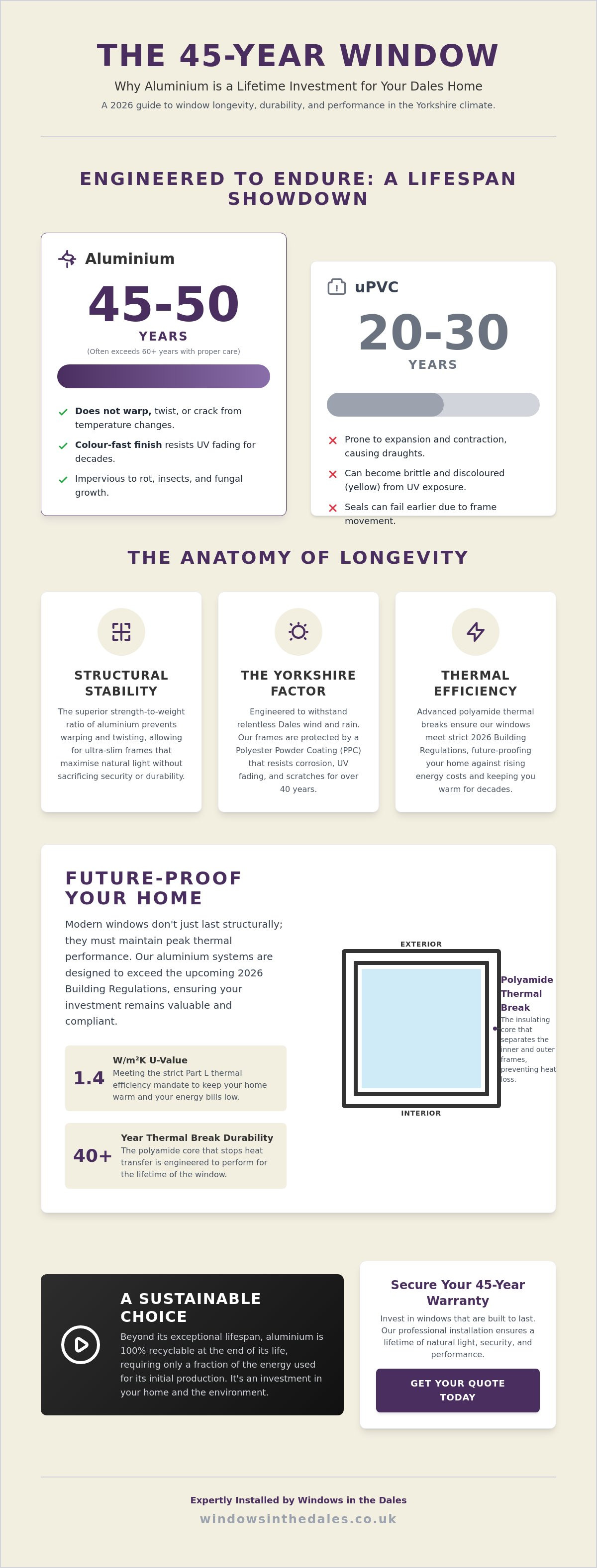
When you invest in your home, you aren't just buying a product; you're securing a legacy. For many Yorkshire homeowners, the primary concern is: how long do aluminium windows last? In 2026, the industry standard for high-quality frames is now a remarkable 45 to 50 years. This isn't a speculative figure. It's a calculated lifespan based on the inherent durability of the metal and advanced finishing techniques. However, "lifespan" in a modern context means more than the frame simply remaining in place. It refers to the window's ability to maintain its structural integrity and peak thermal performance throughout its entire life cycle. For a property in the Dales, this longevity is the difference between a temporary fix and a permanent architectural upgrade.
The 45-year figure is often considered a conservative estimate. In many cases, well-maintained aluminium can remain functional for over six decades. When comparing window frame materials, aluminium stands out because it doesn't suffer from the biological degradation of timber or the UV-induced brittleness of older uPVC. It's a material built to withstand the specific pressures of the British climate, from coastal salt spray to the biting frosts of a Yorkshire winter.
The Role of Polyester Powder Coating (PPC)
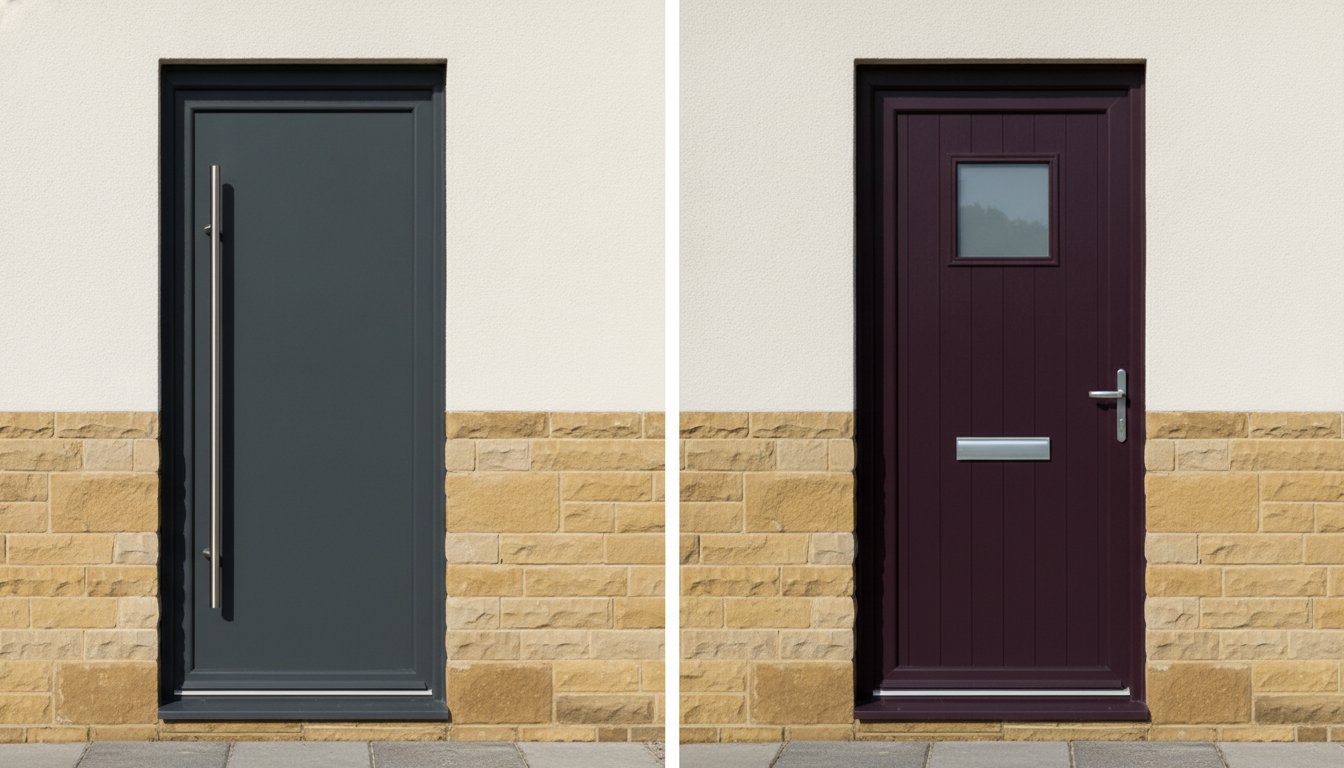
Polyester Powder Coating acts as the primary shield against atmospheric oxidisation by creating an impermeable barrier between the raw metal and the environment. This process involves electrostatically applying a dry powder to the aluminium, which is then cured under heat to create a permanent, protective colour bond. This finish is incredibly resilient. It resists UV fading, chalking, and scratching over four decades of exposure. For homes in high-exposure areas, this means the vibrant Anthracite Grey or classic White you choose today will look just as sophisticated in the 2060s.
2026 Energy Standards and Thermal Longevity
The 2026 Building Regulations have redefined what makes a window "last." Older frames often become obsolete not because they fail structurally, but because their thermal performance falls behind modern requirements. Modern aluminium windows are engineered with advanced polyamide thermal breaks. These components provide 40-year durability while ensuring the unit meets the strict 1.4 W/m²K U-value mandate. By installing these systems, you future-proof your home against rising energy costs and ensure your property remains compliant with evolving environmental standards. This is how we protect your investment; we provide glazing that remains thermally efficient long after cheaper alternatives have let the cold in.
Engineering Longevity: Why Aluminium Outperforms uPVC and Timber
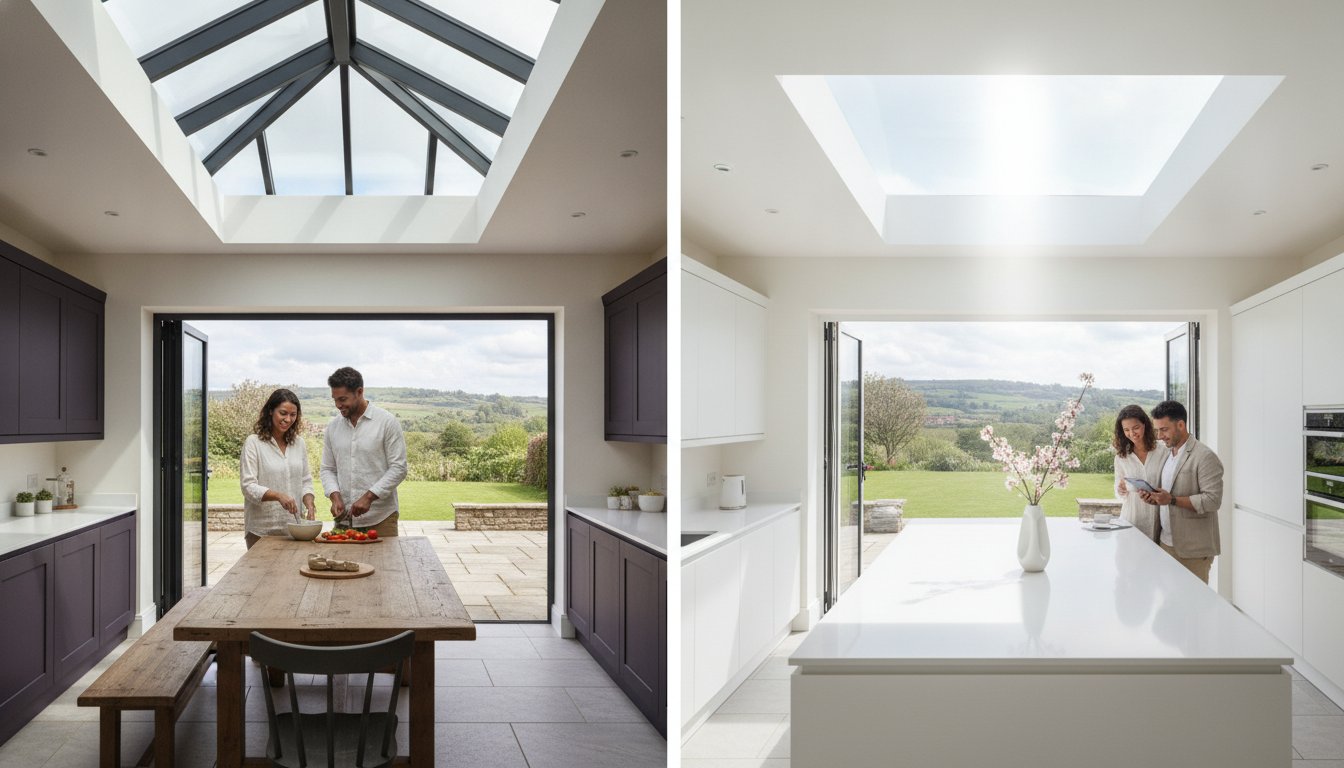
Aluminium provides unparalleled structural stability that alternative materials simply cannot match. Unlike uPVC, which can expand and contract significantly during the fluctuating temperatures of a Yorkshire summer, aluminium remains inert. This prevents the frames from twisting or warping, a common cause of draughts and hardware failure in older installations. Because the metal is so robust, it allows for incredibly slim frames that support vast panes of glass. This superior weight-to-strength ratio is why aluminium is the preferred choice for contemporary architectural designs that prioritise natural illumination without the risk of frame fatigue.
When homeowners ask, "how long do aluminium windows last?", they're often comparing the 45-year reality of metal against the shorter life cycles of plastic or wood. It's also a material that resists the common enemies of the Yorkshire countryside. It doesn't rot, it isn't susceptible to wood-boring insects, and it doesn't support fungal growth. Beyond durability, the environmental benefit is significant; aluminium is 100% recyclable at the end of its life. While some legacy data, such as that from the , provides a baseline for older installations, the 2026 standard for British architectural glazing has pushed these boundaries much further.
Aluminium vs. uPVC: The 20-Year Divide
uPVC is often the entry-level choice, but it carries a hidden tax on longevity. Over 20 or 30 years, uPVC frames can become brittle due to UV exposure, leading to cracks or a permanent yellowing of the finish. Aluminium avoids this "colour-fast" issue entirely, retaining its original hue for decades. When you calculate the cost-per-year of service, the 45-year lifespan of aluminium often makes it the more economical choice compared to replacing uPVC windows twice in the same period. If you're weighing up these materials for your own renovation, exploring our case studies can show how aluminium transforms local homes.
Aluminium vs. Timber: Maintenance and Decay
Timber has a classic appeal but demands constant vigilance in the damp Yorkshire climate. Wooden frames typically require sanding and repainting every five years to prevent wet rot and decay. In contrast, modern aluminium windows can mimic heritage aesthetics, such as the "steel-look" or flush sash styles, without the maintenance burden. This allows you to upgrade a period property whilst ensuring the frames last as long as the stone walls they sit within, effectively ending the cycle of expensive repairs and repainting.
The Yorkshire Factor: How Local Conditions Affect Window Durability
Yorkshire weather is a formidable opponent for any building material. While we have established that the frames can technically reach a 50-year milestone, the practical answer to "how long do aluminium windows last?" depends heavily on your specific postcode. A property perched on a wind-swept moor in the Dales faces different stresses than a contemporary townhouse in Leeds or a coastal home in Bridlington. Understanding these regional nuances is essential for protecting your investment and ensuring your glazing performs as intended for decades.
In high-exposure areas like the Yorkshire Dales, wind pressure and driving rain are the primary concerns. Aluminium's inherent rigidity prevents the frame from flexing under intense gusts, a common failure point for less robust materials. For homeowners in urban centres like Leeds or Sheffield, the challenge shifts to atmospheric pollution. Industrial particulates and traffic film can be acidic; however, the high-quality polyester powder coating on modern aluminium windows acts as a barrier against this corrosive environment. In Harrogate, where south-facing extensions are popular for capturing natural light, aluminium stays true. It won't expand or stick in the heat, ensuring the smooth operation of your frames even during the height of summer.
Coastal properties in Hull or Bridlington require even more specialist care. Salt spray is incredibly aggressive toward metal. To achieve a 45-year lifespan here, a marine-grade finish is a non-negotiable requirement. This enhanced coating process provides extra thickness and protection, preventing the "pitting" or bubbling that can occur when standard finishes are exposed to sea air.
Managing Condensation and Moisture in Yorkshire
Yorkshire’s humidity zones can lead to internal damp issues if not managed correctly. Modern aluminium systems feature high-performance seals and sophisticated internal drainage channels. These channels are designed to direct any water that enters the frame back outside, preventing the moisture build-up that causes seal failure. To maintain this, we recommend a simple annual check to ensure drainage holes remain clear of debris. This small step ensures your windows continue to protect your home’s structural integrity whilst maintaining a clear, condensation-free view.
Local Installation Standards
A "cowboy" installation in York or Leeds can easily halve a window’s lifespan. Yorkshire stone properties often feature irregular masonry that requires expert handling. If the perimeter sealing is poor, draughts and water ingress will eventually compromise the internal polyamide breaks and hardware. A professional installation ensures that the window is perfectly level and the seals are airtight. This precision is what guarantees long-term draught proofing and ensures your aluminium frames remain a permanent fixture of your home rather than a temporary solution.
Beyond the Frame: Assessing Glass, Seals, and Hardware
While the architectural frame is designed to endure for nearly half a century, it's a mistake to view a window as a single, static object. A window is a complex assembly of moving parts, seals, and glazing units, each with its own service life. When homeowners ask, "how long do aluminium windows last?", they're often surprised to learn that the glass and hardware may require attention long before the aluminium itself. In the 2026 market, high-performance double and triple glazing units typically have a lifespan of 20 to 25 years. After this period, the desiccant within the spacer bar may become saturated, leading to the familiar "misted" appearance of a failed seal.
The gaskets and weatherstripping are the unsung heroes that maintain your home’s airtight seal. These components are engineered from high-grade EPDM or TPE, materials designed to remain flexible for 40 years or more. However, their longevity depends on the frame remaining stable. Because aluminium doesn't warp, these seals aren't subjected to the constant stretching and compression found in uPVC systems. This stability is a primary reason why the question of "how long do aluminium windows last?" usually ends with a much higher number than other materials. If a component does fail, the modular nature of our systems allows for specific repairs, such as replacing a glazed unit or a gasket, without the need to tear out the entire frame.
Hardware Longevity and Security
The hinges, handles, and locks are the "moving parts" that define your daily experience with your windows. For long-term smooth operation, stainless steel hardware is an essential specification that resists the corrosive damp of the Yorkshire climate. The 2026 standard for multi-point locking systems ensures not only peak security but also a mechanical durability that matches the frame’s lifespan. To ensure these components remain in top condition, you should apply a light silicone-based lubricant to the friction stays and locking points once a year to prevent snapping or seizing.
Maintaining Your Investment
The term "virtually maintenance-free" is often misunderstood as "no maintenance." To protect the sophisticated finish of your aluminium windows, a basic cleaning schedule is required. For rural properties in the Dales, a biannual wash with warm soapy water is sufficient to remove grit. In urban environments like Leeds or Sheffield, quarterly cleaning is recommended to prevent industrial pollutants from etching the powder coating. Organising a yearly window health check allows you to spot minor issues, such as blocked drainage holes or loose handles, before they impact the window’s performance. If you're ready to upgrade to a lifetime glazing solution, request a quote from our specialist team today.
Securing Your 45-Year Warranty with Windows in the Dales
Achieving a half-century of performance requires more than just a premium product; it demands an installation that respects the unique architectural fabric of our region. When you ask how long do aluminium windows last?, the answer is fundamentally tied to the precision of the fit. A frame is only as durable as the seal that surrounds it. We've seen countless homeowners suffer because of industry errors, such as poor perimeter sealing or the use of sub-standard fixings that ignore the movement of Yorkshire stone. Our approach is different. We act as guardians of your investment, ensuring that every hinge, seal, and frame is positioned to withstand the test of time.
While many competitors offer a basic 10-year guarantee, we provide a more robust level of protection. Typical warranties for our professional installations in the Yorkshire region range from 10 to 20 years, which is often double the industry standard. This covers material defects and hardware, providing the security you need to reach that 45-year lifespan goal. We don't believe in high-pressure sales; instead, we focus on consumer education and craftsmanship. By choosing a specialist who understands the local climate, you ensure that your aluminium windows remain a high-performing asset rather than a future liability.
Why Choose a Local Specialist?
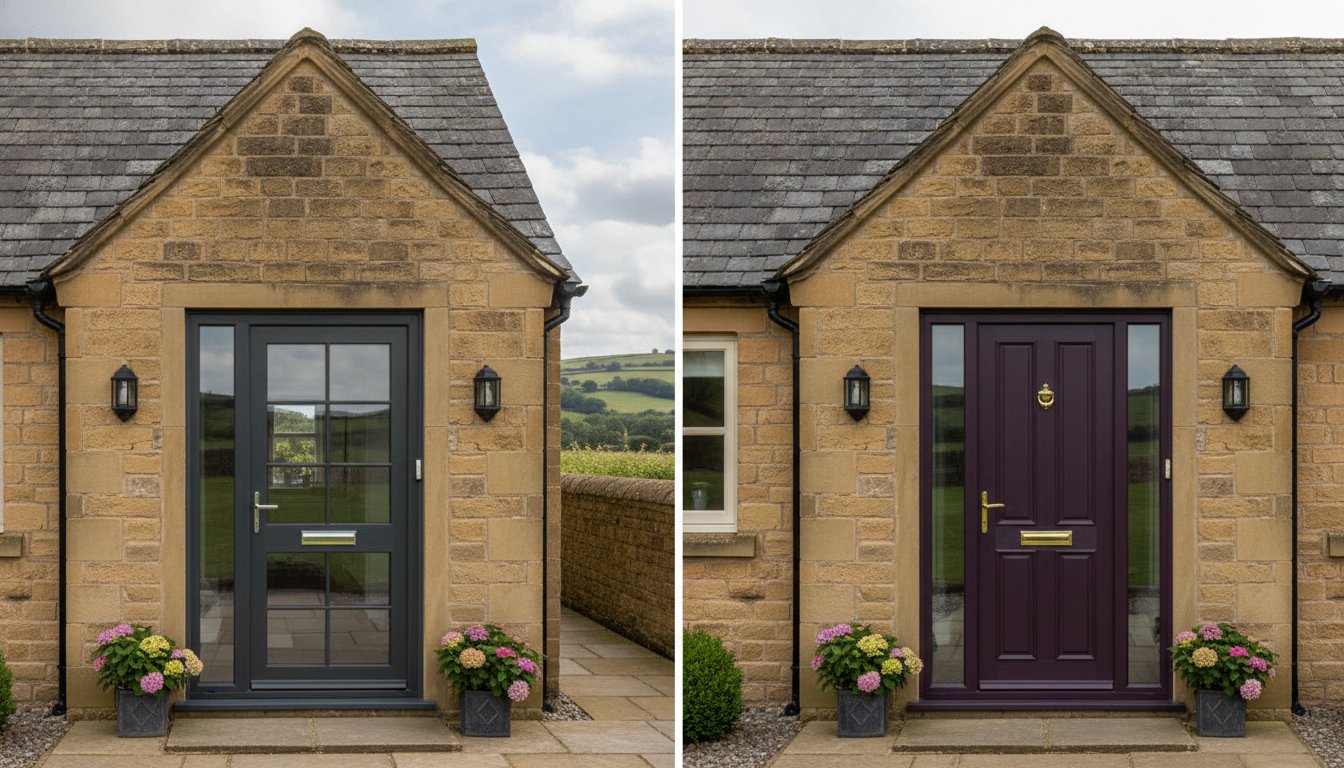
Our deep roots in the Yorkshire community mean we don't just finish a job and disappear. We're accountable to our neighbours and take immense pride in the long-term satisfaction of local residents. Whether you're looking for contemporary slimline frames for a modern extension or traditional heritage styles for a period cottage, we possess the niche expertise required for architecturally sensitive projects. You can view our case studies to see these durable designs in action across the county, from the urban centres to the heart of the Dales.
Start Your Property Transformation
We centre our service around your home’s specific architectural needs, prioritising the enhancement of natural illumination and contemporary aesthetics. Every project is an opportunity to transform a living space into a sanctuary of light. You don't have to settle for the "move or improve" dilemma when you can invest in quality that outlasts a generation. Our team is ready to guide you through the latest 2026 standards to ensure your home is both beautiful and compliant. Request a Quote for your Yorkshire home today and begin your journey toward a lifetime of comfort.
Future-Proof Your Home with 50-Year Glazing
Choosing the right material for your property is a decision that defines the next half-century of your home life. You've seen that the answer to how long do aluminium windows last? is a remarkable 45 to 50 years; provided you prioritise premium finishes and 2026 thermal standards. By moving away from the short lifecycle of uPVC and the high maintenance of timber, you're investing in a legacy of natural light and structural security. This longevity isn't just about the metal. It's about the precision of a specialist installation that understands the unique pressures of the Yorkshire climate.
As independent Yorkshire glazing experts, we specialise in heritage and slimline aluminium designs that respect your home’s character. We provide professional installation across Leeds, York, and Harrogate, ensuring every seal and frame is perfectly positioned for maximum durability. Don't leave your investment to chance by ignoring the technical details of hardware and thermal breaks. It's time to transform your living space into a warm, contemporary sanctuary that stands the test of time. Request a bespoke quote for your Yorkshire home today. We look forward to helping you secure a brighter, more efficient future for your property.
Frequently Asked Questions
Do aluminium windows rust or corrode over time?
Aluminium does not rust because it contains no iron. It naturally develops a protective oxide layer that prevents deep corrosion. In coastal Yorkshire locations like Bridlington or Hull, we specify a marine-grade powder coating to prevent surface pitting caused by salt spray. This ensures the metal remains structurally sound for several decades without the degradation seen in steel or untreated timber.
How do aluminium windows compare to uPVC for energy efficiency in 2026?
In 2026, aluminium windows are highly competitive with uPVC due to advanced polyamide thermal breaks. These components stop heat from transferring through the metal frame. Under current Building Regulations Part L, our systems comfortably achieve the required 1.4 W/m²K U-value. This means you enjoy the slim, modern aesthetics of metal without sacrificing the warmth and comfort of your home.
Can you repaint aluminium windows if you want to change the colour?
While you can technically repaint them, it is a complex process that requires professional on-site spraying. The original polyester powder coating is a factory-bonded finish designed to last for 40 years without fading. We recommend choosing a timeless shade, such as Anthracite Grey or Black, to ensure your property maintains its contemporary appeal throughout the windows' long service life.
What is the most common cause of failure in aluminium windows?
Mechanical hardware fatigue or double glazing seal failure usually occurs long before the frame itself fails. While the question of how long do aluminium windows last? often focuses on the metal, the hinges and handles typically require attention after 15 to 20 years. Glass units may also mist up after 25 years if the internal seals perish, though these components are easily replaced without removing the frames.
Are aluminium windows worth the extra cost compared to uPVC?
Aluminium represents a superior long-term investment because of its 45-year lifespan. While the initial outlay is higher than uPVC, you'll likely replace plastic frames twice in the same period. Aluminium also offers better structural strength for larger glass spans. This creates a more desirable, light-filled living space that can significantly enhance the resale value of a premium Yorkshire property.
How often do I need to clean my aluminium window frames in Yorkshire?
Your cleaning schedule should be dictated by your specific postcode. For homes in the Yorkshire Dales, a simple wash with soapy water every six months is enough to keep the frames pristine. In urban centres like Leeds or Sheffield, we recommend quarterly cleaning. This prevents the build-up of industrial particulates and traffic film that can eventually dull the protective powder-coated finish.
Will aluminium windows increase the value of my Yorkshire property?
High-quality architectural glazing is a major selling point in the 2026 housing market. Prospective buyers prioritise energy efficiency and low-maintenance materials that won't require immediate replacement. Upgrading to aluminium signals that a property has been maintained to a high standard. This is particularly true for heritage renovations where slimline frames preserve the building's original character whilst providing modern performance.
Do aluminium windows suffer from condensation more than other materials?
Modern aluminium systems do not suffer from excess condensation because they utilise sophisticated thermal breaks. These breaks isolate the cold exterior metal from the warm interior frame. Any condensation you see is usually a result of high internal humidity rather than the frame material. Following the 2026 Part F ventilation standards, such as using trickle vents, will ensure a healthy airflow and a dry home.