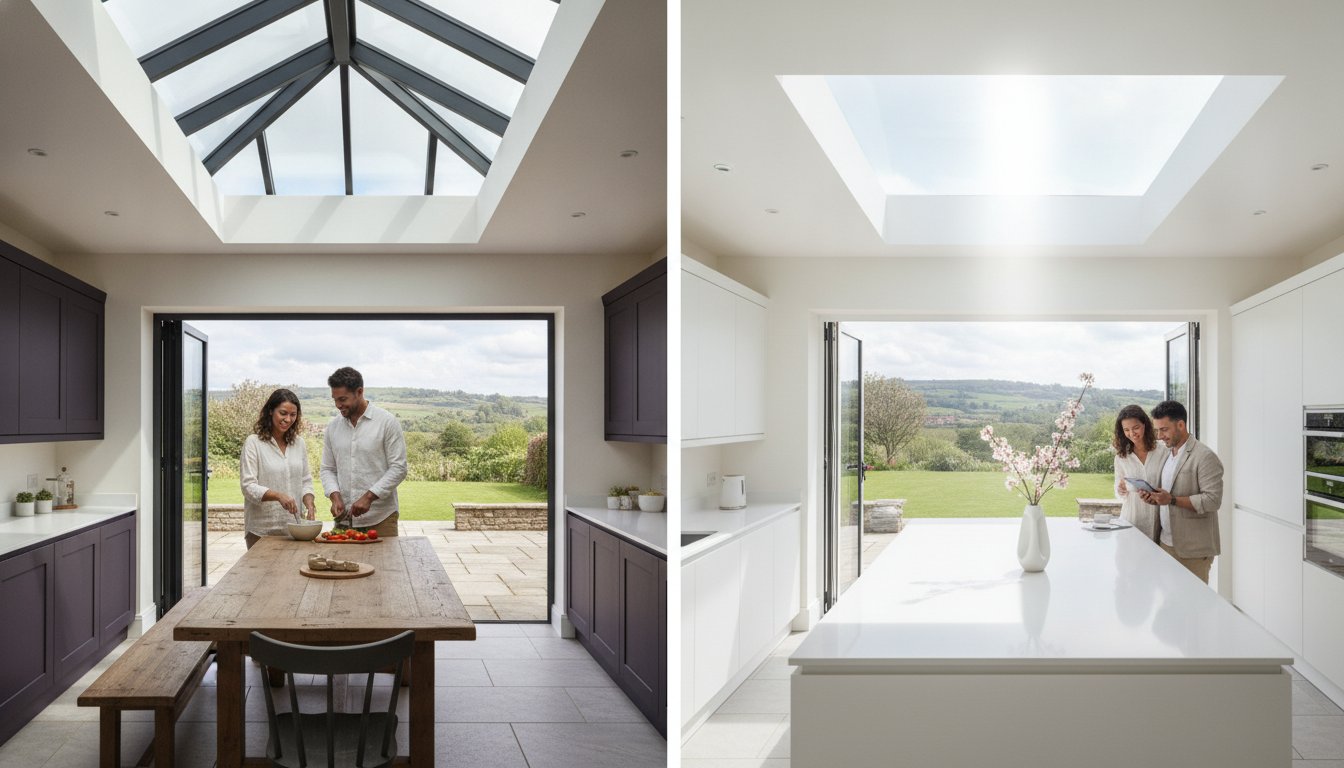
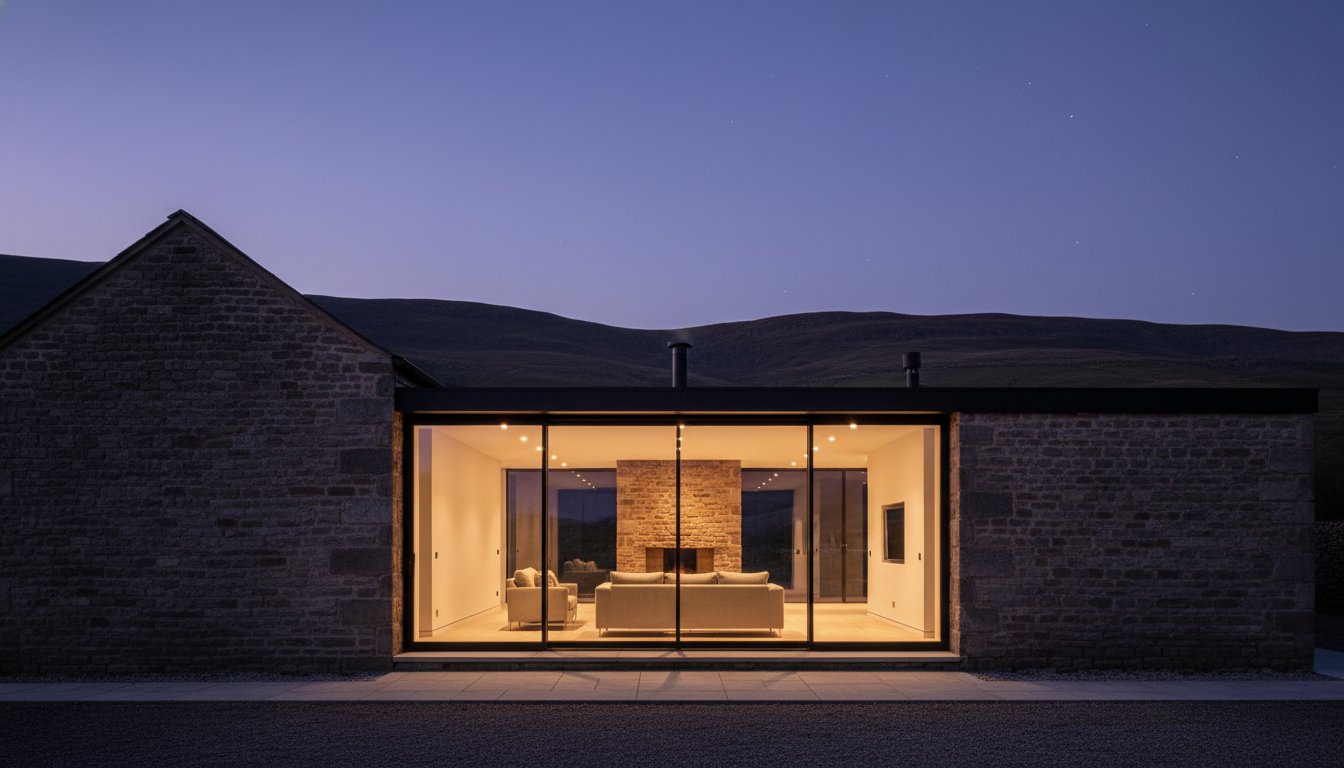
Can you really replace traditional stone openings with floor-to-ceiling glazing without falling foul of the Yorkshire Dales National Park's strict lighting rules? It's the most common question we hear regarding Dales Barn Conversions: How to Handle Large Glass Expanses and Dark Skies. You want to wake up to the rolling Yorkshire landscape; however, the fear of a planning rejection due to light spill or failing to meet the March 2026 Building Regulations often feels like a barrier to your dream project.
We understand that balancing a modern aesthetic with sensitive heritage requirements is a complex task, especially when windows and doors can account for up to 40% of a home's total heat loss. You'll learn how to integrate expansive aluminium sliding doors and slimline windows that actually improve Dark Sky protection through advanced smart coatings. We'll explore how to achieve a maximum U-value of 1.2 W/m²K to ensure your home remains energy efficient, potentially saving you £235 annually on heating bills. This guide covers everything from adhering to the International Dark Sky Reserve guidance, established in December 2020, to selecting glazing that maximises light without compromising the Dales landscape.
Key Takeaways
- Learn why the "glass-to-wall" ratio is the deciding factor for planning approval in 2026 and how to balance heritage requirements with a modern, transparent aesthetic.
- Discover our expert guide on Dales Barn Conversions: How to Handle Large Glass Expanses and Dark Skies to protect the region's International Dark Sky Reserve status whilst enjoying floor-to-ceiling views.
- Compare the structural and visual benefits of slimline aluminium against traditional timber to achieve the sleekest possible sightlines for your Yorkshire home.
- Understand how to meet the latest 2026 U-value targets of 1.2 W/m²K to eliminate cold bridging and keep your conversion energy efficient during the winter months.
- Gain insights into the "Architectural Glazing" approach that helps local homeowners in Skipton and Richmond avoid costly mistakes during the planning application process.
The Barn Conversion Challenge: Balancing Heritage and Transparency
Yorkshire Dales barns are more than just old stone buildings; they're historical markers of our region's farming heritage. The laithe house, which traditionally sheltered both livestock and families under a single roof, presents a specific set of architectural rules. When planning Dales Barn Conversions: How to Handle Large Glass Expanses and Dark Skies, you'll find that the glass-to-wall ratio is the primary concern for planning officers in 2026. They aim to protect the building's rugged, solid appearance. Homeowners often face an emotional conflict. You want panoramic views of the Swale or Wharfe valleys; however, planning guidelines often demand you preserve the black-hole look of a traditional agricultural building.
The "Agricultural Character" Constraint
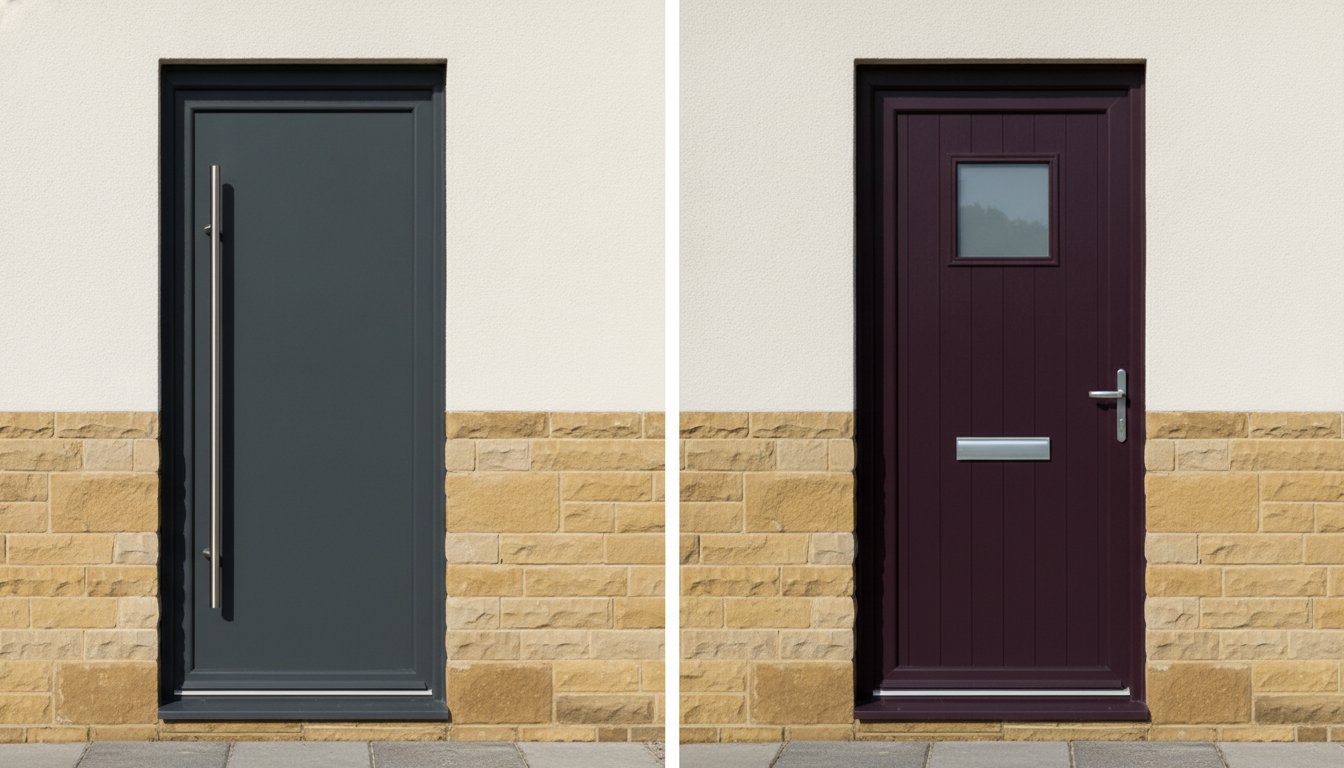
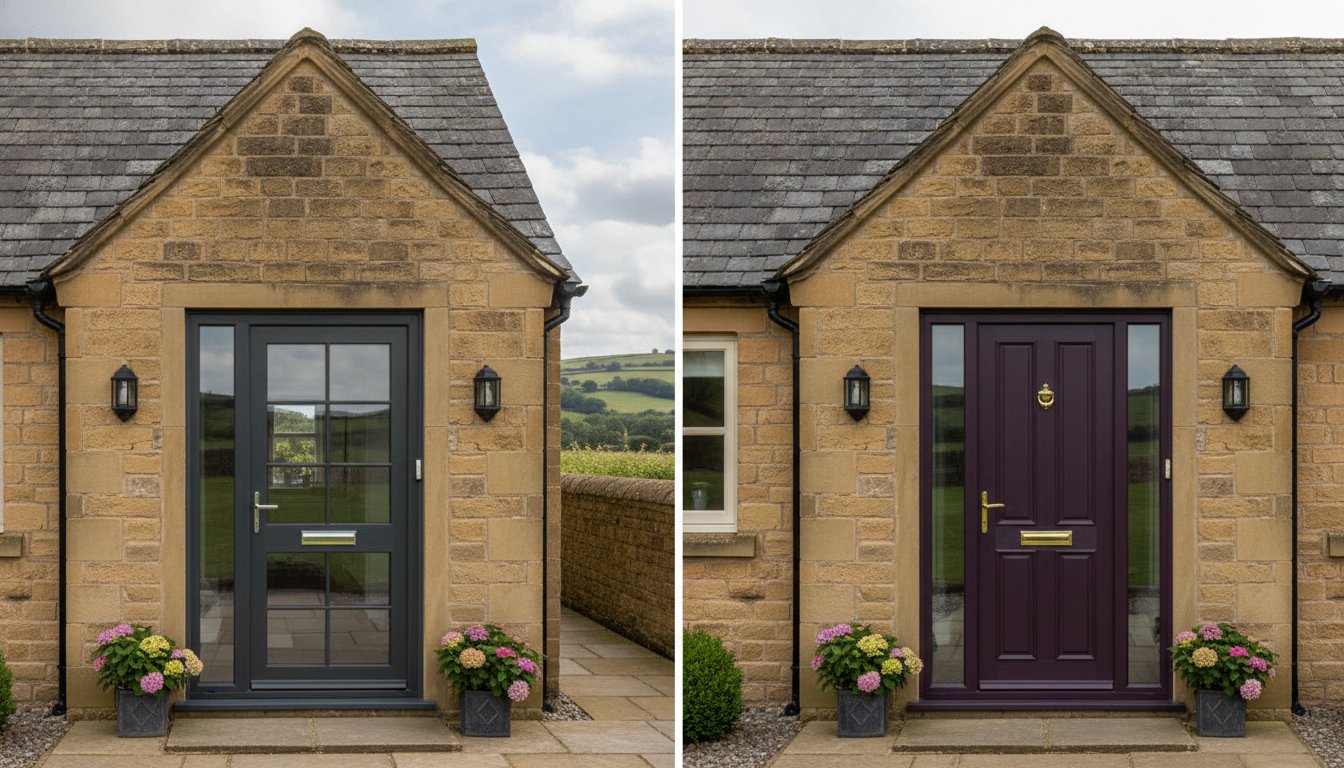
Planners usually insist that new glazing is deeply recessed within original stone apertures. This technique creates shadow lines. These lines help large glass expanses disappear into the masonry when viewed from a distance. By avoiding flush-mounted frames, you maintain the building's historic profile and ensure the stone remains the dominant feature. High-quality heritage doors are an excellent solution here. They can be designed to mimic the appearance of traditional stable doors or cart-shed openings whilst providing the thermal performance required by today's standards. Understanding the history of barn conversions helps explain why these strict rules exist. It is fundamentally about preventing these structures from looking like standard suburban houses.
The Evolution of Dales Design Standards
Design standards in the Dales have shifted significantly by May 2026. The trend now favours invisible interventions rather than the chunky timber frames popular in previous decades. Modern architectural glazing uses slimline frames to prioritise the landscape over the window itself. A Yorkshire-centric design requires a different approach to projects in Leeds or Sheffield. In an urban setting, bold frames might be a design feature. In the Dales, the goal is for the frame to be as unobtrusive as possible. This ensures breathtaking views remain the focus while the barn retains its quiet, agricultural dignity. By choosing materials that blend with the gritstone or limestone, you avoid the costly mistake of creating a jarring, modern eyesore in a sensitive landscape.
Handling Large Glass Expanses: Slimline Aluminium vs. Traditional Timber
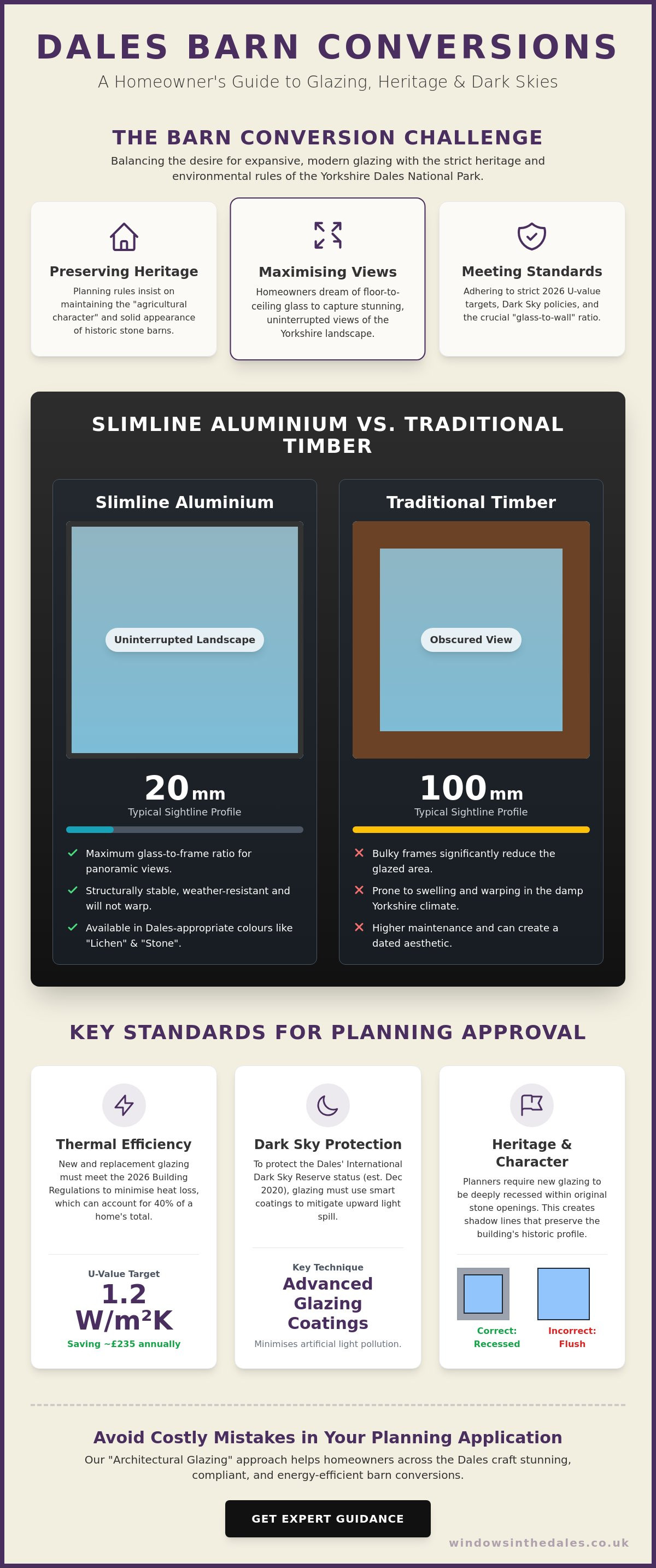
Choosing between slimline aluminium and traditional timber is a pivotal decision for any Yorkshire project. Whilst timber offers a classic feel, its bulky frames often obscure the very views you've moved to the countryside to enjoy. In 2026, slimline aluminium has become the superior choice for high-end heritage projects because it allows for massive glass panes without the structural bulk of wood. This is particularly vital when considering Dales Barn Conversions: How to Handle Large Glass Expanses and Dark Skies, as the goal is to let the landscape speak for itself. Aluminium frames are narrower; therefore, they provide a much higher glass-to-frame ratio than their timber counterparts.
The visual impact of sightlines cannot be overstated. A standard timber frame might be 100mm wide, whereas modern aluminium can offer profiles as slim as 20mm. These thinner lines ensure that the transition from your living room to the rolling hills feels seamless. Colour choice is equally critical. We recommend moving beyond the ubiquitous Anthracite Grey. Earthier, Dales-appropriate tones like "Lichen" or "Stone" help the building blend into the local limestone or gritstone. These shades reflect the natural palette of the National Park, satisfying both your aesthetic desires and strict planning requirements.
Structural integrity is another factor. The Dales are notorious for high wind speeds and driving rain. Aluminium is inherently more stable than timber, which can warp or swell in the damp Yorkshire climate. By using high-performance materials, you are effectively Improving Energy Efficiency in Historic Buildings whilst ensuring the longevity of your investment. These modern systems handle the weight of triple glazing with ease, which is essential for meeting the 1.2 W/m²K U-value targets mandated in March 2026.
Maximising Views with Slimline Sliding Doors
For those seeking uninterrupted vistas, aluminium sliding doors are often the preferred solution. Unlike bifold doors, which require multiple vertical frames, sliding systems offer vast, single panes of glass. This results in more light and fewer visual distractions. We recently completed a Harrogate barn conversion using 20mm sightlines, where the doors were designed as "pocket doors." These disappear entirely into the barn walls when opened, creating a true indoor-outdoor living space. If you're unsure which configuration fits your layout, you can explore our local project gallery for inspiration.
The Heritage Look: Steel-Style Glazing
If your planning officer is concerned about large, modern-looking voids, heritage aluminium is the answer. These steel-style systems use horizontal glazing bars to break up large expanses without losing significant light. This approach satisfies planners by mimicking the traditional window rhythms found in historical agricultural buildings. It maintains that essential utilitarian feel while providing modern thermal breaks. These industrial-inspired systems prove that Dales Barn Conversions: How to Handle Large Glass Expanses and Dark Skies don't have to sacrifice style for regulation.
Protecting Dark Skies: Smart Glazing and Light Spill Mitigation
The Yorkshire Dales National Park was designated an International Dark Sky Reserve in December 2020. This status means that every new window in a Skipton or Richmond conversion is scrutinised for its nocturnal impact. If you're researching Dales Barn Conversions: How to Handle Large Glass Expanses and Dark Skies, you've likely realised that planners are wary of "lantern effects" in the landscape. Light Spill Mitigation is the reduction of artificial light escaping through glass. Internal house lights can easily ruin the Dales night sky, turning a heritage building into a glowing beacon that disrupts local wildlife and stargazing.
Anti-Reflective and Low-Transmittance Coatings
Specialised glass coatings are now a vital tool for the modern renovator. These coatings can reduce the amount of light escaping upwards by up to 30%, which is often the difference between a planning approval and a flat refusal. When selecting your glazing, you'll encounter the "Tinted vs. Clear" debate. Whilst clear glass is the traditional choice, low-transmittance (LT) glass offers a subtle tint that significantly dampens internal light spill. It's about finding the right balance. You want to maintain your daytime view whilst adhering to the official design guidance from the National Park Authority. Pay close attention to the Light Transmission ratings; a lower LT value is often requested in sensitive zones to ensure your home remains discreet after sunset.
Smart Home Integration for Night-Time Protection
Technology can do the heavy lifting for you. Automated solar-tracking blinds are a practical solution for massive barn openings. These systems can be programmed to close precisely at dusk, creating a physical barrier that prevents light pollution. This is far more reliable than manual blinds and shows planners you're serious about mitigation. Your internal lighting choices also play a role. Current regulations from May 2026 specify that lamps should be 500 lumens or less, with a colour temperature under 3000K. Using even warmer tones, such as 2700K, creates a soft, golden glow that is less disruptive than harsh blue-white light.
A successful planning application often requires a comprehensive "Good Lighting Plan." This document should detail your glazing specs, your blind automation, and your use of proximity sensors instead of dusk-till-dawn sensors. By taking this expert-led approach, you protect your investment and the landscape simultaneously. It's a structured way to achieve a light-filled home that respects the unique character of the Yorkshire Dales. Every choice you make, from the G-value of the glass to the Kelvin rating of your bulbs, contributes to a successful, energy-efficient living space.
Thermal Efficiency: Keeping Barn Conversions Warm in a Dales Winter
A Dales winter doesn't hold back. When the temperature drops on the moors, your glazing becomes the front line of defence. Windows and doors can account for up to 40% of a home's total heat loss; therefore, thermal performance is a non-negotiable priority. For Dales Barn Conversions: How to Handle Large Glass Expanses and Dark Skies, the challenge often lies in "cold bridging." This occurs when heat travels through highly conductive materials like aluminium. Modern systems solve this with polyamide thermal breaks. These internal barriers effectively separate the cold outer frame from the warm inner frame. This ensures your living space stays comfortable even during a February gale.
The regulatory landscape has changed significantly. In March 2026, the government published updated standards requiring a maximum U-value of 1.2 W/m²K for windows and doors in new dwellings. Meeting these targets is essential for both planning compliance and long-term energy savings. Managing solar gain is equally vital. Whilst you want warmth in January, you don't want a greenhouse in July. High-performance coatings now manage this balance by reflecting heat out in summer whilst trapping it inside during winter. Professional installation is the final piece of the puzzle. It prevents the notorious Yorkshire draughts that can plague poorly fitted frames on exposed moorland sites.
Triple Glazing: Is it Worth the Investment?
Triple glazing is rapidly becoming the standard for exposed Yorkshire sites. The extra pane of glass provides a significant jump in thermal performance compared to standard double glazing. It also offers superior acoustic benefits. This is crucial when you want to block out the roar of the Dales wind during winter storms. For smaller barn apertures where slim aluminium might not be the primary requirement, uPVC heritage windows often provide an even better thermal baseline. They are naturally insulating and can be styled to match the traditional aesthetic of the Dales whilst keeping costs manageable.
Weather Rating and Durability
Your home faces extreme conditions. We test our glazing for "High Exposure" zones to ensure it stands up to driving rain and grit. For aluminium frames in damp, rural environments, we always recommend marine-grade powder coating. This provides a durable finish that resists corrosion better than standard coatings. Maintenance is also a practical concern. Working rural landscapes are dusty. We ensure tracks and seals are designed to handle grit and debris without jamming. If you're ready to secure your home against the elements, request a quote for your conversion today.
The Windows in the Dales Approach: Crafting Your Conversion
Navigating a barn renovation in the Yorkshire Dales requires more than just a standard window supplier. It demands a partner who understands the delicate relationship between gritstone masonry and modern glass. At Windows in the Dales, we specialise in Dales Barn Conversions: How to Handle Large Glass Expanses and Dark Skies by treating every project as a bespoke architectural challenge. We don't just sell products; we provide architectural glazing solutions designed to survive the high-exposure moorland environment whilst satisfying the most stringent planning officers. Our approach ensures your home remains a light-filled sanctuary that respects the agricultural heritage of the region.
We take pride in helping homeowners avoid the "7 costly mistakes" that often derail sensitive projects. These pitfalls range from choosing the cheapest quote, which often leads to poor thermal performance, to ignoring the December 2020 Dark Sky Reserve regulations. By focusing on quality over initial cost, we protect your investment. We ensure your glazing meets the March 2026 U-value target of 1.2 W/m²K, preventing the common issue of a beautiful conversion that is simply too cold to live in. From your initial sketches to the final professional installation, our team manages the technical complexity so you can focus on the design.
Consultative Design for Sensitive Sites
A successful conversion begins with a collaborative design process. We work closely with architects to ensure that your aluminium sliding doors or heritage windows align perfectly with the barn's original features. To assist with planning approval, we provide detailed 3D visualisations. These tools help planners see the exact "Dark Sky" impact of your project, demonstrating how our coatings and automated blinds mitigate light spill. This level of detail often makes the difference in sensitive National Park applications. If you're ready to see how we can transform your site, request a quote for a site survey today.
Local Craftsmanship and Accountability
Being "Proudly Yorkshire" is at the core of our identity. We understand that a barn in the Dales faces different weather challenges than a suburban semi in Leeds. Our local expertise allows us to recommend the right marine-grade finishes and structural reinforcements for high-wind areas. We maintain a commitment to high-quality workmanship across York, Harrogate, and the wider Dales area. This local accountability means we're always here to support you long after the installation is complete. You can view our real-world Dales barn case studies to see how we've helped your neighbours achieve a perfect balance of heritage and modern living.
Secure Your Vision for a Modern Dales Home
Creating a successful conversion is about more than just aesthetics; it's about respecting the landscape whilst embracing modern performance. You've seen that Dales Barn Conversions: How to Handle Large Glass Expanses and Dark Skies require a technical approach that balances recessed "shadow line" glazing with advanced smart coatings. By prioritising thermal targets and light spill mitigation, you protect the region's International Dark Sky Reserve status whilst securing a comfortable, future-proof home that meets the latest 2026 building standards.
Don't risk your investment with standard products that might fail planning or compromise the Dales night sky. We bring over 20 years of Yorkshire glazing expertise and specialise in National Park planning compliance to help you avoid common pitfalls. Our award-winning slimline aluminium systems are designed specifically for these unique, high-exposure environments, ensuring your home remains as durable as it is beautiful.
Ready to bring your vision to life? Request a Free Yorkshire Dales Glazing Consultation today. Your dream of a modern, sensitive barn conversion is well within reach.
Frequently Asked Questions
Do I need planning permission to increase the size of windows in a Dales barn conversion?
Yes, you almost certainly need planning permission to alter window sizes in the National Park. The Authority prioritises the "agricultural character" of the building and usually prefers glass to be recessed within original openings to create shadow lines. This is a core part of Dales Barn Conversions: How to Handle Large Glass Expanses and Dark Skies. Applications submitted before March 24, 2027, may follow different transitional rules; however, expect strict scrutiny of any new masonry cuts.
What is the "Dark Sky" status in the Yorkshire Dales and how does it affect my windows?
The Yorkshire Dales became an International Dark Sky Reserve in December 2020. This status means any new glazing must minimise light pollution to protect the nocturnal environment. Regulations published in May 2026 require domestic lights to be 500 lumens or less with a colour temperature under 3000K. Your window choice must support this by including features like low-transmittance coatings or automated blinds to prevent internal light from escaping upwards into the night sky.
Can I use aluminium frames in a Grade II listed barn conversion?
Using aluminium in Grade II listed barns is possible but requires careful negotiation with your local Conservation Officer. Slimline "steel-look" aluminium frames are often accepted because they mimic the industrial aesthetic of original metal-framed agricultural windows. These systems provide a much thinner sightline than timber. Whilst timber was the traditional choice, the durability and slim profiles of modern heritage aluminium often satisfy both the homeowner's desire for light and the officer's need for historical accuracy.
What is the best glass coating to reduce light spill at night?
Low-transmittance (LT) glass is the most effective solution for reducing light spill in sensitive areas. These specialised coatings can block up to 30% of internal light from escaping into the darkness. When planning Dales Barn Conversions: How to Handle Large Glass Expanses and Dark Skies, you should look for glass with a lower LT rating. This dampens the "lantern effect" that planners dislike whilst still providing clear, uninterrupted views of the Yorkshire landscape during daylight hours.
How do I stop my large glass extension from overheating in the summer?
You can prevent overheating by specifying solar control glass with a low G-value. This coating reflects a high percentage of solar radiation whilst allowing natural light to enter the room. It's a standard expectation for high-performance glazing in 2026. Combining this with automated solar-tracking blinds ensures your barn stays cool in summer. This is vital as windows and doors can account for up to 40% of a home's total heat gain during peak months.
Will triple glazing make my barn conversion too quiet or "sealed off" from nature?
Triple glazing won't make you feel "sealed off"; instead, it removes the uncomfortable "cold zone" typically found near large glass areas. By eliminating draughts and cold spots, you can sit closer to the glass and feel more connected to the landscape. It also offers superior acoustic performance. This is a major benefit during winter storms on the moors, as it blocks the roar of the wind whilst keeping your home's thermal efficiency at the required 1.2 W/m²K.
How much does it cost to install heritage-style sliding doors in Yorkshire?
In 2026, slimline aluminium systems are priced in the mid-range of the market. According to 2026 data from Harrington Windows, a full replacement for a standard 3-bedroom house with aluminium windows costs approximately £7,000 to £10,000. Heritage-style sliding doors are a premium architectural feature, and costs depend on the number of panels and the complexity of the installation. These systems offer better long-term value than timber, which can cost up to £16,000 for a full house replacement.
What are the 2026 U-value requirements for barn conversion glazing?
As of March 2026, the Future Homes Standard mandates a maximum U-value of 1.2 W/m²K for windows and doors in new dwellings. For replacement windows in existing homes, the requirement is a maximum U-value of 1.4 W/m²K or a minimum Window Energy Rating of Band B. Upgrading to A-rated double glazing can save approximately £235 annually on heating bills. Meeting these 2026 targets is essential for both building regulation approval and long-term energy efficiency in the Dales.
Alongside thermal efficiency, fire safety is a crucial component of modern building regulations. For specialist passive fire protection services across the UK, including fire stopping and fire door installation, National Fire Ltd ensures your conversion project is both compliant and secure.