Imagine standing in your hallway in a beautiful Victorian home, perhaps in Leeds, York, or Harrogate, as the North Yorkshire wind howls through gaps in your original timber frames. For many homeowners with period properties, this isn't just a minor annoyance; it's a daily battle with rising energy bills and a house that never felt truly warm. This Case Study: Replacing 15 Windows in a Skipton Victorian Terrace explores how Windows in the Dales tackled a large-scale renovation that many feared would strip the property of its 19th-century charm. It is a common worry that modern updates might ruin the soul of a heritage building, but leaving old windows in place is a costly mistake that impacts both your comfort and your wallet.
You likely agree that Victorian homes are architectural treasures, yet their original glazing often contributes significantly to the 16% of carbon emissions generated by UK residential heating. Windows in the Dales promises to show you that modern thermal efficiency doesn't have to mean "plastic-looking" frames. You will discover how we achieved the 1.4 W/m²K U-value required by May 2026 Building Regulations whilst using heritage-style materials that replicate traditional sash details perfectly. This guide previews the logistics of managing a 15-window project and the exact steps we took to protect this home's character whilst dramatically reducing heating costs for a period property, just like yours.
Key Takeaways
- Understand how failing timber frames impact your home's thermal efficiency and why addressing noise pollution is vital for period properties in Skipton.
- Learn how to navigate Craven District Council's conservation requirements by choosing "like-for-like" designs that satisfy local planning officers.
- This Case Study: Replacing 15 Windows in a Skipton Victorian Terrace demonstrates how a blend of Heritage Aluminium and high-performance uPVC can replicate traditional aesthetics while meeting 2026 U-value standards.
- Discover the logistical secrets to managing a large-scale, 15-window installation smoothly whilst keeping your home clean and functional throughout the process.
- See the measurable impact of slimline frames on natural light and how modern glazing significantly reduces annual heating demand.
The Brief: Restoring a Characterful Victorian Terrace in Skipton
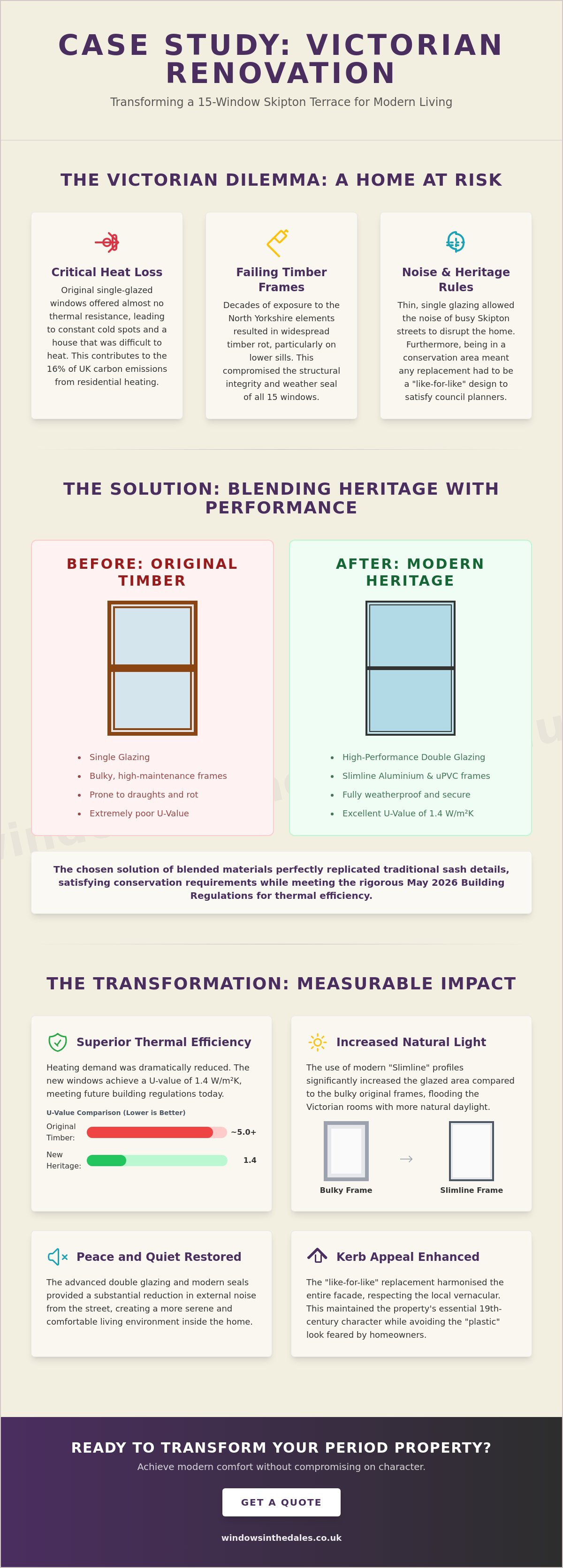
This Case Study: Replacing 15 Windows in a Skipton Victorian Terrace centres on a traditional Yorkshire stone property that had reached a critical turning point. The homeowners faced a dilemma common across the Dales: their beautiful period home was becoming increasingly difficult to heat and maintain. With 15 separate openings to consider, the project was more than a simple cosmetic refresh; it was a total thermal envelope upgrade. The existing windows were failing, leading to significant heat loss and allowing the noise of busy Skipton streets to penetrate the living spaces. Residential heating accounts for approximately 16% of the UK's total carbon footprint, and much of that waste occurs through the single glazing found in homes like this one.
The primary goal was to achieve modern levels of comfort without stripping away the building's soul. Many homeowners fear that upgrading will lead to a "plastic" appearance that devalues their investment. We define a "Heritage Replacement" as a solution that avoids the bulky, flat profiles of standard uPVC windows. Choosing the wrong materials is a costly mistake that can ruin the kerb appeal of a Victorian street. Instead, we focused on finding a specification that mirrored the original timber while meeting the rigorous demands of 2026 energy standards.
Identifying the Architectural Significance
Victorian terraces in Skipton are defined by their rugged stone mullions and precise window proportions. During our initial assessment, we carefully measured the original sash window dimensions to ensure any new units would sit perfectly within the masonry. Replacing 15 units allowed us to harmonise the entire facade, creating a consistent "Yorkshire" aesthetic that respects the local vernacular. By maintaining slim sightlines, we ensured that natural light could still flood the high-ceilinged rooms, an essential feature of 19th-century design that modern homeowners still prize today.
Common Issues with Original Victorian Windows
The original timber frames had suffered decades of exposure to the harsh North Yorkshire elements. Timber rot was evident amongst the lower sills and sashes, where moisture had trapped itself against the stone. This deterioration led to "cold spots," where internal temperatures would plummet during winter nights. Single glazing offers almost no resistance to thermal transfer, making it impossible for the property to meet the current maximum U-value of 1.4 W/m²K required by Building Regulations. A true heritage look in 2026 is defined by the seamless integration of traditional proportions and deep bottom rails with modern glazing technology that achieves a 1.4 W/m²K U-value without sacrificing the property's historic silhouette.
Navigating Planning and Conservation in the Yorkshire Dales
Skipton's historic charm is protected by various conservation areas, making any large-scale renovation a matter of public record. When we began this Case Study: Replacing 15 Windows in a Skipton Victorian Terrace, the first priority was ensuring the proposed designs met Craven District Council's strict criteria. For properties in these zones, the "like-for-like" appearance is the gold standard. This means the new units must replicate the proportions, opening mechanisms, and even the "putty line" aesthetics of the original timber. Our team manages the entire process, providing the detailed technical drawings and planning liaison required to secure approval.
Using "Steel-look" and "Slimline" profiles has become a game-changer for modern heritage projects. These frames offer the strength of modern materials with the delicate sightlines of traditional metal or timber windows. By choosing these high-performance options, homeowners can enjoy contemporary security and durability without disrupting the visual rhythm of a Yorkshire stone terrace.
Is Your Skipton Property in a Conservation Area?
It's vital to check your property's status before committing to a 15-window project. Many streets in Skipton fall under Article 4 directions, which remove certain permitted development rights. This is particularly true for street-facing elevations where the council aims to preserve the uniform character of the terrace. Working with a local specialist ensures you don't fall victim to "costly mistakes" regarding planning enforcement. We understand the local nuances and can advise whether a full planning application or a simpler "certificate of lawfulness" is the right path for your home.
Balancing Aesthetics with 2026 Building Regulations
Modern comfort requires meeting the latest Building Regulations on thermal performance. As of 2026, replacement windows must achieve a maximum U-value of 1.4 W/m²K to satisfy Part L requirements. This can be challenging when you're trying to maintain a heritage silhouette. We solve this by using advanced glazing technology and discreet ventilation solutions. Trickle vents are often a legal requirement for background ventilation, but we ensure they are integrated into the frame so they don't spoil the historic look. View our Heritage Windows range to see how we blend these technical necessities with beautiful design.
If you're unsure about the regulations affecting your property, request a free consultation with our Skipton team to discuss your options.
The Solution: Selecting the Perfect Glazing Specification
For this Case Study: Replacing 15 Windows in a Skipton Victorian Terrace, we avoided a one-size-fits-all approach. We recommended a strategic mix of Heritage Aluminium for the prominent street-facing elevations and high-performance uPVC for the rear of the property. This hybrid solution balanced the homeowner's budget with absolute architectural fidelity. Heritage Aluminium: Achieve the slimmest possible sightlines whilst maintaining structural integrity. These frames allow us to mimic the delicate proportions of original timber sashes far better than standard materials.
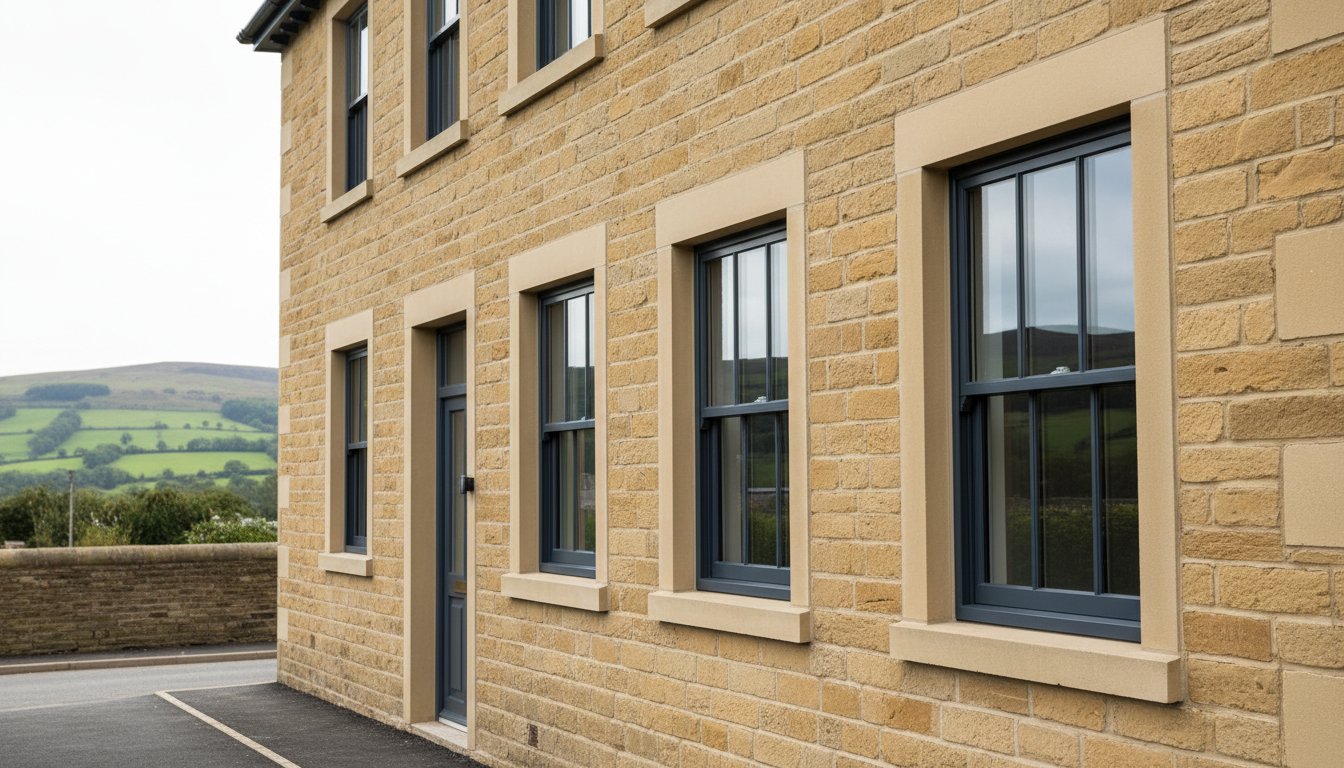
The technical specification focused on maximising natural light. Original Victorian apertures were designed to flood rooms with sunshine, but bulky modern frames can reduce the glass area by up to 12%. By selecting slimline profiles, we preserved the expansive feel of the high-ceilinged rooms. We also prioritised security across all 15 units. Every window meets PAS24 standards, featuring multi-point locking systems that provide modern protection without compromising the heritage aesthetic. Our colour choice was equally deliberate. We moved away from stark whites, opting instead for Agate Grey and Heritage White to complement the warm, earthy tones of the local Yorkshire stone.
Aluminium vs. uPVC for Period Properties
When comparing materials for a Victorian terrace, frame thickness is often the deciding factor. Aluminium offers a "steel-look" finish with much narrower sightlines than traditional uPVC. This is particularly effective for larger openings where you want to minimise the visible frame. Powder-coated aluminium is also incredibly durable in the Yorkshire climate. It resists the damp, windy conditions of the Dales and won't warp or fade over its 40-year lifespan. Explore our uPVC options to see how modern woodgrain foils can provide a cost-effective alternative for less visible elevations.
Heritage Detail: Sash Horns and Deep Bottom Rails
Authenticity lives in the details that many installers overlook. We insisted on run-through sash horns and deep bottom rails to replicate the weight and balance of the property's original 19th-century windows. We also utilised mechanical joints rather than standard mitred welds. Mechanical joints create a 90-degree butt joint that looks like handcrafted joinery, whereas diagonal welds are a tell-tale sign of a modern "plastic" window. Selecting a stark, brilliant white frame is the most common mistake in Skipton renovations, as it creates a jarring contrast against the weathered character of local Yorkshire stone.
The Installation: Managing a 15-Window Project in Skipton
Replacing 15 windows in a single property is a major logistical challenge, particularly whilst the family remains in residence. In this Case Study: Replacing 15 Windows in a Skipton Victorian Terrace, our FENSA-registered team demonstrated how a structured approach prevents chaos. FENSA certification isn't just a badge; it's your guarantee that the work complies with the 1.4 W/m²K thermal requirements we detailed in the planning phase. Our installers are seasoned experts who understand that your home is a living space, not just a building site.
We follow a methodical step-by-step process for every unit. It begins with comprehensive site protection, using heavy-duty dust sheets and floor coverings to safeguard your interiors. Once the area is secure, we carefully extract the failing timber frames, ensuring no damage occurs to the surrounding Yorkshire stone. After the new heritage frames are mechanically fixed and insulated, we apply a professional mastic seal. This final seal is critical for preventing draughts and water ingress during the heavy rain common in the Dales.
Minimising Disruption in a Terrace Environment
Skipton's residential streets often feature narrow lanes and shared back alleys that make vehicle access difficult. We coordinated our deliveries to ensure minimal impact on neighbours and local traffic. To keep the home habitable, we employed a strict room-by-room strategy. This approach ensures that only one part of the house is exposed to the elements at any time, maintaining internal temperatures and containing dust. Leaving a site unprotected is one of the costly mistakes that inexperienced installers often make. Our team's commitment to cleanliness is absolute. We tidy as we go and perform a final deep clean of the work area before moving to the next room.
Technical Challenges of Stone Wall Fitting
Yorkshire stone terraces present unique fitting hurdles because the walls are incredibly thick and rarely uniform. Achieving a weather-tight seal against uneven Victorian masonry requires a high level of craftsmanship and specialised fixings. We also consider the structural implications of removing 15 large units. Each aperture is assessed for lintel stability before the old frame is removed to ensure the masonry remains supported. Read more Case Studies to discover how we adapt our installation techniques for various heritage properties across the region.
If you're planning a large-scale renovation, contact our professional installation team to discuss a tailored project plan for your home.
The Result: Thermal Performance and Aesthetic Transformation
The final reveal of this Case Study: Replacing 15 Windows in a Skipton Victorian Terrace demonstrates that you don't have to choose between architectural history and high performance. The Agate Grey and Heritage White frames we selected now sit proudly against the weathered Yorkshire stone, restoring the building's original dignity. This isn't just a cosmetic change; it's a total restoration of the terrace's kerb appeal. By replacing all 15 units simultaneously, we've created a unified facade that stands out as a benchmark for sensitive renovation in the Dales.
The thermal data confirms a dramatic shift in the home's efficiency. We've moved the property from failing single glazing to a consistent 1.4 W/m²K U-value, meeting the strict May 2026 Part L Building Regulations. With residential heating accounting for 16% of the UK's total carbon footprint, this upgrade significantly slashes the home's environmental impact and annual energy demand. Beyond the numbers, the acoustic benefits have been transformative. High-performance glazing acts as a powerful barrier, silencing the street noise of a busy Skipton thoroughfare and turning the living spaces into a quiet sanctuary. Every unit is backed by our comprehensive guarantee, providing the long-term peace of mind that only comes from professional, FENSA-registered craftsmanship.
Homeowner Feedback and Lifestyle Impact
The homeowners reported an immediate change in how they use their living spaces. "The house feels like a home for the first time in years," they noted. "It's warmer, quieter, and the slimline frames have made the rooms feel much larger by letting in more light." This maximise-light approach is essential for deep Victorian floor plans where natural sunshine is often limited. Beyond daily comfort, this investment adds significant value to the Skipton property. High-quality heritage glazing is a major selling point in North Yorkshire, ensuring the home remains desirable and thermally compliant for future generations.
Avoiding the 7 Costly Mistakes
This project successfully avoided the "7 costly mistakes" that often plague large-scale window replacements. The most frequent error is choosing the cheapest quote, which almost always results in bulky, ill-fitting frames that leak heat and ruin a building's character. We prioritised technical specification and architectural fidelity over initial cost, ensuring the result is durable and practical. By avoiding mitred welds and stark white plastics, we've protected the homeowner's investment from the common pitfalls of "modernisation." Request a Quote for your project to see how our team can bring this same level of expertise to your home renovation.
Transform Your Period Property with Expert Heritage Glazing
Upgrading a large Victorian home requires a delicate balance of technical precision and architectural respect. This Case Study: Replacing 15 Windows in a Skipton Victorian Terrace demonstrates how modern 1.4 W/m²K thermal efficiency can coexist with traditional Yorkshire stone aesthetics. By navigating the specific planning nuances of the Craven District Council and selecting slimline profiles, we've successfully future-proofed this heritage property against rising energy costs and North Yorkshire winters.
Choosing a FENSA Registered Installer ensures your project meets all legal standards while protecting your home's long-term value. Since 2021, we have acted as specialists in Yorkshire conservation areas, helping homeowners avoid the costly mistakes of poor material choice or improper installation. We pride ourselves on being a trusted local partner, proudly serving Skipton and the Dales with craftsmanship that lasts for decades. Your home deserves glazing that honours its history whilst providing the comfort of a 2026 build.
Ready to start your own transformation? Request a Free Quote for your Heritage Project today and discover how we can maximise light and warmth in your period home. We look forward to helping you protect your Yorkshire investment.
Frequently Asked Questions
Do I need planning permission to replace windows in a Skipton Victorian terrace?
You generally don't need planning permission if you're replacing windows "like-for-like" in terms of appearance and material. However, if your property falls under an Article 4 directive within a Skipton conservation area, Craven District Council requires a full application. We always recommend checking with a local conservation officer before starting a large-scale project to ensure your new frames respect the street's historic character.
How long does it take to install 15 windows in a residential property?
A typical installation for 15 units takes between 3 and 5 working days to complete. This timeframe allows our team to manage the room-by-room approach mentioned in our Case Study: Replacing 15 Windows in a Skipton Victorian Terrace. We work at a deliberate pace to ensure every unit is perfectly sealed against thick Yorkshire stone walls, prioritising a weather-tight finish over a rushed delivery.
Can modern uPVC windows really look like traditional timber sashes?
Yes, high-quality uPVC windows now feature mechanical 90-degree joints that replicate handcrafted joinery perfectly. Unlike standard diagonal welds, these heritage details avoid the "plastic" look that homeowners often fear. When combined with run-through sash horns and deep bottom rails, these modern units are virtually indistinguishable from original 19th-century timber frames once installed in a stone aperture.
What are the best window colours for a Yorkshire stone house?
Agate Grey and Heritage White are the most effective choices for complementing the earthy tones of local stone. Brilliant white is often too stark and creates a jarring contrast that devalues a period property's appearance. Selecting a softer palette like Cream or Sage Green ensures your new glazing blends seamlessly with the weathered masonry common across the Dales and Skipton's historic terraces.
Will replacing my windows significantly reduce my heating bills in 2026?
Replacing single glazing with units that meet the 1.4 W/m²K U-value standard can reduce heat loss by up to 31%. Since residential heating accounts for 16% of the UK's total carbon footprint, this upgrade is a vital step toward lower energy demand. By May 2026, these thermal standards will be the benchmark for all UK renovations, helping you maintain a warm home during harsh North Yorkshire winters.
Is aluminium or uPVC better for a period home in the Dales?
Aluminium is ideal for achieving the ultra-slim sightlines of traditional steel-look windows, whereas uPVC offers a cost-effective way to replicate timber. Both materials provide excellent durability against the damp Yorkshire climate. Your choice should depend on the specific architectural style of your terrace and your budget. Both options meet PAS24 security standards and current Building Regulations for thermal performance.
What happens if my property is in a conservation area?
Properties in conservation areas face stricter rules regarding changes to street-facing elevations. You must ensure the new frames match the original proportions and opening mechanisms to satisfy local planning officers. As shown in our Case Study: Replacing 15 Windows in a Skipton Victorian Terrace, using a specialist who understands Craven District Council requirements prevents the costly mistake of enforcement action later.
How do you ensure the installation doesn't damage my Victorian stone mullions?
Our installers use a precise extraction method that avoids putting unnecessary pressure on the surrounding masonry. We conduct a structural assessment of every stone mullion and lintel before removing the old frames. This careful approach protects the integrity of your 19th-century stonework. Once the new frames are fixed, we apply a professional mastic seal to ensure the joint remains weather-proof and secure.