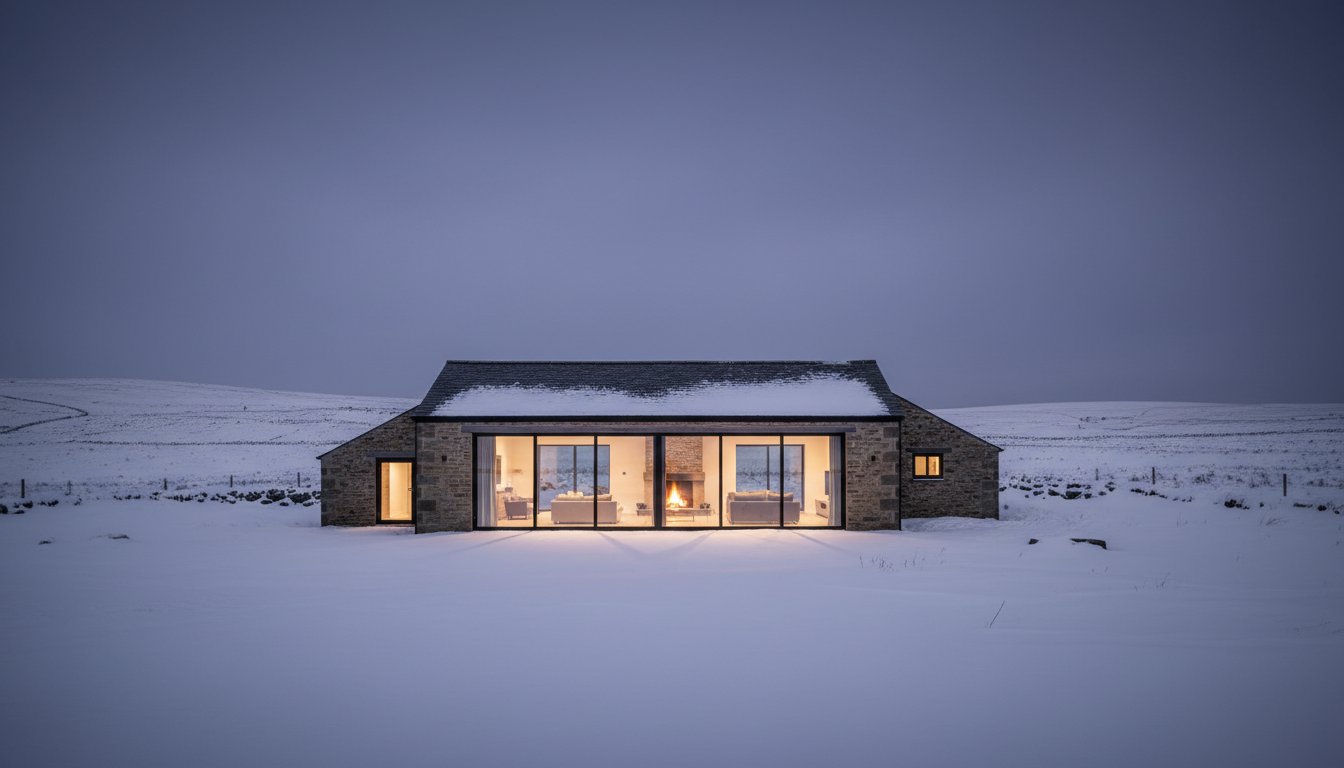
Last January, a homeowner in Swaledale watched their curtains flutter whilst the windows were shut tight, a common frustration for those living on the elevated edges of the moors. You likely know the feeling of a biting wind cutting straight through your heritage frames, leaving you with soaring energy bills and a persistent chill. Achieving true Thermal Efficiency in High-Altitude Homes: Tackling the North Yorkshire Winter requires more than just standard double glazing. It demands a strategy built for architectural resilience against extreme exposure.
You can have a warm, draught-free home this mid-winter without compromising the traditional aesthetic of your cottage. This article explains how to protect your property using advanced architectural glazing and the latest thermal science. We'll explore how modern aluminium windows and heritage-sensitive designs can lower your costs and improve property value. You will learn about the fabric first approach and how to future-proof your home against the 2027 building standards whilst maintaining those stunning, uninterrupted views of the Yorkshire landscape.
Key Takeaways
- Learn how altitude and wind-chill at 300m+ significantly increase heat leaching and how to counteract these forces with advanced glazing.
- Discover why a U-value of 1.2 W/m²K is the critical benchmark for Thermal Efficiency in High-Altitude Homes: Tackling the North Yorkshire Winter.
- Explore how to balance heritage aesthetics with modern resilience using steel-look doors and slimline aluminium windows for traditional barn conversions.
- Evaluate the performance of different door configurations to determine whether sliding or bifold designs offer better protection in high-wind zones.
- Understand the importance of local installation techniques that account for unique Dales masonry to prevent draughts and energy loss.
The High-Altitude Challenge: Why North Yorkshire Winters are Different
Living at 300 metres above sea level in the Yorkshire Dales isn't just about the panoramic views. It's about enduring "High-Altitude Thermal Exposure." This term describes the aggressive combination of low ambient temperatures and relentless wind speeds that characterise our upland regions. Most standard UK building regulations are designed for the average suburban home, not a ridge-line property in the North York Moors. Thermal Efficiency in High-Altitude Homes: Tackling the North Yorkshire Winter requires a deeper understanding of how local geography dictates domestic comfort. When the temperature drops, the exposure of your home's "envelope" becomes the deciding factor in your energy bills.
The Science of Wind-Chill and Glazing
Air acts as a natural insulator. On a calm day, a thin "boundary layer" of still air clings to the outside of your glass, providing a subtle layer of extra protection. In a January gale over the Dales, this layer is instantly stripped away. This process significantly lowers the effective R-value of your window assembly, making the glass feel ice-cold to the touch. High winds also create a dangerous pressure differential. The wind pushes hard against the windward side of your house whilst creating a vacuum on the leeward side. This literally sucks the warm air out of your living room through any microscopic gaps in traditional window seals. Standard double glazing often lacks the structural integrity to remain airtight under such extreme atmospheric pressure.
Regional Hotspots: From Skipton to the North York Moors
Altitude and exposure vary wildly across our region. A property in the centre of Skipton might enjoy a relatively sheltered microclimate, whereas a home on the outskirts of Richmond or Harrogate could be fully exposed to the elements. These exposed ridge-lines experience what locals call "horizontal weather," where driving rain is pushed with enough force to penetrate standard seals that weren't designed for such velocity. Local stone architecture also complicates the issue. Thick gritstone or limestone walls are beautiful, but they can act as thermal bridges, drawing heat away from the interior of the home.
Replacing old, failing units with high-performance aluminium windows or uPVC windows is often the only way to break this cycle of heat loss. Thermal Efficiency in High-Altitude Homes: Tackling the North Yorkshire Winter is about building a barrier that respects the local stone whilst outperforming the local weather. We've seen many homeowners struggle with "off-the-shelf" solutions that simply don't account for the unique wind-loads found in our corner of the country. Investing in architectural-grade glazing ensures your home remains a sanctuary, regardless of what the Moors throw at it.
The Physics of Performance: U-Values, G-Values, and Thermal Breaks
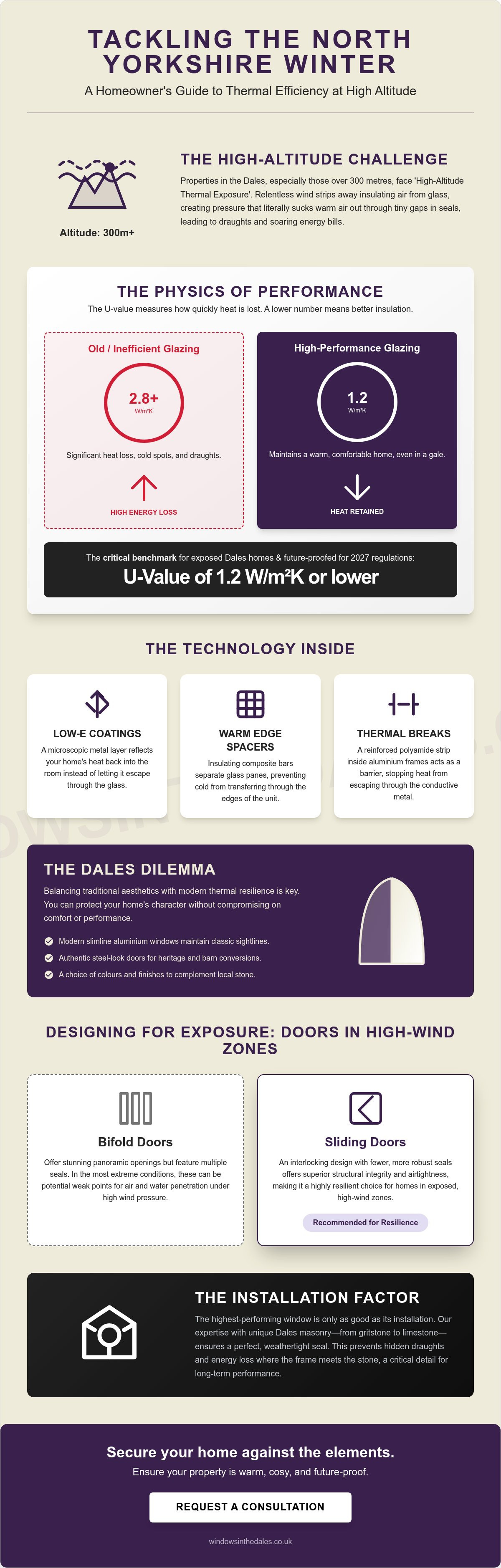
Understanding the metrics of heat retention is vital for anyone living above the 200m contour line. The most critical figure is the U-value, which measures the rate of heat transfer through a window. Whilst the 2027 UK building regulations will mandate a U-value of 1.2 W/m²K for new builds, this is already the essential benchmark for achieving true Thermal Efficiency in High-Altitude Homes: Tackling the North Yorkshire Winter. A lower U-value means better insulation, keeping your expensive heating inside where it belongs. It's the difference between a room that feels draughty and one that remains cosy in a gale.
Then there's the G-value, or solar gain. This measures how much heat from the sun passes through the glass. For a south-facing extension overlooking Wensleydale, a higher G-value can provide "free" heating during the crisp, sunny days of February. However, this must be balanced with high-performance coatings to ensure you don't lose that heat as soon as the sun sets behind the hills. Balancing these two values is where architectural science meets local living requirements.
Understanding Advanced Glazing Specifications
Modern glazing units use Low-E (low-emissivity) coatings, which are microscopic metal layers that reflect heat back into your lounge. To eliminate the "cold perimeter" often seen on older units, we use warm edge spacer bars made from insulating materials rather than traditional aluminium. This prevents condensation from forming amongst the seals. Gas-filling is another essential factor. Argon is the high-performance standard, but Krypton offers even higher thermal resistance for the narrow cavities required in some aluminium windows. Whilst triple glazing offers the ultimate barrier, high-performance double glazing is often the more balanced choice for the North Yorks climate if the frame technology is sufficiently advanced.
The Myth of "Cold Aluminium"
Many homeowners fear that metal frames will feel ice-cold to the touch. This is a misconception rooted in the outdated designs of the 1970s. Modern frames use polyamide thermal breaks to create a complete barrier between the external and internal profiles. A thermal break is a non-conductive material placed between metal window parts to stop heat flow. This ensures the internal frame stays at room temperature, even during a Swaledale blizzard. Aluminium provides superior thermal stability compared to uPVC, as it doesn't expand or contract as much during extreme temperature fluctuations. This stability is crucial for maintaining airtight seals on exposed ridge-lines.
Investing in these technical specifications protects your home's fabric and your long-term comfort. If you're ready to see how these physics apply to your property, you can request a bespoke technical assessment for your project. Thermal Efficiency in High-Altitude Homes: Tackling the North Yorkshire Winter is an investment in both science and style that pays dividends in every winter bill.
Heritage Aesthetics vs. Thermal Resilience: The Dales Dilemma
The Dales Dilemma is a genuine concern for residents from Reeth to Malham. Many homeowners believe that achieving Thermal Efficiency in High-Altitude Homes: Tackling the North Yorkshire Winter requires sacrificing the soul of their property to clunky, thick-set frames. This is a false choice. Modern architectural glazing allows you to maintain the delicate sightlines of traditional timber or steel whilst significantly improving your home's thermal envelope. You don't have to settle for "plastic" aesthetics to stay warm in a Swaledale blizzard. Slimline aluminium profiles provide the structural strength to support large glass spans without the bulk of traditional materials.
Integrating 21st-century technology into a period property is a delicate balancing act. Local planning officers often demand strict adherence to heritage styles, especially in conservation areas where the character of the village is protected. However, the UK Building Regulations set high bars for thermal performance that original single-glazed units cannot meet. By choosing modern materials, you bridge this gap. You gain a home that meets rigorous energy standards without losing its 19th-century charm. It's about protecting the heritage of the building whilst ensuring it remains a viable, comfortable residence for the future.
Heritage Doors: The Modern Solution for Period Homes
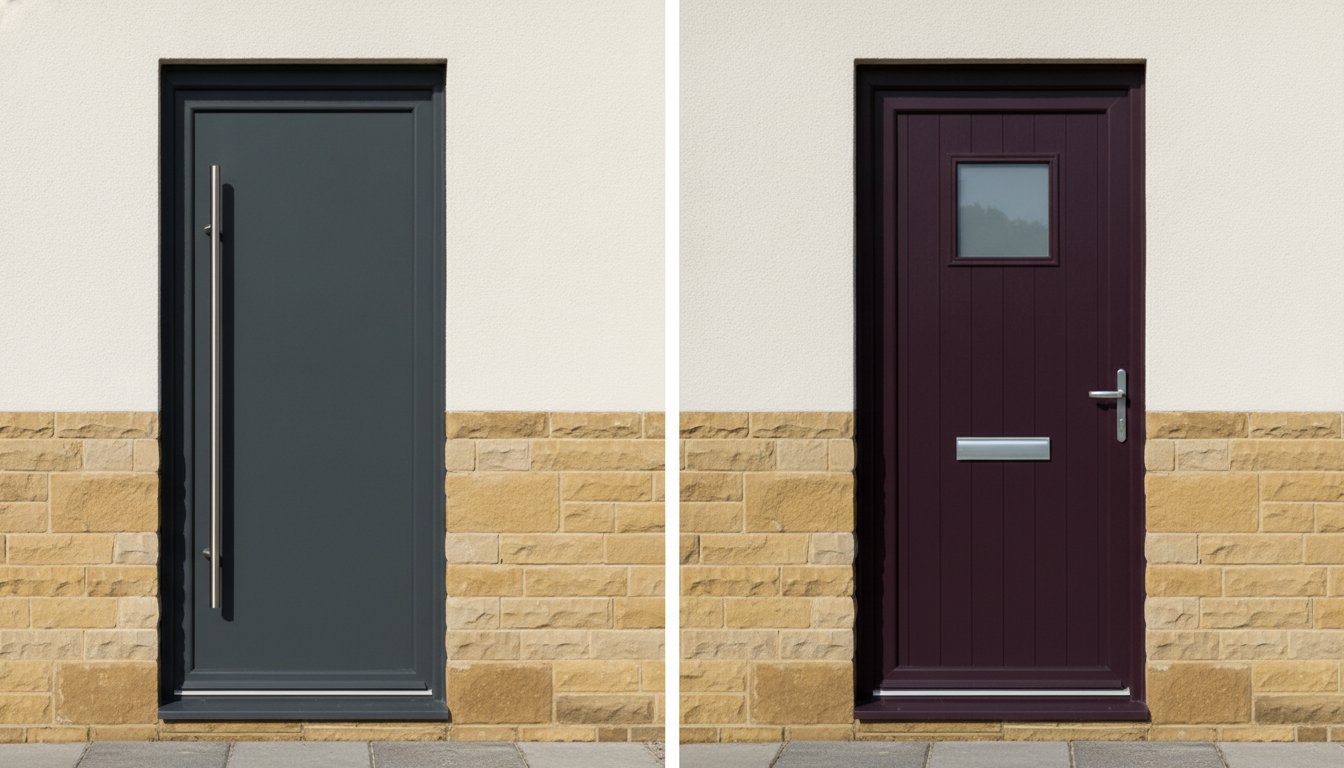
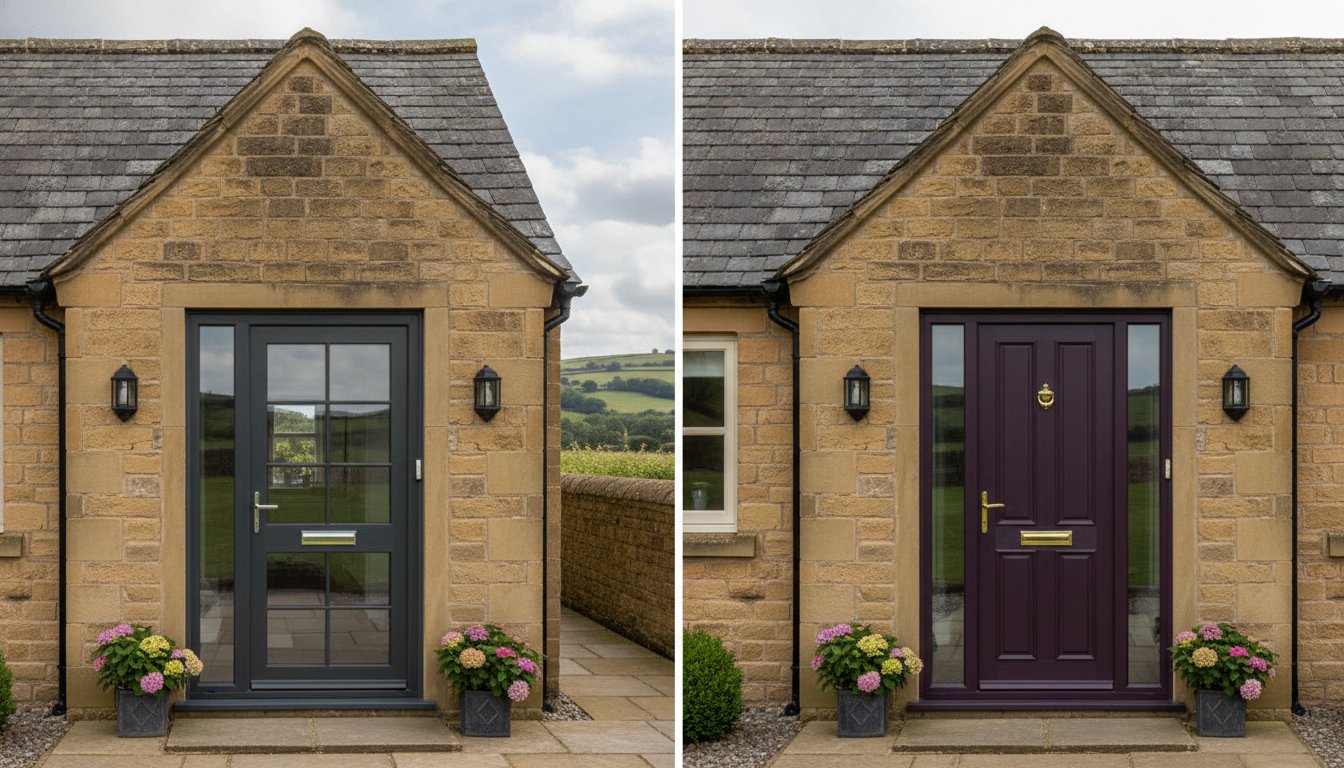
Our Heritage Doors are designed specifically to replicate the iconic industrial look of the 19th century using 2026 thermal technology. These units provide the authentic "Crittall-style" aesthetic but eliminate the thermal bridging issues associated with original steel. In a recent Dales cottage transformation, we replaced failing timber doors with slimline heritage glazing. The result was a draught-free interior that felt significantly warmer whilst actually enhancing the property's traditional character. This approach allows for maximum natural light and superior insulation without the "clunky" look of standard replacements.
Colour and Texture in the Yorkshire Landscape
Visual harmony is essential when upgrading a property in the North Yorkshire landscape. Frame colours like Anthracite Grey or Agate Grey are favourite choices amongst local residents because they complement the natural, weathered hues of Yorkshire Gritstone. Beyond aesthetics, the technical finish of the frame matters. High-quality powder coating protects your frames from the abrasive salt-air and moorland grit found on higher ground. This ensures your investment retains its "kerb appeal" and structural integrity for decades. Whether you're in Harrogate or a remote farmhouse, the right colour choice turns a functional thermal upgrade into a sophisticated design statement.
Designing for Exposure: Configurations for High-Wind Zones
The configuration of your glazing is just as critical as the glass itself when building for the uplands. In high-altitude zones, the "opening style" of a window dictates how well it stands up to the pressure of a North Yorkshire winter. Casement windows that open outwards are often preferred because the wind actually pushes the sash tighter against the frame seals, enhancing the airtight barrier. To ensure this seal remains unbroken during a storm, we utilise multi-point locking systems as standard. These systems secure the window at multiple intervals along the frame, preventing the bowing or whistling often heard in older, single-point latch windows.
Bifolds and Sliders in Rural Locations
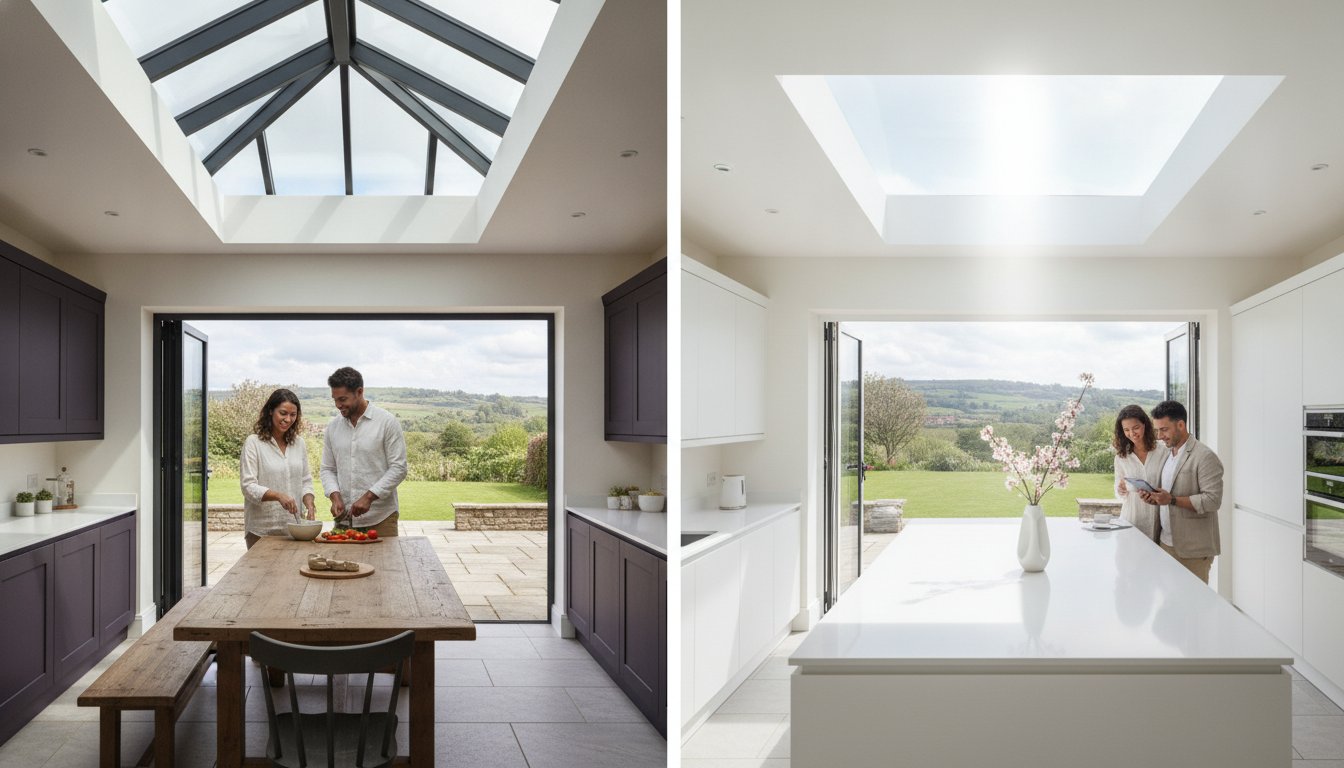
For large apertures, the choice between Aluminium Sliding Doors and bifolds is often decided by the level of exposure. In a true Yorkshire gale, sliding doors frequently offer superior wind resistance. This is because they have fewer vertical seals and a simpler mechanical structure than bifolding systems. When reviewing weather-rating benchmarks, homeowners should look specifically for high "Pascal" ratings for wind-load and water tightness. Whilst many desire a "flush floor" look, we often advise a weathered threshold for ridge-line homes. This small step provides a physical upstand that prevents driving rain from being forced under the door by high-velocity winds.
The Role of Roof Lanterns in Thermal Management
Darker Dales kitchens often benefit from the addition of Roof Lanterns, which serve as a strategic tool for thermal management. These structures allow for significant solar gain, using natural sunlight to help heat high-ceilinged extensions during the colder months. To maintain Thermal Efficiency in High-Altitude Homes: Tackling the North Yorkshire Winter, these lanterns must feature high-performance thermal breaks and argon-filled units. We also recommend self-cleaning glass for rural properties. It uses UV rays to break down organic dirt and rainwater to wash it away, which is essential for hard-to-reach glazing on exposed moorland sites.
Choosing the right configuration ensures your home stays bright and warm without the risk of seal failure. If you're planning a renovation in an exposed location, you can consult our local experts for a tailored configuration plan. Effective Thermal Efficiency in High-Altitude Homes: Tackling the North Yorkshire Winter is achieved when architectural design meets the reality of our local weather.
The Installation Factor: Why "How" Matters as Much as "What"
The final pillar of Thermal Efficiency in High-Altitude Homes: Tackling the North Yorkshire Winter isn't found in a laboratory, but on the end of a spirit level. You can purchase the most advanced triple-glazed unit on the market, but if the installation is flawed, the thermal performance will be non-existent. Poor fitting leads to cold bridging and air leakage, which effectively bypasses the high-tech coatings you've paid for. National chains often rely on a "one size fits all" approach that ignores the complexities of traditional Yorkshire construction. In contrast, the "Yorkshire Standard" of installation respects the unique challenges of local masonry and the extreme weather patterns of the Dales.
Identifying a quality architectural glazing specialist is your best defence against the "Solar Cowboy" problem. These are low-cost installers who promise high performance but cut corners on structural fixings and weather-sealing. A seasoned specialist understands that a ridge-line property in the North York Moors requires a different level of structural integrity than a sheltered suburban house. They prioritise longevity and consumer education over high-pressure sales tactics, ensuring your investment is protected for the long term.
Airtightness and Structural Integrity
Achieving a weather-tight bond between modern aluminium and centuries-old stone requires specialist materials. We utilise expanding foams and high-performance tapes specifically designed for moorland exposure. These materials remain flexible, allowing the frame to move slightly without breaking the seal during high winds. In the Yorkshire Dales, a window is only as efficient as the seal between the frame and the stone reveal. Without this attention to detail, driving rain and biting winds will eventually find a path into your home, leading to damp and heat loss. Our case studies demonstrate how this precision prevents the whistling and rattling common in poorly fitted units.
Investing for the Future of Your Home
Upgrading your glazing is a long-term investment that significantly reduces the carbon footprint of rural North Yorkshire homes. High-performance aluminium windows and uPVC windows directly impact your Energy Performance Certificate (EPC) rating. A better rating is a powerful asset for property resale value in competitive markets like Harrogate and York. Beyond the financial ROI, the primary benefit is the transformation of your living space into a warm, light-filled sanctuary that remains comfortable regardless of the altitude.
If you're ready to protect your property against the elements, you can request a bespoke quote for your Yorkshire home upgrade. Our team understands the specific requirements of our region and is committed to delivering the highest standard of craftsmanship. Achieving Thermal Efficiency in High-Altitude Homes: Tackling the North Yorkshire Winter is a commitment to quality that pays dividends every time the temperature drops.
Securing Your Sanctuary Against the Swaledale Gale
Mastering Thermal Efficiency in High-Altitude Homes: Tackling the North Yorkshire Winter is a sophisticated blend of advanced glazing physics and local craftsmanship. You now understand how a 1.2 W/m²K U-value and polyamide thermal breaks transform a cold, draughty lounge into a year-round haven. Protecting your property doesn't mean losing its character. Heritage-certified aluminium profiles replicate 19th-century charm whilst providing 21st-century resilience against the horizontal rain and moorland winds that define our region.
Your home deserves a specialist who understands the specific pressure differentials and masonry of the Dales. We combine expert local knowledge with premium architectural glazing to ensure every seal is weather-tight and structurally sound. Every project we undertake is a commitment to quality and regional pride. Don't let another winter leach heat and value from your investment. Transform your home with a bespoke architectural glazing quote from Windows in the Dales. It's time to enjoy those stunning Yorkshire views from the warmth and comfort of a truly efficient sanctuary.
Frequently Asked Questions
Is triple glazing necessary for homes in the Yorkshire Dales?
Triple glazing is highly effective for the most exposed ridge-line properties, but it isn't always a strict necessity. High-performance double glazing with argon-filled units and Low-E coatings often provides sufficient Thermal Efficiency in High-Altitude Homes: Tackling the North Yorkshire Winter. The decision depends on your specific altitude and wind exposure. We recommend assessing the structural weight capacity of your existing masonry before choosing triple-glazed units for older Dales cottages.
Will aluminium windows make my traditional stone cottage look too modern?
Modern aluminium windows are designed with slimline profiles that specifically replicate the delicate sightlines of traditional timber and steel. Choosing a heritage-style frame ensures your cottage retains its historic character whilst benefiting from 21st-century thermal breaks. Frames finished in Agate Grey or Anthracite Grey complement Yorkshire Gritstone perfectly. This allows you to enhance your home's performance without the clunky appearance often associated with standard replacements.
How much can I actually save on my heating bills by upgrading to high-performance glazing?
Upgrading from single glazing to A-rated double glazing can save you approximately £195 per year on energy bills. These savings are often higher in high-altitude areas where heating systems work harder to combat the persistent wind-chill. Beyond the annual saving, high-performance glazing increases your property's value and EPC rating. It represents a long-term investment in the fabric of your home that pays dividends through reduced energy consumption and improved internal comfort.
What is the best type of door for a very windy, high-altitude location?
Aluminium sliding doors are generally the superior choice for high-wind, high-altitude locations. They feature fewer vertical seals than bifolding systems, which reduces the potential for air infiltration during a gale. The sliding mechanism also remains more stable under extreme atmospheric pressure. For maximum protection, ensure your door includes a weathered threshold to prevent driving rain from being forced underneath the frame during a storm.
Do heritage-style aluminium windows meet conservation area requirements in North Yorkshire?
Heritage-style aluminium windows are frequently accepted in conservation areas because they replicate the slim profiles of original steel glazing. Approval is never automatic and depends on the specific guidelines of your local authority. We always advise consulting with the North Yorkshire Council conservation officer before starting work. Many homeowners find that our heritage range provides the perfect compromise between strict aesthetic requirements and modern energy standards.
How do I stop condensation from forming on my windows during a cold Yorkshire winter?
Preventing condensation requires a combination of warm edge spacer bars and improved internal ventilation. Warm edge spacers eliminate the cold perimeter around the glass, which is where moisture typically forms during a cold winter. You should also ensure your home meets the updated Part F building regulations regarding airflow. This fabric-first approach keeps the internal glass temperature higher and prevents the damp issues common in older, poorly insulated properties.
What U-value should I look for when buying new windows for an exposed property?
You should look for a U-value of 1.2 W/m²K or lower to ensure adequate Thermal Efficiency in High-Altitude Homes: Tackling the North Yorkshire Winter. This figure represents the current benchmark for high-performance comfort and aligns with the upcoming 2027 building standards. In exposed locations, every decimal point matters. A lower U-value indicates better thermal resistance, which is essential for keeping your home warm when external temperatures drop well below freezing on the moors.
Can I install large glass sliding doors in a high-wind area without them whistling?
You can install large sliding doors in high-wind areas without whistling by insisting on multi-point locking and professional installation. Whistling is usually caused by air escaping through microscopic gaps in the seals under high pressure. Our installation process uses specialist expanding foams and tapes to create an airtight bond with your home's masonry. This ensures the structural integrity of the seal remains intact, even during the most aggressive winter storms.