Choosing the wrong window frame in a conservation area like Grassington or Sedbergh isn't just an aesthetic slip; it's a legal risk that could lead to a costly enforcement notice. Many homeowners assume that replacing a draughty timber unit with a modern alternative is a simple task, yet the reality of Yorkshire Dales National Park Planning: When Do You Need Permission for Windows? is often more nuanced. With the new Local Plan set for adoption in late June 2026 and a fresh Design Guide currently under consultation until 24 May, the rules governing your home’s exterior are shifting toward a more flexible, innovation-led approach.
You likely want to lower those rising energy bills without losing the heritage charm that makes your Dales property so special. It's frustrating to feel stuck between a freezing living room and the fear of a council order to remove your new installation. This guide provides the clarity you need to move forward safely. We'll break down the latest 2026 regulations, explain how slimline aluminium windows can meet strict heritage standards, and provide a clear framework to determine if your project qualifies as permitted development.
Key Takeaways
- Learn why the Yorkshire Dales National Park Authority imposes stricter limits on permitted development than other local councils.
- Identify the specific design changes, such as altering opening styles or adding new windows, that require a formal planning application.
- Discover how modern aluminium windows can replicate traditional heritage aesthetics whilst delivering 21st-century thermal performance.
- Master the legal requirements of Yorkshire Dales National Park Planning: When Do You Need Permission for Windows? by utilising the pre-application advice service.
- Understand the importance of selecting a specialist installer who is experienced with the unique architectural demands of Dales stone construction.
Understanding the Yorkshire Dales Planning Framework for Windows
The Yorkshire Dales National Park Authority (YDNPA) operates as the sole planning body for this protected landscape. Unlike properties in nearby urban centres, homes within the Park boundary face heightened scrutiny to preserve the area's unique architectural soul. 2026 building regulations make window upgrades a priority for Dales homeowners seeking lower energy bills. However, achieving these modern standards requires a careful balance with heritage preservation. Understanding Yorkshire Dales National Park Planning: When Do You Need Permission for Windows? starts with recognising that your property is part of a nationally significant environment. The YDNPA prioritises 'Local Character' above all else. If a proposed change alters the outward appearance of a dwelling, it's often classified as 'development' rather than a simple repair.
What is Permitted Development in the Dales?
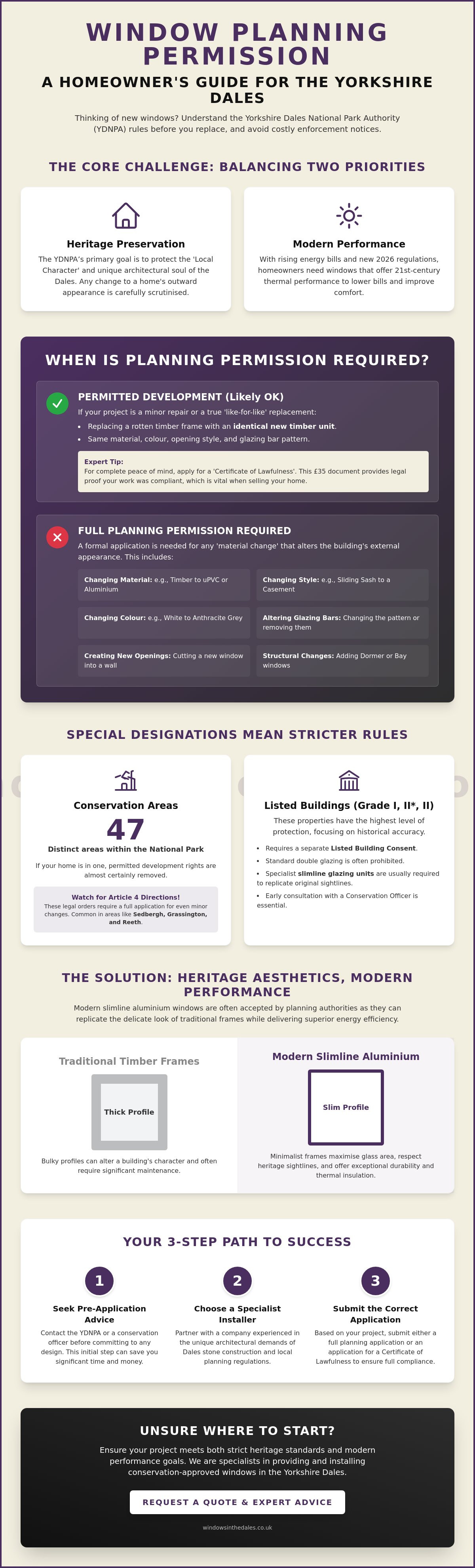
Permitted development rights are significantly more restricted within the Yorkshire Dales National Park. Minor repairs and 'like-for-like' replacements usually don't require a formal application. This means if you're replacing a rotten timber frame with an identical timber unit, you're likely safe. Problems occur when you introduce a 'material change'. Swapping traditional frames for modern uPVC windows or altering the glazing bar pattern can trigger the need for permission. We always advise homeowners to obtain a 'Certificate of Lawfulness' for a fee of £35. This document provides legal proof that your window work was legal, which is vital when you eventually sell your home.
The Impact of Conservation Areas and Article 4 Directions
The Dales contain 47 distinct Conservation Areas. If your home sits within one, your permitted development rights are almost certainly curtailed. In many of these villages, the YDNPA has implemented 'Article 4 Directions'. These legal orders remove the right to make even minor changes without a full planning application. This ensures that the historic fabric of the village remains intact. Common locations where Article 4 is strictly enforced include parts of Sedbergh, Grassington, and Reeth. Before you invest in aluminium windows, check the local maps. Choosing a material that the council eventually forces you to remove is a financial risk no homeowner should take. Accurate guidance on Yorkshire Dales National Park Planning: When Do You Need Permission for Windows? ensures your renovation stays on the right side of the law. Professional consultation protects your investment from future enforcement action.
When Is Planning Permission Mandatory for Your Windows?
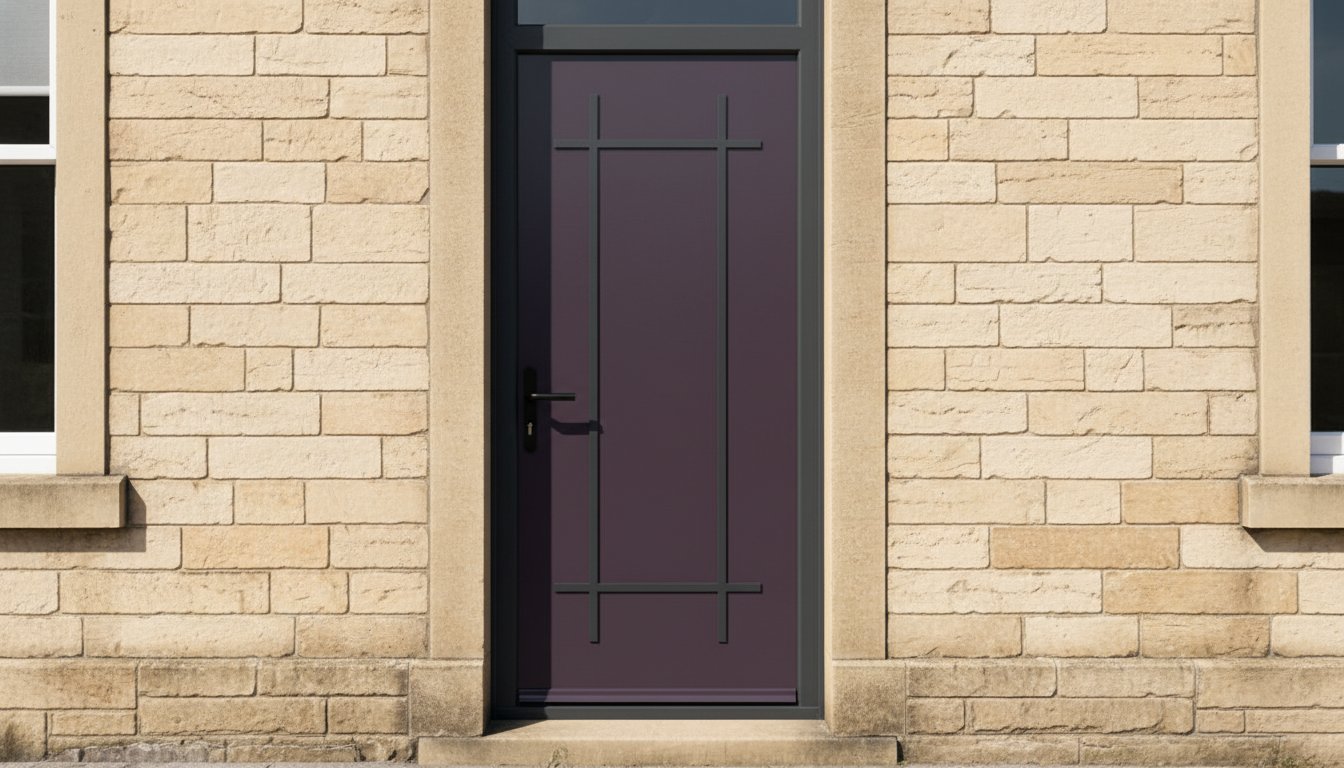
Replacing a window isn't always a simple swap. If you're moving from a traditional sliding sash to a modern top-hung casement, you've altered the building's character. This change triggers the need for a full application. Similarly, cutting a new opening into a stone gable or installing windows in a new extension requires formal approval. For many properties, adhering to Yorkshire Dales conservation area rules is the baseline for any external renovation. The National Park Authority pays close attention to frame thickness and colour. Swapping white timber for anthracite grey aluminium might seem like a minor upgrade, but it's a material change in the eyes of the YDNPA. Determining exactly Yorkshire Dales National Park Planning: When Do You Need Permission for Windows? depends on the degree of visual impact your project creates.
The Listed Building Challenge
Listed Building Consent is a separate legal requirement from standard planning permission. It applies to Grade I, II*, and II structures. The focus here is on historic accuracy. You can't simply install standard double glazing. You'll likely need slimline units that respect the original glazing bars and glass types. We recommend speaking with a conservation officer early in the process. This prevents the heartbreak of a rejected application after you've already commissioned bespoke frames. If you're unsure about your building's status, you can request a quote and advice from a specialist who understands local stone architecture. Accuracy is non-negotiable for protected structures.
Structural Alterations: Dormers and Bay Windows
Dormer windows are almost always a full planning matter. They break the traditional roofline of a Dales cottage and can significantly impact the landscape. The YDNPA Design Guide, currently under consultation until 24 May 2026, emphasises that new additions must respect local context. Bay windows must maintain the vertical emphasis common in regional architecture. Horizontal, wide-pane windows often look out of place against traditional masonry. Ensuring your project aligns with Yorkshire Dales National Park Planning: When Do You Need Permission for Windows? means respecting these architectural proportions. Even adding significant rooflights to a barn conversion can require permission if they dominate the roof slope. A sympathetic dormer installation preserves the cottage aesthetic whilst providing essential natural light.
Materials and Aesthetics: Aluminium vs. Timber in the Dales
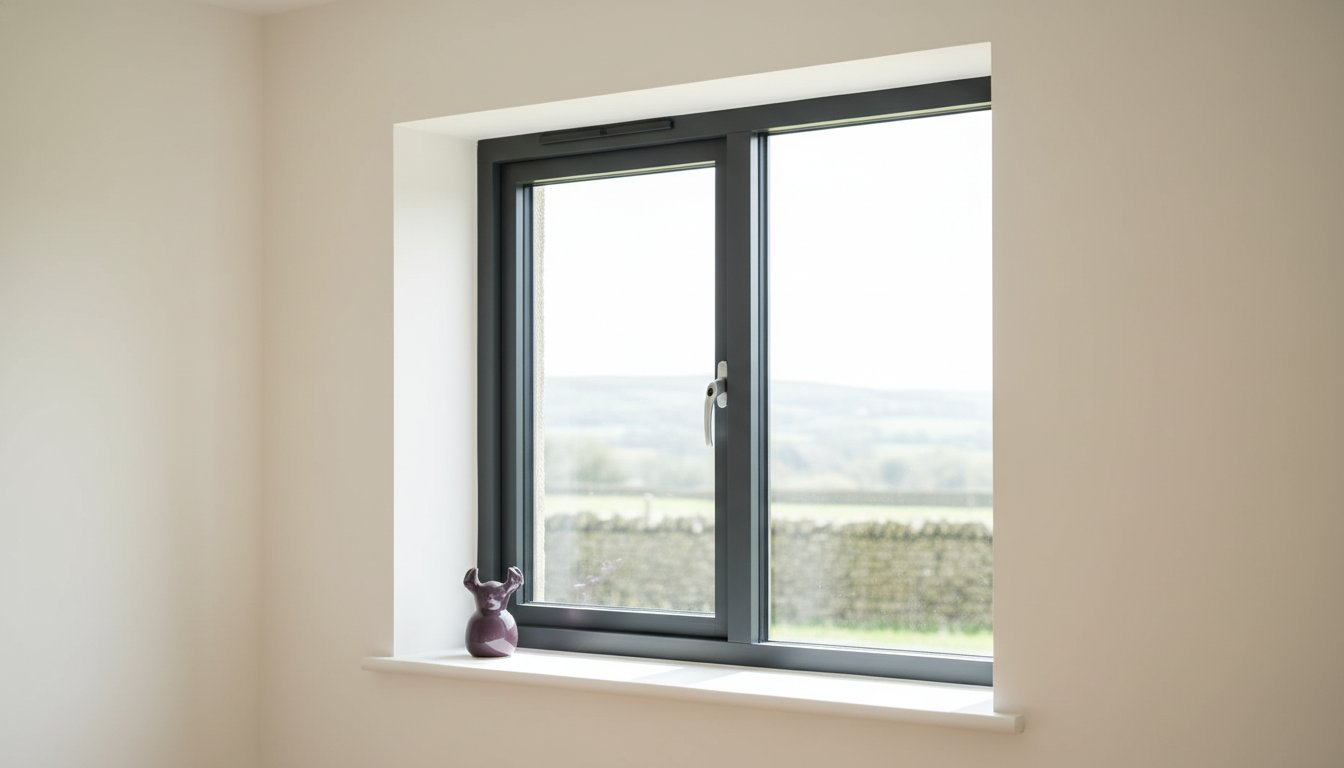
Timber has long been the default choice for traditional Dales cottages and farmhouses. It offers an undeniable authenticity, yet the relentless Pennine weather makes maintenance a punishing, multi-year cycle of sanding and painting. For many homeowners, the shift toward modern materials is a pragmatic response to the harsh local climate. Modern aluminium windows have redefined the market by replicating the industrial 'steel-look' found in many heritage properties and barn conversions. These systems provide the structural integrity required to support expansive glass panes within exceptionally thin frames, ensuring your home remains flooded with natural light whilst standing firm against the elements.
This 'Slimline' profile is often the deciding factor in a successful renovation. When investigating Yorkshire Dales National Park Planning: When Do You Need Permission for Windows?, you'll find that the YDNPA focuses heavily on frame thickness. Bulky, standard uPVC units frequently face rejection because they overwhelm the delicate proportions of a stone masonry opening. Heritage aluminium avoids this pitfall by mimicking the narrow sightlines of original timber or metal windows. Selecting the correct colour palette is equally vital for a sympathetic finish. While white was once the standard, modern Dales-approved shades now include Agate Grey, Heritage Black, and various shades of Cream. These tones are designed to harmonise with the natural limestone and gritstone of the surrounding landscape, moving away from the stark contrast of low-cost alternatives.
Achieving the 'Like-for-Like' Look with Modern Tech
The secret to a smooth planning application process lies in the finer architectural details. Modern heritage aluminium features 'putty-line' chamfers that replicate the distinct angled finish of traditional glazing. Authentic astragal bars, which are applied to the surface of the glass rather than trapped inside the unit, provide the depth and shadow lines that conservation officers look for. This attention to detail ensures that your new installation feels integral to the building's history. It allows you to enjoy the benefits of a modern material whilst satisfying the strict visual requirements of the National Park.
Thermal Performance and Sustainability in 2026
The 2026 updates to Part L of the Building Regulations have introduced more stringent requirements for thermal efficiency. Dales homes are notoriously difficult to keep warm; as a result, high-performance glazing is now a necessity rather than an optional extra. Modern double and triple glazing units achieve U-values that far outperform the original single-paned timber windows they replace. When you prepare your case, highlight how these upgrades support the Park's long-term sustainability objectives. Improved insulation significantly reduces domestic carbon footprints. This creates a powerful argument that modern Yorkshire Dales National Park Planning: When Do You Need Permission for Windows? standards are actually met through the use of high-efficiency, long-lasting materials.
The Application Process: A Step-by-Step Guide for Homeowners
Securing approval in a protected landscape requires a meticulous, documented approach. The Yorkshire Dales National Park Authority (YDNPA) expects homeowners to demonstrate a deep respect for local character. Following a structured path reduces the risk of costly delays or project rejection. To master Yorkshire Dales National Park Planning: When Do You Need Permission for Windows?, you must navigate five critical stages. This journey begins long before your new frames arrive on site.
- Step 1: Pre-application advice. This service identifies potential hurdles before you commit to a full application. The YDNPA offers a permitted development check for £35; it provides the legal certainty every homeowner needs. For more complex conversions, written advice is available for £300.
- Step 2: Commissioning elevations. Accurate 'Existing and Proposed' drawings are mandatory. These architectural plans show the exact scale, material, and opening style of your windows in relation to the stone masonry.
- Step 3: Drafting the Design and Access Statement. This document is your opportunity to justify your choices. You must explain how your project preserves the 'significance' of the Dales landscape.
- Step 4: Submission via the Planning Portal. Submit your forms and pay the statutory fees. Note that planning application fees increased on 1 April 2026; use the Planning Portal calculator for the most current figures.
- Step 5: The consultation period. Your application enters a public phase. Neighbours and parish councils have the chance to weigh in on your plans. The YDNPA considers these comments alongside their own conservation policies.
A professional partner ensures your documentation meets these exacting standards from day one. You can request a quote to begin planning your project with a specialist who understands the local stone architecture and current 2026 regulations.
Perfecting Your Design and Access Statement
Your statement must move beyond simple aesthetics. Describe the building's historical context and how your chosen materials, such as heritage aluminium, offer longevity whilst mimicking traditional sightlines. Use case studies of similar approved projects in your village to support your argument. A well-argued statement proves that your renovation is a long-term investment in the property's future, not a low-cost, temporary fix.
What to Do If Your Application Is Refused
Refusal isn't the end of your project. Carefully review the 'Reason for Refusal' document provided by the YDNPA. Often, the issue is a specific detail like frame thickness or a particular window's opening style. You can usually 'Amend and Resubmit' a revised application without paying a second fee, provided you do so within a set timeframe. If you believe the decision is fundamentally unfair, you may consider a formal Planning Appeal to the Inspectorate, though this is a lengthy process that should be a last resort.
Choosing a Specialist Partner for Dales Glazing Projects
General window fitters often apply urban installation techniques to rural heritage properties. This is a mistake. Urban methods rarely account for the specific architectural demands of the National Park. A specialist partner understands that Yorkshire Dales National Park Planning: When Do You Need Permission for Windows? is as much about structural integrity as it is about aesthetic compliance. They don't just supply frames; they provide a comprehensive service that includes technical drawings and direct liaison with the YDNPA. By reviewing Case Studies of successful local projects, you can see how bespoke Heritage Windows transform a living space whilst satisfying strict conservation criteria. This expertise prevents the common industry error of installing a product that the council later forces you to remove.
Specialists move beyond the high-pressure sales pitch to offer a relationship built on trust and transparency. They act as guardians of your investment. They ensure that every detail, from the depth of the glazing bar to the specific RAL colour of the frame, aligns with the 2026 Design Guide. This professional authority is vital when dealing with the complexities of Dales planning rules. A seasoned specialist handles the paperwork, allowing you to focus on the beauty of your home’s transformation. They provide the peace of mind that comes from knowing your renovation is both legal and architecturally sensitive.
Local Expertise: Why it Matters in Yorkshire
Installing into centuries-old stone masonry requires a specific skill set. Unlike modern brickwork, Dales stone walls are thick, irregular, and structural. A local expert ensures that the window sits correctly within the reveal to maintain traditional sightlines and prevent damp issues. These specialists have established professional relationships with planning officers in Bainbridge and beyond, which can streamline the consultation process. Always ensure your installer is FENSA or CERTASS certified. This provides the necessary paperwork for future house sales and guarantees that the work meets the latest 2026 building standards. This local accountability is the foundation of a successful project.
Start Your Dales Transformation Today
Your renovation journey begins with a clear understanding of your property's potential. Request a Quote today to receive a free feasibility assessment tailored to your specific location. Seeing physical samples of 'Heritage' finishes is vital before you submit your application. It allows you to feel the texture and observe how the colour reacts to the unique Dales light. Use this final checklist to ensure your project is ready for the 2026 planning season:
- Confirm if your property sits within one of the 47 Conservation Areas.
- Identify any Article 4 Directions that might remove permitted development rights.
- Review the 2026 Design Guide for specific guidance on frame thickness and materials.
- Obtain pre-application advice to clarify Yorkshire Dales National Park Planning: When Do You Need Permission for Windows? for your specific dwelling.
Secure the Future of Your Dales Home
The 2026 planning landscape in the Dales requires a sophisticated balance of thermal efficiency and historic preservation. You now have a clear framework for Yorkshire Dales National Park Planning: When Do You Need Permission for Windows?, from the necessity of pre-application advice to the technical benefits of heritage-grade materials. Replacing draughty frames with slimline aluminium systems protects your property's character whilst meeting modern energy standards. It's a long-term investment that safeguards both your comfort and your home's market value.
Don't risk your renovation with general installers who lack local expertise. We have delivered specialist Yorkshire craftsmanship since 2021, focusing on Red Dot-standard slimline aluminium systems designed specifically for YDNPA requirements. Our team manages the technical drawings and planning liaison so you don't have to. We ensure every detail respects the unique architectural soul of our region.
Book a Heritage Glazing Consultation for Your Dales Home to start your project with legal certainty and expert guidance. Your Dales property is a significant asset; let's ensure it remains beautiful and efficient for generations to come.
Frequently Asked Questions
Do I need planning permission for like-for-like window replacement in the Dales?
No, you usually don't need planning permission for like-for-like window replacement if your home isn't listed and lacks an Article 4 Direction. The YDNPA views identical repairs as maintenance rather than development. However, any slight change in glazing bar thickness or opening mechanism can trigger a requirement for permission. It's always safest to secure a Certificate of Lawfulness for £35 to prove the work was legal when you eventually sell the property.
Can I use aluminium windows in a Yorkshire Dales conservation area?
Yes, you can use aluminium windows in many of the 47 conservation areas, provided they feature slimline profiles. The YDNPA increasingly accepts high-performance materials that replicate the narrow sightlines of traditional steel or timber. These modern systems offer superior thermal performance whilst respecting the architectural integrity of the Dales. Success depends on choosing a frame that mimics the original proportions and follows the approved local colour palette.
What is an Article 4 Direction and how do I know if my house has one?
An Article 4 Direction is a legal tool that removes your automatic 'permitted development' rights for certain works. This means you must apply for planning permission even for minor changes like replacing window frames. You can find out if your property is affected by checking the YDNPA’s online mapping system or contacting the planning department directly. These directions are common in historic village centres where preserving a uniform aesthetic is vital for the community.
How long does it take to get a planning decision from the YDNPA in 2026?
You should expect a decision within eight weeks for most householder applications in 2026. This statutory period allows for the necessary consultation with neighbours and parish councils. If your project is complex or involves a listed building, the process may take longer. Using the pre-application advice service for a £300 fee can often speed up the final decision by resolving potential design conflicts before you submit the formal paperwork.
Do I need permission to change the colour of my window frames?
Yes, you generally need permission to change the colour of your window frames if the property is in a conservation area or subject to an Article 4 Direction. The National Park Authority considers the colour of glazing a material part of the building's character. Swapping white frames for a modern Agate Grey or Heritage Black is a material change that requires approval. Sticking to Dales-approved shades ensures your application aligns with the new 2026 Design Guide.
What is the difference between Planning Permission and Listed Building Consent?
Planning permission governs the development of land, whilst Listed Building Consent specifically protects the historic fabric of a structure. If your home is Grade II listed, you will likely need both permissions for window alterations. Listed Building Consent focuses on the minute details of the glass, putty, and timber. It's a criminal offence to work on a listed building without this consent. Always consult a specialist who understands the nuances of Yorkshire Dales National Park Planning: When Do You Need Permission for Windows? before starting.
Can the National Park Authority force me to remove windows I've already installed?
The National Park Authority has the legal power to issue an enforcement notice requiring you to remove unauthorised windows. If you install frames that don't comply with the specific guidelines for Yorkshire Dales National Park Planning: When Do You Need Permission for Windows?, you may be forced to replace them at your own expense. Enforcement action can be triggered by a neighbour's complaint or a routine check by planning officers. Taking a risk on unauthorised work is a significant financial gamble.
Are uPVC windows ever allowed in the Yorkshire Dales National Park?
uPVC windows are permitted in some modern developments or less sensitive locations outside of the 47 conservation areas. However, the YDNPA often rejects uPVC in historic settings because the frames are typically too bulky to replicate traditional timber sightlines. If you want a low-maintenance alternative to timber in a sensitive area, heritage aluminium is frequently the preferred choice. It offers the slim profiles the Authority demands with the longevity of modern materials.