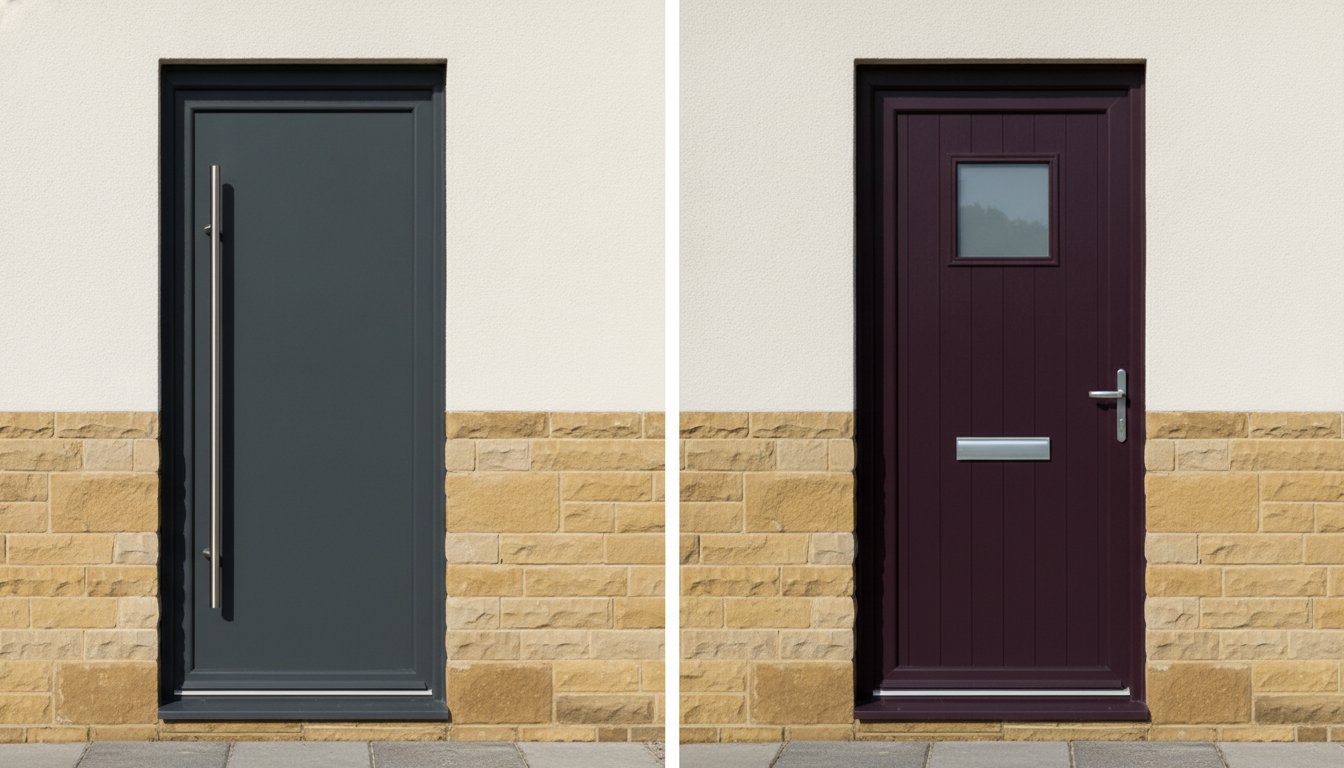
The cheapest front door on the market might actually be the most expensive mistake you make for your home this year. We understand that deciding between aluminium vs uPVC front doors often feels like a minefield of conflicting technical specs, especially when you're trying to shield your hallway from the harsh Yorkshire wind and rain. You deserve a home that stays warm and secure, yet it's natural to worry that a standard uPVC finish might look lacklustre next to your neighbours or fail to provide the architectural impact your property deserves.
This guide offers the definitive comparison you need to navigate the 2026 market with professional clarity. You'll discover how each material performs against the latest Part L thermal regulations, requiring a U-value of 1.4 W/m²K or better, and which option guarantees a maintenance-free life for twenty years or more. We will preview the latest security innovations and aesthetic trends to ensure your new entrance adds genuine value and sophisticated kerb appeal to your property, helping you make an informed investment that lasts a lifetime.
Key Takeaways
- Compare the long-term structural integrity of both materials, noting that aluminium often provides double the functional lifespan of traditional uPVC alternatives.
- Evaluate the aesthetic differences between aluminium vs uPVC front doors, focusing on how slimline profiles and bespoke RAL colours can transform your home's architectural profile.
- Understand the role of thermal break technology and U-values in maintaining a warm, energy-efficient interior whilst meeting strict 2026 building regulations.
- Discover why choosing premium entrance solutions acts as a safeguard for your property investment in competitive Yorkshire markets like Harrogate and York.
Understanding the Basics: Aluminium and uPVC Front Doors Explained
Selecting a new entrance is about more than just choosing a favourite colour. It's a technical decision that impacts your home's thermal envelope and long-term security. When evaluating different door materials, most Yorkshire homeowners find themselves weighing up the merits of aluminium vs uPVC front doors. Each material has undergone a significant technical evolution to meet 2026 efficiency standards. uPVC remains a versatile, cost-effective vinyl polymer that dominates the mass-market due to its inherent insulating properties. Aluminium has emerged as the architectural choice for those seeking a high-strength, lightweight solution that supports slimmer frames and larger panes of glass. Whilst uPVC focuses on accessible value, aluminium is often viewed as a premium investment for contemporary renovations and heritage projects across the region.
What is a Modern uPVC Front Door?
Forget the thin, yellowing plastic panels of the 1990s. Modern uPVC windows and doors utilise sophisticated multi-chambered profiles. These internal pockets trap air to create a highly effective thermal barrier against the North Yorkshire chill. You can now choose from a vast range of wood-effect foils. These provide a traditional timber aesthetic without the risk of rotting or warping. It's a functional choice that delivers consistent performance for a lower initial outlay. This material is ideal for homeowners who want a reliable, warm home without the higher price point of metal alternatives.
The Rise of Aluminium in Residential Design
Aluminium has transitioned from commercial skyscrapers to residential hallways for one primary reason: structural integrity. This metal's natural strength allows for bespoke, over-sized entrances that would be impossible with other materials. The frames are finished through a meticulous powder-coating process. This creates a hard-wearing, high-end surface that resists the elements for decades. You'll frequently see aluminium installations in modern Yorkshire extensions or sensitive heritage restorations where maximising natural light is the priority. It offers a sleek, minimalist look that uPVC simply cannot replicate. Because the frames are so slim, you get more glass and more light, which is a defining signature of contemporary living. Choosing aluminium is a statement of architectural intent, prioritising longevity and a high-end finish over short-term savings.
Key Differences in Performance, Durability, and Maintenance
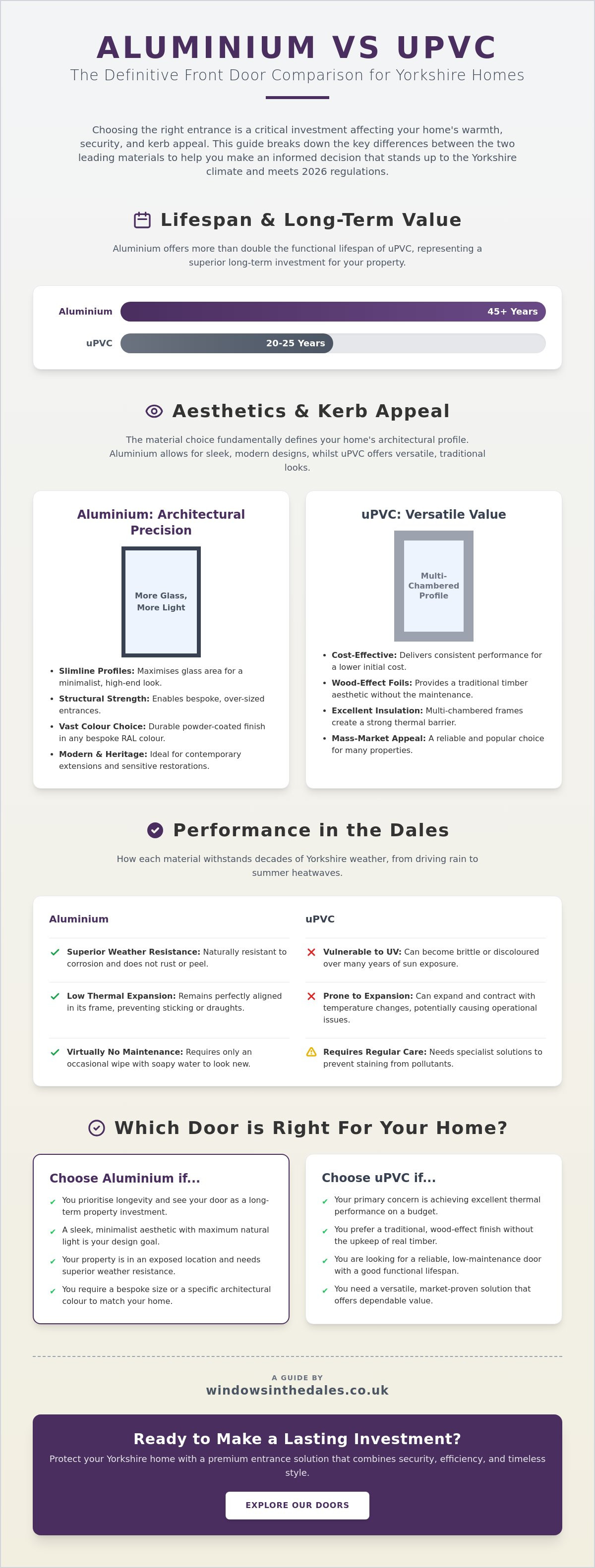
Choosing between aluminium vs uPVC front doors involves looking beyond the initial installation. You're investing in a component that must withstand decades of Yorkshire weather. A standard uPVC door typically offers a functional lifespan of 20 to 25 years. In contrast, high-grade aluminium is an architectural investment designed to last 45 years or longer. This disparity matters when you consider the cost of replacement and the long-term value of your property. Whilst uPVC provides excellent initial insulation, aluminium offers a level of structural integrity that remains unmatched over several decades.
Lifespan and Weather Resistance
Exposure to intense UV rays can cause older uPVC profiles to become brittle or discoloured over time. Aluminium possesses a natural resistance to corrosion that makes it the superior choice for exposed Yorkshire Dales properties facing heavy rain and driving wind. Thermal expansion is the physical tendency of a material to change its shape or volume in response to temperature fluctuations. Because aluminium has a low rate of expansion, the door remains perfectly aligned in its frame during seasonal shifts. This prevents the sticking or draughts often associated with materials that warp under thermal stress. Your entrance remains easy to operate whether it's a freezing January morning or a rare mid-summer heatwave.
The Maintenance Myth
Both materials are marketed as low maintenance, but their requirements differ as they age. uPVC requires regular cleaning with specialist solutions to prevent the white frames from staining or turning grey from environmental pollutants. Powder-coated aluminium is virtually "no maintenance" and only requires an occasional wipe with soapy water to maintain its original lustre. This durable finish is baked onto the metal, ensuring it won't peel or flake even in harsh conditions.
- Structural Rigidity: Aluminium frames do not flex, which protects the internal locking mechanisms from unnecessary strain.
- Hardware Longevity: High-security hinges and cylinders often last longer because the rigid frame prevents the misalignment that leads to mechanical wear.
- Recyclability: Aluminium is infinitely recyclable, offering a significantly lower lifetime carbon footprint compared to the complex disposal needs of uPVC.
Adhering to the UK building regulations for security is far simpler with a rigid frame that resists physical warping. A door that stays square in its frame is a door that stays secure against intruders. If you want to see how these materials perform in real-world settings, you can browse our case studies to see recent installations across the region.
Thermal Efficiency and Security: Protecting Your Yorkshire Property
A front door serves as the primary guardian of your home's temperature and safety. When comparing aluminium vs uPVC front doors, the most critical technical metric is the U-value. This figure measures the rate of heat transfer through the door; the lower the number, the better the door is at keeping your hallway warm. As of 2026, UK Building Regulations (Part L) mandate that replacement doors must achieve a U-value of 1.4 W/m²K or better. Failing to meet these standards doesn't just lead to higher energy bills. It can also complicate the future sale of your property. We advocate for a "fabric first" approach to home energy, ensuring your entrance works as hard as your insulation to trap heat where it belongs.
Keeping the Yorkshire Chill Out
uPVC is a natural insulator. Its multi-chambered internal structure creates pockets of stagnant air that act as a barrier to heat loss. Historically, aluminium was seen as a "cold" material because metal conducts heat quickly. This is no longer the case. Modern aluminium doors feature "thermal break" technology. This involves a high-performance polyamide strip positioned between the inner and outer sections of the frame. This strip effectively breaks the "cold bridge," preventing the freezing Yorkshire air from reaching the interior surface. When combined with high-performance glazing, both materials offer exceptional efficiency. For those looking to upgrade their entire property's thermal envelope, pairing a new entrance with modern uPVC windows ensures a consistent, draught-free environment across every room.
Security Standards in 2026
Security remains a non-negotiable priority for every homeowner. In 2026, the industry benchmarks for safety are PAS 24 and Secured by Design (SBD). Both aluminium and uPVC doors come equipped with multi-point locking systems as standard. These mechanisms engage the door into the frame at several different heights, making it significantly harder to jemmy open. However, the inherent rigidity of aluminium provides an additional layer of physical protection. Whilst a uPVC frame can sometimes be flexed or manipulated under extreme force, aluminium remains stubbornly rigid. This structural strength makes it an incredibly difficult material for an intruder to breach.
Professional installation is the final, vital component of your home's security. Even the most advanced locking system will fail if the door is poorly aligned. We frequently see high-end doors compromised by amateur fitting, which leads to "lock snagging" and premature wear. A correctly fitted door should glide into place with minimal effort, ensuring the multi-point bolts engage fully and provide the protective seal your family relies on.
Aesthetics and Kerb Appeal: Matching Your Door to Local Architecture
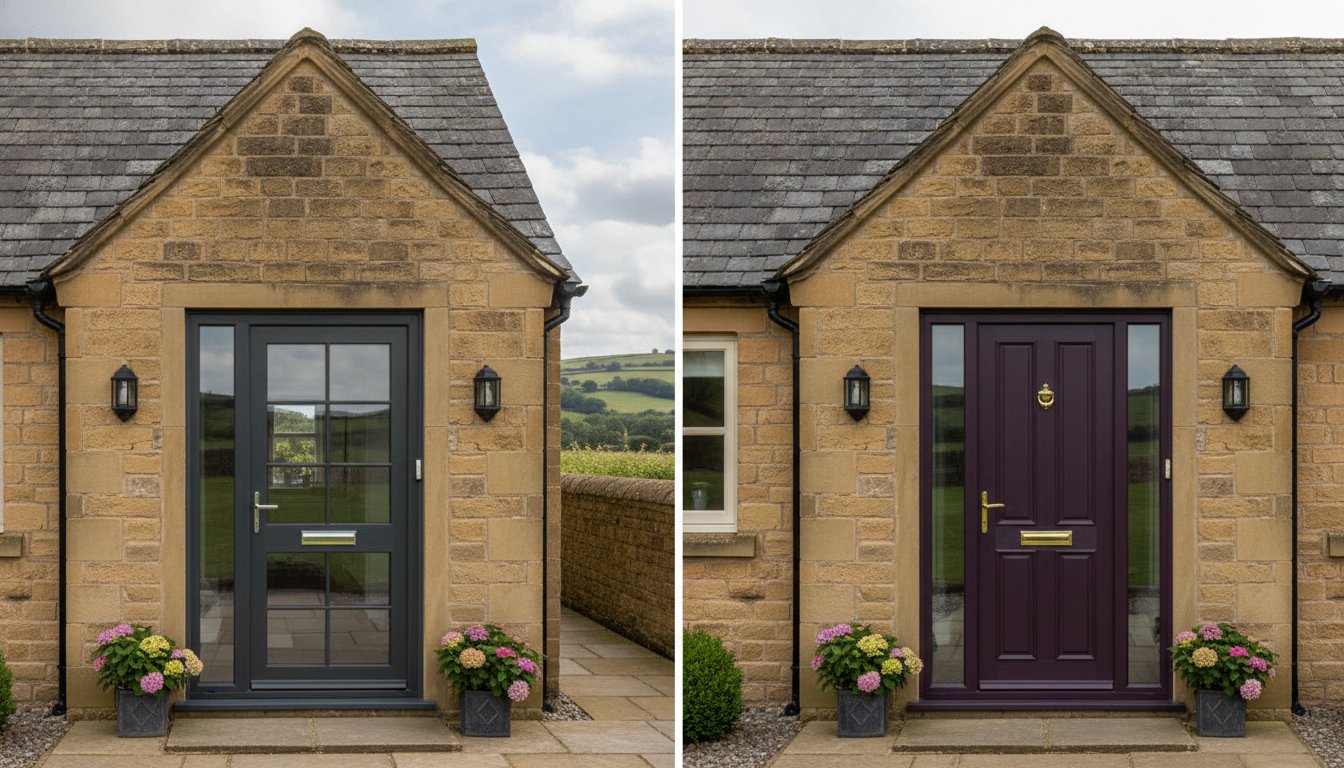
The visual identity of your home begins at the threshold. When deciding between aluminium vs uPVC front doors, you must consider how the frame's profile interacts with your property's existing architecture. Aluminium is celebrated for its slimline aesthetics. Its inherent strength allows for much narrower frames that maximise the glass area and create a sleek, minimalist appearance. uPVC profiles are generally thicker to provide the necessary structural support. This results in a more substantial, traditional look that many homeowners find reassuring and familiar.
Colour choice is where your personal style takes centre stage. Aluminium doors are finished using the extensive RAL colour chart, offering hundreds of powder-coated options that resist fading for decades. uPVC relies on high-quality foil finishes. These are excellent for replicating the texture of natural grain, but they don't offer the same level of bespoke colour matching as metal. Achieving a cohesive facade means matching your new door to your existing windows, whether you're looking for a sharp contrast in a modern Leeds suburb or a seamless tonal blend in a York conservation area.
Heritage and Traditional Properties
Maintaining the character of a period property or a stone cottage in the Dales requires a sensitive touch. Our Heritage Doors are designed to mimic the iconic steel-look styles of the early 20th century, providing a sophisticated alternative to bulky timber. For those who prefer a classic rural aesthetic, wood-effect uPVC serves as a brilliant substitute for real oak or rosewood. Completing the look with authentic ironmongery, such as a traditional doctor's knocker or a forged ring pull, ensures the door feels like a natural part of the building's history rather than a modern afterthought.
Modern and Contemporary Designs
Contemporary Yorkshire renovations often lean towards the industrial-chic appeal of anthracite grey aluminium. This shade has become a staple for homeowners in Harrogate who want to create a high-impact "grand entrance." Because aluminium is so rigid, it supports oversized configurations like French doors that flood your hallway with natural light. These designs prioritise "light and sight," using the slim frames mentioned earlier to blur the line between your interior and the landscape outside. Choosing a modern material allows you to experiment with bold, architectural shapes that uPVC simply cannot support.
To see how a bespoke style might enhance your home's unique character, you can request a quote for a new entrance today.
Making the Right Investment: Why Quality Matters for Yorkshire Homeowners
The "Buy Cheap, Buy Twice" philosophy is a cautionary reality in the home improvement industry. When weighing up aluminium vs uPVC front doors, the initial quote is only one part of the financial equation. Low-end uPVC suppliers often compromise on the quality of internal steel reinforcements or use inferior gaskets that perish after just a few seasons of North Yorkshire frost. These cost-cutting measures lead to warped frames and failed seals, eventually forcing a second replacement far sooner than expected. Investing in a premium entrance acts as a safeguard for your capital. In competitive property markets like Harrogate and York, high-quality architectural hardware and sleek finishes provide a significant uplift in property valuation. A sophisticated entrance signals to potential buyers that the entire property has been maintained to an exacting standard.
The Long-Term Value Proposition
A true assessment of value requires looking at the cost-per-year of the door's lifespan. Whilst uPVC offers an accessible entry point with excellent thermal performance, aluminium provides a lifelong service life that often exceeds forty-five years. This longevity makes it the more economical choice over several decades. Choosing a local Yorkshire-based specialist ensures you have access to reliable aftercare and regional expertise. We understand how the specific humidity and wind speeds in the Dales affect different materials. To find the best fit for your specific property, you can request a quote for a tailored assessment of your needs.
Avoiding Common Installation Pitfalls
Even a world-class door will underperform if the installation is flawed. Poor drainage paths or incorrect perimeter sealing can lead to water ingress and damp hallway carpets. A professional survey is a vital first step; it identifies structural opening irregularities that a simple tape measure might miss. Our team focuses on precision fitting to ensure every multi-point lock engages perfectly without requiring force. You can view our previous case studies to see how professional installation has transformed homes across the region, providing both security and peace of mind.
The Final Verdict:
- Choose uPVC if: You prioritise immediate value, require traditional wood-grain textures, and want a reliable, warm home on a modest budget.
- Choose Aluminium if: You are looking for a permanent architectural upgrade, prefer slimline contemporary aesthetics, and want a door that offers the highest level of structural rigidity for forty-five years or more.
Your front door is the one part of your home you interact with every single day. Whether you opt for the versatile warmth of uPVC or the sleek, enduring strength of aluminium, prioritising craftsmanship over the lowest price ensures your home remains a secure, stylish sanctuary for the long term.
Secure Your Home’s Future with a Premium Entrance
Choosing a new entrance is a significant decision that defines your property's character and thermal efficiency for decades. We've explored the fundamental trade-offs between aluminium vs uPVC front doors, from the natural insulating properties of vinyl polymers to the unmatched structural rigidity of architectural metal. Whether you prioritise the cost-effective reliability of modern uPVC or the slimline, maintenance-free profile of aluminium, your choice should always be anchored in quality and professional fitting.
As a Yorkshire-based family business, we take pride in delivering expert local installation across Leeds, York, and Harrogate. Our specialists in high-performance architectural glazing are dedicated to helping you navigate technical specifications to find a solution that protects your investment and enhances natural light. Upgrade your home today; Request a Quote from Windows in the Dales. Transform your hallway into a warm, secure, and beautiful space that welcomes you home every day.
Frequently Asked Questions
Is aluminium better than uPVC for a front door in the UK weather?
Aluminium is the superior choice for the unpredictable British climate. Its natural resistance to corrosion and low thermal expansion ensures the door won't stick or warp when the Yorkshire Dales face heavy rain or sudden temperature shifts. whilst uPVC is an excellent insulator, aluminium remains structurally stable for decades longer in exposed positions.
Which is more secure: an aluminium or a uPVC front door?
Both materials utilise advanced multi-point locking systems to meet PAS 24 standards. However, the structural rigidity of aluminium makes the frame significantly harder to manipulate or force than uPVC. This inherent metal strength provides an extra layer of physical protection for your home that is difficult for intruders to breach.
Do uPVC front doors fade or discolour over time?
Modern uPVC is engineered with UV stabilisers to prevent the yellowing seen in older 1990s installations. After twenty years of exposure, a uPVC finish may eventually lose some of its original lustre. Powder-coated aluminium finishes are baked on at high temperatures, ensuring the colour remains vibrant and resistant to peeling or fading for the door's entire lifespan.
Can I get an aluminium front door that looks like wood?
If you desire a traditional timber aesthetic, uPVC is the standard material of choice. It uses high-quality wood-effect foils that replicate the texture and grain of oak or rosewood. When comparing aluminium vs uPVC front doors for a heritage cottage, uPVC provides that classic look without the maintenance of real wood, whereas aluminium is better suited to sleek, solid RAL colours.
How much more does an aluminium front door cost compared to uPVC?
Aluminium requires a larger initial investment than uPVC. This premium price point reflects the material's architectural status and its 45-year functional lifespan. You're paying for a product designed to last twice as long as a standard uPVC alternative, making it a more cost-effective choice when measured over the lifetime of your property.
What maintenance is required for an aluminium front door?
Aluminium doors are virtually maintenance-free. You only need to wipe the frames with a soft cloth and warm, soapy water every few months to remove environmental pollutants or grit. Unlike timber, there is no need for sanding, painting, or varnishing to keep the metal protected from the elements, saving you significant time and effort over the years.
Will a new front door help reduce my energy bills in Yorkshire?
A new entrance is a vital component in reducing household energy consumption. By meeting the latest 2026 building regulations for thermal efficiency, a modern door prevents the heat loss and draughts common in older Yorkshire properties. This helps maintain a consistent internal temperature and reduces the strain on your heating system during the freezing winter months.
Are aluminium doors more environmentally friendly than uPVC?
Aluminium is the more sustainable option for eco-conscious homeowners. It's an infinitely recyclable material that retains its quality through every recycling cycle, requiring significantly less energy to process than primary production. whilst uPVC has improved in its recyclability, it has a higher lifetime carbon footprint compared to the circular economy of aluminium.