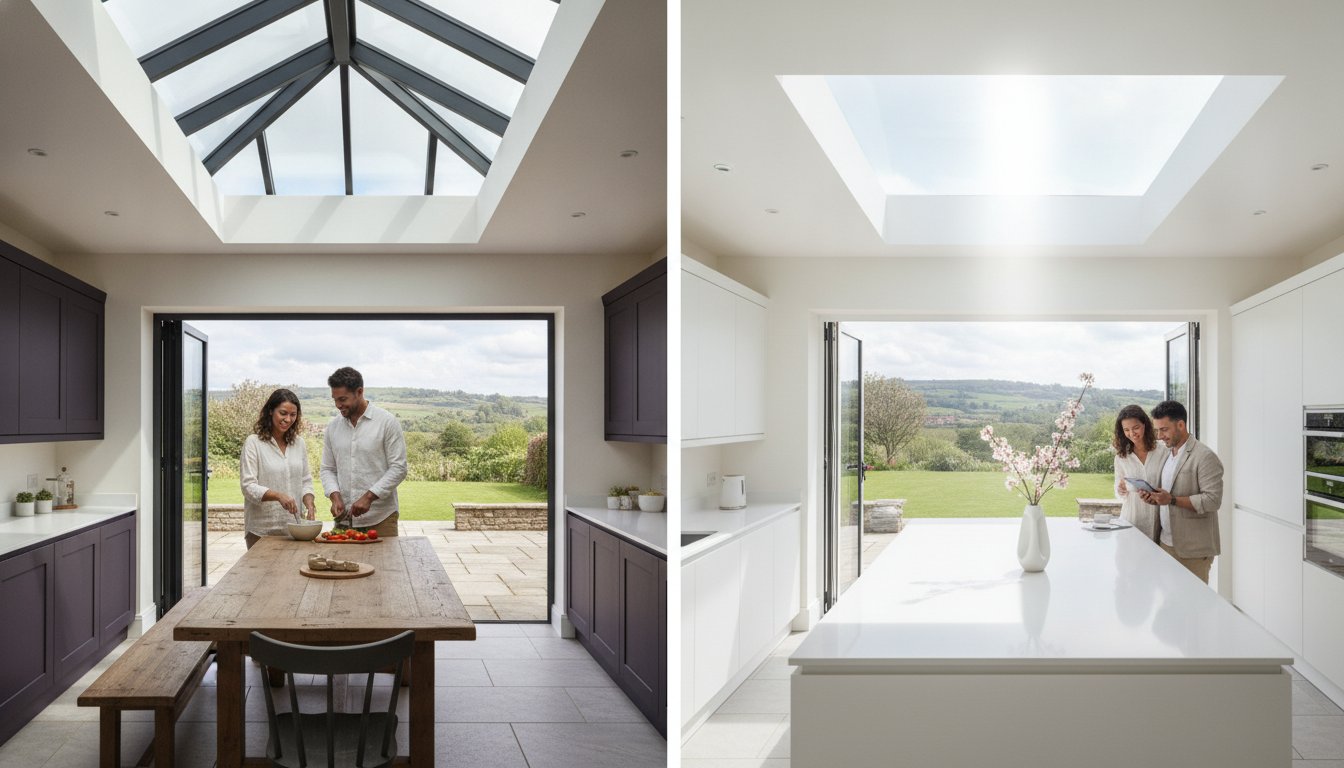
Why do some Yorkshire extensions feel like a sweltering greenhouse in July only to become an icebox by January? It's a valid concern for any homeowner looking to transform a dark room into a bright, contemporary living space. You deserve a home that remains comfortable year-round, without the constant worry of planning permission hurdles or the fear of future maintenance issues. We understand that your home is your most significant investment, and protecting that investment requires making informed, expert-led decisions rather than falling for high-pressure sales tactics.
Choosing between these two popular styles is about more than just aesthetics; it's about finding the right balance for your specific architecture and local climate. This guide provides the definitive roof lantern vs flat skylight pros and cons to ensure your choice adds genuine value and character to your property in 2026. We'll compare thermal efficiency, structural requirements, and aesthetic impact to help you select a glazing solution that perfectly complements your lifestyle and your home's unique design. From the historic streets of York to modern renovations in Leeds, we'll help you find the perfect fit.
Key Takeaways
- Learn how a roof lantern adds internal volume and architectural drama, whilst a flat skylight offers a sleek, minimalist finish that sits flush with your roofline.
- Understand the roof lantern vs flat skylight pros and cons regarding thermal efficiency and how modern U-values impact your energy bills in the Yorkshire climate.
- Discover the 2026 Permitted Development rules to ensure your glazing project stays compliant without the need for costly planning applications.
- Compare how light enters your home, from the multi-angled capture of a lantern to the direct, intense overhead illumination of a flat skylight.
- Identify the structural requirements for each option to ensure your existing flat roof can safely support your chosen glazing solution.
Understanding the Basics: What is the Difference Between a Roof Lantern and a Flat Skylight?
When you're planning a high-quality extension for your Yorkshire home, the choice often boils down to how you want to capture the sky. A roof lantern is a pitched, multi-pane glass structure that sits proudly atop a flat roof, creating a classic architectural feature. Conversely, a flat skylight is a single pane of glass that sits flush or at a very slight angle to the roof surface. While both solutions are designed to flood your living space with natural light, their physical presence and the way they transform a room are vastly different. Knowing the What is a Skylight? basics helps you begin weighing up the roof lantern vs flat skylight pros and cons for your specific project.
Both systems are typically installed on flat roof extensions, yet they require distinct structural preparation. A lantern requires a raised "upstand" or kerb to sit on, which adds significant height to the building's exterior profile. A flat skylight is much lower in profile, often appearing almost invisible from the garden level. This distinction is vital when you're considering the visual impact on your property silhouette or navigating local planning expectations in conservation areas. You'll find that while both serve to illuminate, the lantern is an addition to the architecture, whereas the skylight is an integration into it.
The Structural Profile of a Roof Lantern
The pyramid or hipped shape of a roof lantern does more than just look elegant; it physically expands the volume of your room. By extending the ceiling upwards, it creates an airy, grand feel that's particularly effective in large, open-plan kitchens. We use aluminium frames to achieve incredibly slim sightlines, ensuring the focus remains on the glass rather than bulky supports. For many homeowners, the lantern becomes the architectural heart of the home. It acts as a stunning focal point that draws the eye upward, making even a modest extension feel like a bespoke orangery.
The Minimalist Appeal of Flat Skylights
If your aesthetic leans toward the contemporary and understated, a flat skylight is often the superior choice. From the inside, these units often offer a "frameless" look, providing an uninterrupted connection to the clouds. They're exceptionally discreet from the exterior. This makes them ideal for modern designs or properties where you want to maintain a subtle roofline. In smaller extensions where a full lantern might feel overwhelming or "busy", a sleek flat rooflight maintains clean lines. It provides that essential influx of light without dominating the room's internal character.
Whether you're looking to make a bold statement or simply brighten a dark corner, the choice impacts your home's long-term value. Each option carries unique technical requirements, from structural reinforcement to specific drainage considerations. In the following sections, we'll dive deeper into how these choices affect your home's performance and comfort throughout the changing Yorkshire seasons.
Aesthetic Impact: Architectural Statement vs Minimalist Design
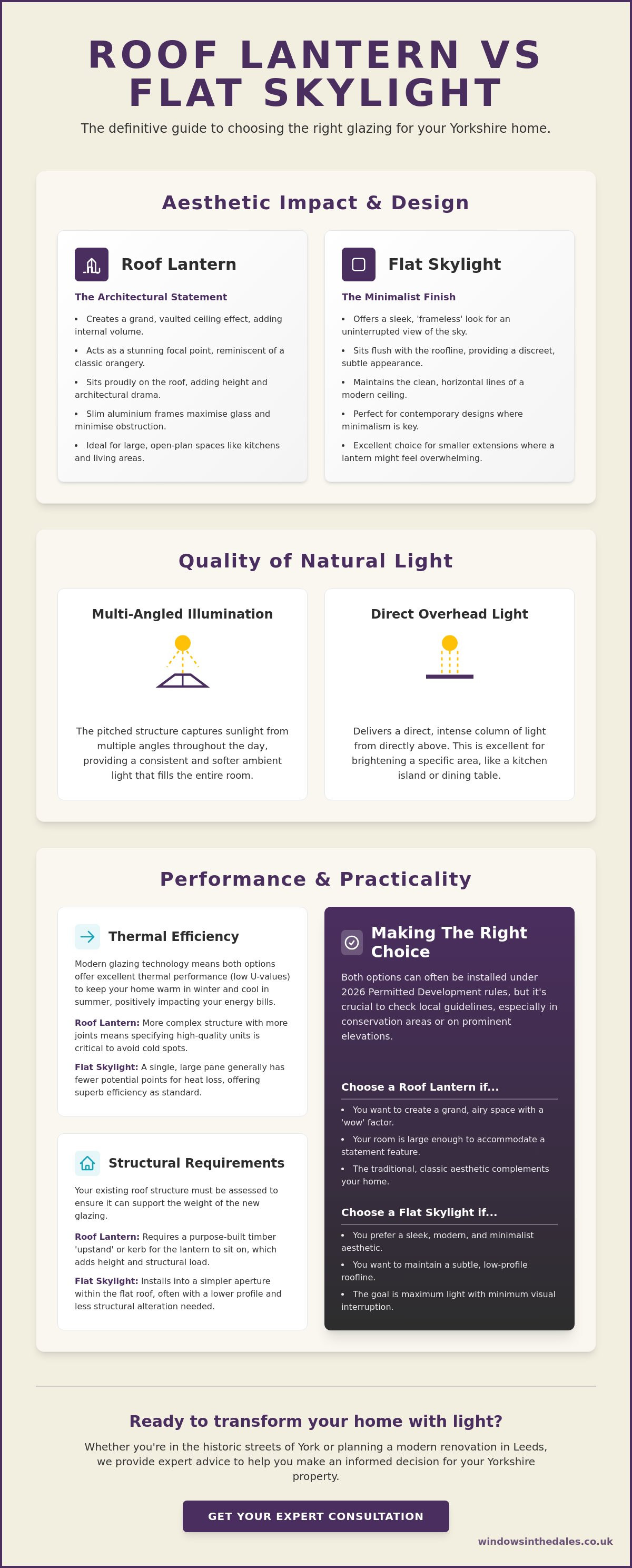
The aesthetic transformation of your home depends entirely on whether you want to highlight the sky or the structure itself. When evaluating the roof lantern vs flat skylight pros and cons, the most immediate difference is how they alter the internal volume of your room. A lantern draws the eyes upward, creating a vaulted ceiling effect that makes an extension feel significantly larger. In contrast, a flat skylight offers a minimalist, "disappearing" act. It provides a crystal-clear view of the Yorkshire sky without interrupting the clean, horizontal lines of a contemporary ceiling.
From the outside, your choice dictates the silhouette of your property. A lantern sits prominently on the roof, acting as a crown that signals a high-end orangery or bespoke living space. This added height is a bold architectural statement, but it requires careful consideration regarding planning permission for skylights and roof alterations, particularly on prominent elevations. Flat skylights remain almost invisible from the street level. They offer a discreet solution for homeowners who want to modernise their interiors without fundamentally changing the external character of their house.
Choosing for Heritage and Period Properties
For the historic villas of Harrogate or the Victorian terraces in York, maintaining architectural harmony is essential. Roof lanterns are the preferred choice for these period homes because they echo the traditional design of classic orangeries. To ensure a cohesive look, many homeowners choose to match their lantern frame colours to our heritage doors. Opting for classic shades like black or anthracite grey allows you to introduce modern glazing technology whilst respecting the building's original soul. It's about enhancing the light levels without sacrificing the period charm that makes these Yorkshire properties so desirable.
Modern Extensions and Urban Renovations
In the bustling urban centres like Leeds, the trend has shifted toward the "glass ceiling" effect provided by flat skylights. These units create a seamless transition between indoor and outdoor spaces, perfect for minimalist kitchen renovations. You can even install multiple flat skylights in a row to create a dramatic light-well that spans the length of a dining area. This approach provides a sleek, high-end feel that avoids the bulk of a traditional frame. If you're unsure which look fits your specific street, you can view our local case studies to see how both options perform in real-world Yorkshire settings.
The Performance Showdown: Thermal Efficiency and Natural Light
Performance is where your decision moves from the drawing board to the reality of daily life. In the face of a unpredictable Pennine storm or a rare summer heatwave, the functional differences between these two systems become apparent. When weighing up the roof lantern vs flat skylight pros and cons, you must consider how each unit manages heat, noise, and the specific quality of light it brings into your home. It isn't just about brightening a room; it's about ensuring that space remains a comfortable sanctuary regardless of the conditions outside.
Thermal performance is often the primary concern for homeowners. To comply with 2026 Building Regulations, any new installation must achieve a U-value no higher than 1.6 W/m²K. While some critics argue that the larger surface area of a lantern leads to greater heat loss, modern engineering has largely solved this. We utilise high-performance aluminium systems featuring polyamide nylon glass composite thermal breaks. These components can make a system up to 65% more thermally efficient than conventional aluminium frames. This level of insulation is essential for keeping your energy bills manageable during the biting Yorkshire winters.
Managing the Yorkshire Climate
A U-value measures the rate of heat transfer through a structure, where a lower number indicates superior insulation. Investing in energy efficient skylights or lanterns ensures your extension doesn't become a "cold spot" in your floor plan. For those living in sootier urban areas or near busy roads, self-cleaning glass is a wise addition. This coating uses UV rays to break down organic dirt, which is then washed away by the rain. It's a practical way to maintain clarity without constant ladder work. Additionally, noise reduction is a vital factor. Modern toughened or laminated safety glass significantly dampens the sound of heavy rain or hailstones, protecting the peaceful atmosphere of your living area.
Light Capture Throughout the Day
The way these two options interact with the sun is fundamentally different. Because a roof lantern features multiple angled panes, it effectively "tracks" the sun as it moves across the sky. This allows it to catch morning and evening light more effectively than a flat surface. In fact, a well-placed lantern lets in around three times more light than a standard vertical window of the same size.
Flat skylights, however, often provide a higher "lumen output" per square metre of glass because the light travels directly downward without being diffused by multiple frame segments. This creates a punchy, intense pool of light that's perfect for illuminating a kitchen island or a dark hallway. By maximising this natural light, you'll find you rely far less on artificial lighting during the dim winter months, creating a space that feels vibrant even on the greyest afternoons. Balancing this light with solar control glass can prevent overheating in the summer, ensuring your new room is a success in every season.
Practical Considerations: Planning Permission, Installation, and Maintenance
Navigating the practicalities of a home improvement project requires more than just an eye for design. When evaluating the roof lantern vs flat skylight pros and cons, you must account for the legal and structural realities of 2026. Installing a new glazing unit is a significant structural change. It requires a professional assessment to ensure your existing flat roof can carry the additional weight. While most homeowners focus on the light, the longevity of the installation depends on the materials and the precision of the fit. We advocate for a "done once, done right" approach to protect your investment from future leaks or thermal failure.
Installation complexity varies significantly between the two styles. A flat skylight is often delivered as a pre-assembled unit, making the on-site process relatively swift. A roof lantern, however, usually requires more extensive on-site assembly due to its multi-pane, three-dimensional structure. This added complexity means the quality of the installer is just as important as the quality of the product. Poorly fitted lanterns are a common source of callbacks in the industry, which is why we prioritise precision-engineered aluminium frames that lock together with absolute accuracy.
Planning Permission and Height Restrictions
In 2026, planning authorities are applying clearer guidelines for roof alterations. Most installations fall under Permitted Development, but you must follow strict rules to avoid a retrospective application. On a pitched roof, any new skylight must not project more than 150mm from the existing roof plane. For flat roof extensions, a lantern must not be higher than the highest part of your existing roof. If your property is in a Conservation Area, such as the historic centres of Skipton or Ripon, the rules are far more restrictive. You'll likely need a formal application to ensure the new structure doesn't negatively impact the local heritage. We always recommend consulting a specialist to verify your specific requirements before work begins.
Maintenance and Long-term Care
The Yorkshire weather can be unforgiving, making the maintenance profile of your glazing a vital consideration. The natural pitch of a lantern is a significant advantage; its angled glass allows rainwater and debris to wash away easily. Flat skylights are more prone to "pooling" if not installed correctly. To prevent this, a minimum 5-degree pitch is essential to ensure water runs off the surface rather than sitting and creating unsightly mineral deposits.
Longevity is dictated by material choice. Modern powder-coated aluminium is the gold standard for 2026, offering far superior durability compared to older uPVC versions that can warp or discolour over time. This robust finish matches the performance you would expect from high-quality aluminium windows, providing a low-maintenance solution that resists the elements for decades. If you are ready to enhance your home with a solution built to last, request a quote from our expert team today.
Making the Right Choice for Your Yorkshire Property
Deciding on the perfect glazing solution for your extension comes down to the specific proportions of your room and your long-term lifestyle goals. If you're designing a sprawling open-plan space with high ceilings, a roof lantern provides the architectural volume and "wow factor" that defines a luxury home. For smaller extensions or rooms where you want to maintain a minimalist aesthetic, a flat skylight offers a sleek, non-intrusive way to flood the area with light. Both options are excellent, but the final decision must align with your home's unique character. Weighing the roof lantern vs flat skylight pros and cons helps you move past the initial visual appeal toward a choice that serves your family for decades.
We believe that seeing real-world results is the best way to gain confidence in your choice. To help you visualise how these systems transform a living space, we encourage you to browse our case studies. Seeing how other Yorkshire homeowners have balanced these elements provides invaluable inspiration for your own renovation. This isn't just a purchase; it's a significant investment in your home's thermal comfort and resale value. Choosing a high-quality aluminium system ensures that your new room remains a vibrant, usable space in every season.
The Windows in the Dales Approach
We help families across Leeds, York, and Harrogate navigate the technicalities of modern architectural glazing. Our approach focuses on professional authority and protective advocacy for the homeowner. We only supply and fit high-performance aluminium systems because they offer the longevity and slim sightlines that Yorkshire homes deserve. By providing bespoke solutions, we ensure that your new roof lantern or skylight respects the architectural integrity of your property. We don't believe in "one-size-fits-all" solutions. Every project is an opportunity to enhance the beauty of natural illumination whilst protecting your financial investment from common industry errors.
Next Steps for Your Renovation
Taking the first step toward your new living space is straightforward. Before your initial consultation, take a rough measurement of your intended roof opening. This allows us to provide a more tailored and accurate initial assessment of your project's scope. Choosing a local specialist over a national company ensures you receive advice grounded in regional relevance and local planning knowledge. We understand the specific challenges of the Yorkshire climate and the expectations of local planning offices in conservation areas. If you're ready to transform your home with a glazing solution built to last, request a quote from our expert team today. We'll guide you through the technical details to ensure your home remains bright, airy, and energy-efficient for years to come.
Transform Your Living Space with Expert Architectural Glazing
Choosing between a dramatic lantern and a sleek skylight is the final step in redefining your home's relationship with natural light. This definitive look at roof lantern vs flat skylight pros and cons highlights that your decision should balance internal volume with your property's external character. We provide high-performance aluminium systems designed specifically for the unique demands of the British climate. These solutions ensure your extension remains a thermally efficient, welcoming sanctuary all year round.
Our specialist installers bring professional authority to projects across York, Leeds, Harrogate, and beyond. We offer expert guidance to ensure your glazing complements both heritage properties and modern renovations with precision. By avoiding common industry pitfalls and prioritising craftsman-led installation, you're securing the long-term value and comfort of your property. We're here to help you navigate the technical details and planning requirements with total transparency and regional pride.
Get a bespoke quote for your Yorkshire roof glazing project and take the first step toward a brighter, more aspirational home today.
Frequently Asked Questions
Is a roof lantern more expensive than a flat skylight?
Yes, a roof lantern typically involves a higher initial investment than a flat skylight. This is due to the increased surface area of the glass and the more complex multi-pane aluminium framework required to create the pitched structure. Additionally, the installation process for a lantern usually takes longer and requires more on-site assembly, which is reflected in the overall project cost compared to a single-pane rooflight.
Will a roof lantern make my room too hot in the summer?
Modern roof lanterns don't have to turn your room into a greenhouse. By specifying solar control glazing, you can reflect a significant portion of the sun's heat whilst still enjoying maximum natural light. This high-performance glass is essential for south-facing extensions in Yorkshire to ensure the living space remains comfortable during the peak summer months; it prevents the "greenhouse effect" common in older glazed structures.
Do I need planning permission for a roof lantern in Yorkshire?
In most cases, installing a roof lantern falls under Permitted Development and doesn't require a full planning application. However, strict conditions apply; for example, the unit must not be higher than the highest part of the existing roof. If your home is in a Conservation Area or is a listed building, you must consult your local authority, as formal permission is almost always required to protect the local architectural heritage.
Which is easier to keep clean: a lantern or a skylight?
A roof lantern is generally easier to maintain because its natural pitch allows rainwater to wash away dirt and debris effectively. Flat skylights require a minimum 5-degree installation angle to prevent water pooling, which can lead to unsightly mineral deposits and dirt build-up. For both options, choosing self-cleaning glass is a smart investment that uses UV rays to break down organic matter, reducing the need for manual cleaning.
Can I install a roof lantern on an existing flat roof?
Yes, you can retrofit a roof lantern onto an existing flat roof, but a structural assessment is vital. An existing roof must be strong enough to support the weight of the new glazing and the aluminium frame. In many instances, we recommend reinforcing the timber joists or adding steel beams to ensure the structural integrity of your home isn't compromised by the new architectural feature.
How long does it take to install a roof lantern compared to a skylight?
A flat skylight can often be installed in a single day as it usually arrives as a pre-assembled unit. A roof lantern typically takes longer, often two days or more, because it requires more intricate on-site assembly of the aluminium rafters and multiple glass panes. The complexity of the project and the specific site access at your property will also influence the final installation timeline.
Are roof lanterns secure against intruders?
Modern roof lanterns are designed with security as a priority. We use toughened or laminated safety glass that is extremely difficult to break, combined with internal beading that prevents the glass from being removed from the outside. When professionally installed, these units offer a robust barrier that matches the security standards of high-quality aluminium windows, ensuring your home remains safe and secure.
What is the best frame material for a roof lantern in 2026?
Aluminium is the superior frame material for 2026 due to its exceptional strength and slim architectural sightlines. Unlike uPVC, which can warp or discolour over time, powder-coated aluminium resists the elements and requires very little maintenance. When evaluating the roof lantern vs flat skylight pros and cons, the durability of aluminium consistently makes it the best long-term investment for Yorkshire homeowners seeking quality and style.