Did you know that 39% of residents across Yorkshire and the Humber now report issues with damp, mould, or cold in their homes? It's a frustrating morning ritual for many homeowners in York and Leeds, standing with a towel and wondering, "Why are my windows covered in condensation?" whilst worrying about the black mould creeping into the corner of the bedroom. You might even feel confused if your brand new, high-performance windows are fogging up on the outside, leading you to believe there's a fault when there isn't.
We understand that your home is your sanctuary; seeing moisture build up feels like a threat to both your property and your family's health. You deserve to know exactly why your glass is fogging up and whether it signals a minor ventilation tweak or a structural failure that requires a professional glazing solution. This guide provides a clear diagnosis for your specific condensation type, explains how the latest 2026 building regulations impact your choices, and identifies the most effective ways to restore your home's warmth and clarity.
Key Takeaways
- Identify the three distinct types of moisture to determine if your Yorkshire home needs improved ventilation or a professional glazing upgrade.
- Learn why external condensation is actually a badge of efficiency that proves your high-performance windows are working correctly.
- Diagnose structural failures by recognising the signs of a blown seal to finally answer the question, "Why are my windows covered in condensation?"
- Future-proof your property against the 2026 energy standards by choosing thermally efficient aluminium or uPVC windows that prevent mould growth.
Understanding the Science: Why Windows Fog Up in Yorkshire
Condensation occurs when warm, moisture-laden air meets a surface cold enough to turn that vapour back into liquid. To understand the science of condensation, we must look at the temperature of your window panes compared to the air inside your room. During a typical 2026 Yorkshire winter, the "Dew Point" becomes the critical threshold. This is the temperature at which air can no longer hold its water vapour, forcing it to settle as droplets on the coldest available surface. Because glass has high thermal conductivity, it loses heat much faster than your insulated walls, making it the primary target for fogging.
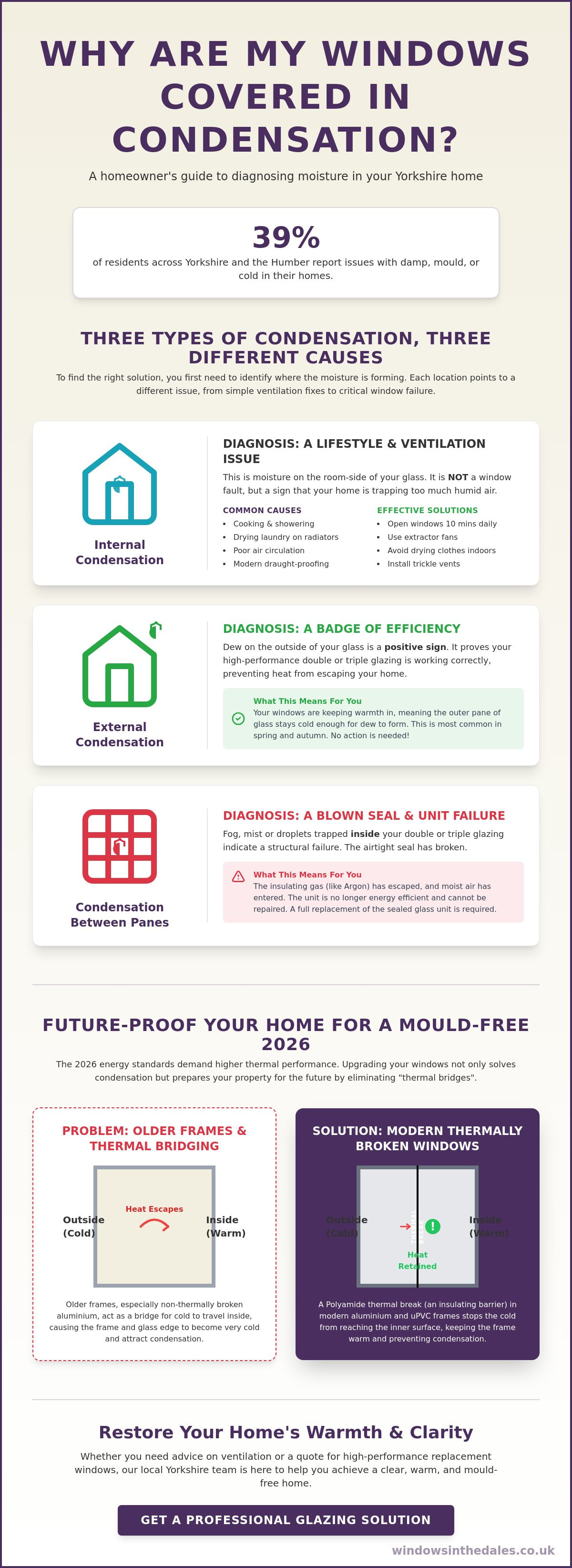
When you ask, "Why are my windows covered in condensation?" you are actually seeing a physical map of where heat and moisture are interacting. We categorise these occurrences into three distinct zones to help you identify the root cause:
- Internal: Moisture forming on the room-side surface of the glass.
- External: Dew appearing on the outside pane, often in the early morning.
- Inter-pane: Fogging or droplets trapped inside the sealed double or triple glazing unit.
The Role of Relative Humidity in Your Home
Daily life in a busy household adds a surprising volume of water to the atmosphere. Boiling a kettle, taking a long shower, or drying laundry on a radiator can release several litres of moisture into the air every day. In modern, draught-proofed extensions across Leeds and Harrogate, this moisture often has nowhere to escape. Whilst older homes were naturally "leaky", today's airtight construction methods can cause humidity levels to soar. For a healthy living environment, you should aim for a relative humidity range of 40% to 60%. Anything higher creates the perfect conditions for the persistent fogging that leaves homeowners wondering, "Why are my windows covered in condensation?" on a daily basis.
Thermal Bridging: The Cold Surface Problem
Thermal bridging happens when a specific part of your window assembly acts as a bridge, allowing heat to bypass your insulation and escape outside. Older aluminium frames were notorious for this issue. Without a break in the metal, the entire frame becomes as cold as the air in the Dales, attracting moisture the moment your heating kicks in. Modern aluminium windows solve this structural flaw using polyamide thermal breaks. These are high-performance insulating barriers that separate the inner and outer sections of the frame. By stopping the cold from reaching the interior surface, these advanced systems eliminate the thermal bridge and help keep your glass clear and your home warm.
Internal Condensation: The Lifestyle and Ventilation Challenge
Internal condensation is the misting you find on the room-side surface of your glass. It is a common sight in York and Leeds during the colder months. Many homeowners assume the window has failed when they see this, but that is rarely the case. Usually, the issue lies with how air moves through the property. In our region, we see this often in traditional Yorkshire stone cottages. These buildings were originally designed to breathe through porous materials and open chimneys. When we add modern insulation or seal up every draught, we inadvertently trap moisture inside. This creates a stagnant environment where water vapour has nowhere to go.
Ignoring this moisture leads to more than just a wet windowsill. Persistent damp creates a breeding ground for black mould, specifically Aspergillus. This is not just an aesthetic problem; it is a health risk. According to data published in February 2026, 23% of households experiencing mould report respiratory issues like coughing. Protecting your family starts with managing the air quality within your four walls and, where necessary, consulting specialists like Smart Property Care Ltd for professional damp proofing and property preservation. If you find yourself asking, "Why are my windows covered in condensation?" every morning, it is time to look at your home's internal ecosystem.
Top Sources of Indoor Moisture
The amount of water we produce daily is staggering. A single person can exhale up to two litres of water vapour every 24 hours. This explains why bedrooms are the primary site for morning fogging. You spend eight hours breathing in a closed room with limited airflow. Cooking and showering add even more to the tally. However, the biggest culprit in York flats is the "Radiator Trap." Drying laundry on radiators releases massive amounts of moisture directly into the room. Without an exit route, this water settles on the coldest surface available: your glass.
Practical Fixes to Stop Internal Fogging
The most effective tool is often the simplest. We recommend the "Morning Purge." Open your windows wide for just ten minutes every morning. This replaces the stale, humid air with fresh, dry air from outside. It is a vital habit in 2026 as homes become increasingly airtight. If your windows have trickle vents, keep them open. They provide a constant, subtle flow of air without creating a cold draught. Under Part F of the Building Regulations, these vents are now a standard requirement because they help mitigate these exact damp issues.
For those seeking a long-term upgrade, choosing high-performance uPVC windows with integrated ventilation can significantly improve your home's thermal balance. Whilst dehumidifiers can help in the short term, they only treat the symptoms. Permanent solutions like Mechanical Ventilation with Heat Recovery (MVHR) are becoming the gold standard for modern Leeds renovations. These systems ensure a mould-free environment year-round whilst retaining the heat you pay for.
External Condensation: Why It Is Actually a Good Sign
If you wake up to find a layer of dew on the outside of your glass, your first instinct might be to worry. You may even ask, "Why are my windows covered in condensation when they were only installed recently?" However, seeing moisture on the exterior pane is a badge of honour. It is definitive proof that your double or triple glazing is performing exactly as intended. Unlike internal fogging, which suggests a ventilation issue, external condensation confirms that your home's heat is staying where it belongs: inside.
This phenomenon occurs because high-performance glazing is incredibly effective at preventing thermal transfer. The outer pane of glass is not being warmed by the heat from your living room, so it remains at the ambient outdoor temperature. When the temperature of that glass drops below the dew point of the outside air, moisture settles on the surface. As the morning sun rises over the Yorkshire hills and warms the air, this fog usually evaporates naturally, leaving your view clear and your home warm.
The Physics of High-Performance Glazing
Modern windows rely on sophisticated technology to maintain this thermal barrier. Low-emissivity (Low-E) coatings are applied to the internal faces of the glass to reflect heat back into your room. This is often paired with Argon or Krypton gas fills between the panes. These gases are denser than air and create a stagnant layer that significantly slows down heat loss. Whilst older, inefficient windows rarely see external fogging, it is because they are leaking your expensive heating through the glass. They keep the outer pane warm enough to prevent dew from forming. In this context, a clear window on a frosty morning is actually a sign of a failing, energy-hungry property.
Why Rural Yorkshire Homes See More External Fog
Homeowners in rural areas like Skipton or Ripon often notice this effect more frequently than those in the centre of Leeds. This is due to "radiative cooling," where objects lose heat to a clear night sky. In the open landscapes of the Dales, surfaces can cool down much faster than in urban heat islands. Proximity to water also plays a role. If you live near the River Ouse or in the lower-lying areas of the Vale of York, the higher local humidity increases the frequency of dew. This explains why, when you look out at the Dales and wonder, "Why are my windows covered in condensation?" the answer is actually a reassurance of quality. You should never attempt to fix external condensation by degrading your insulation. Doing so would only increase your energy bills and compromise the comfort of your living space.
Condensation Between Panes: The Sign of a Blown Seal
Inter-pane condensation is the most serious form of window moisture. Unlike the surface-level fogging we discussed earlier, this occurs deep inside the sealed unit. You cannot wipe it away with a cloth or clear it with a fan. If you are asking, "Why are my windows covered in condensation?" and the moisture is trapped between the two sheets of glass, your window has suffered a "blown seal." This is a structural failure that signals the end of your window's effective lifespan.
This phenomenon happens when the primary and secondary seals that hold the glass together fail. Once the seal is breached, the insulating gas fill—usually Argon—leaks out. Moist air from the outside then seeps into the gap. Every double-glazed unit contains a desiccant within the spacer bar to absorb minor amounts of moisture. However, once the seal is fully blown, this material reaches saturation point. The result is permanent, unsightly fogging that ruins your view and significantly reduces your home's thermal efficiency. Without the gas barrier, your window is essentially just two sheets of glass with cold, damp air in between.
Why Window Seals Fail
Solar pumping is the leading cause of seal failure in Leeds and York properties. As the sun hits the glass, the air inside the unit expands. At night, it contracts. This constant movement puts immense pressure on the seals. Over time, they lose their elasticity and crack. Poor installation or blocked drainage holes in the frame can also cause water to pool around the seals, accelerating their decay. The harsh Yorkshire weather, with its combination of driving rain and biting winds, often tests the limits of older uPVC and timber frames, eventually leading to a breach.
Repair vs. Replacement: What are your options?
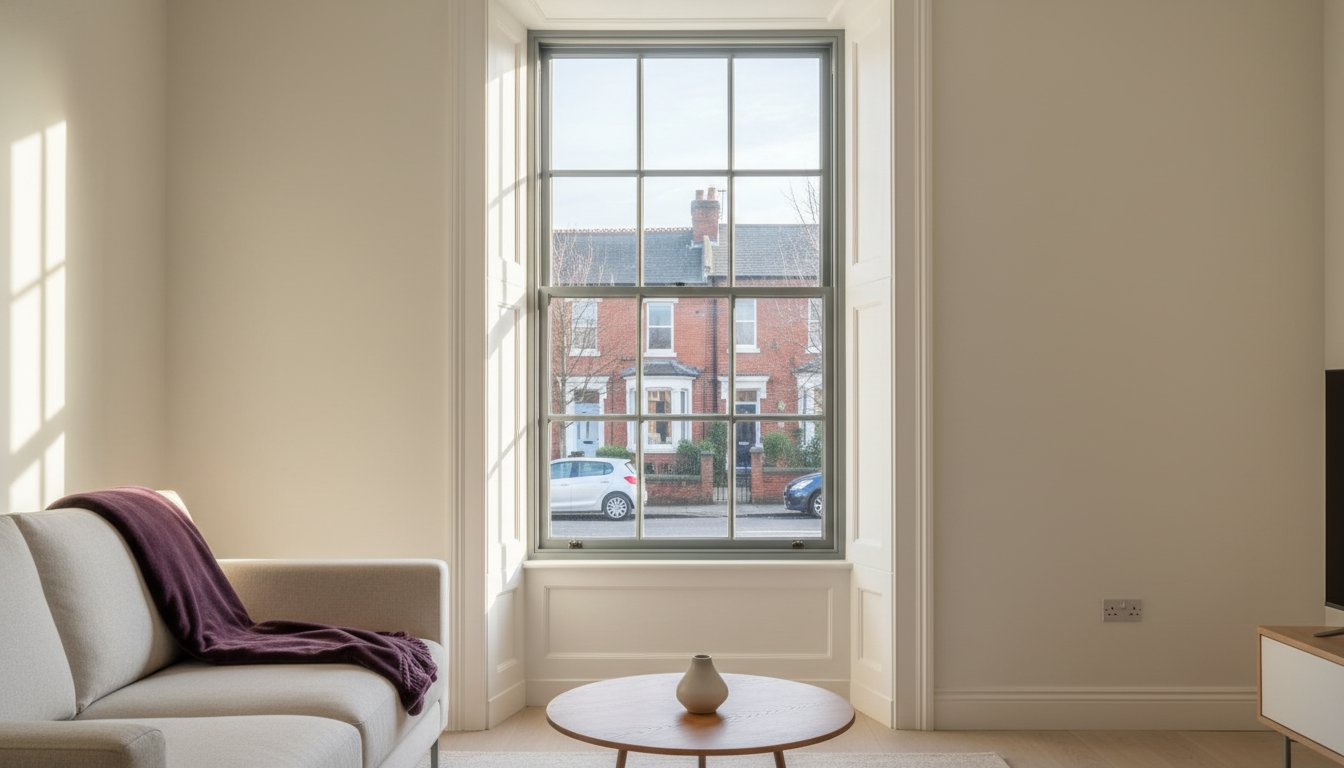
You may see "de-misting" services advertised online. These often involve drilling a small hole in the glass to vent the moisture. We view these as short-term sticking plasters rather than genuine solutions. They do not restore the insulating gas or fix the underlying seal failure. Your thermal efficiency remains compromised. Replacing just the glass unit is a viable mid-ground, but if your frames are old, it is often a false economy. Upgrading to high-quality heritage windows provides a long-term investment in both aesthetics and performance. Modern frames are designed with superior drainage and more resilient seals to ensure your view remains clear for decades.
If you are tired of looking through foggy glass, request a quote today to see how modern, high-performance glazing can restore the clarity and comfort of your home.
Long-Term Solutions: Upgrading Your Yorkshire Home for a Mould-Free 2026
High-performance windows are more than just a home improvement; they are a vital shield for your property's health. By investing in modern glazing, you eliminate the persistent cold spots where moisture settles. This prevents the structural damage caused by damp and protects your family from the respiratory risks associated with mould. Professional installation ensures that your windows function as part of a cohesive ventilation strategy. This approach moves beyond simply asking, "Why are my windows covered in condensation?" and focuses on creating a dry, energy-efficient sanctuary. Quality glazing enhances natural light. It also secures your long-term investment.
Choosing the Right Materials
Aluminium windows represent the gold standard for modern Leeds homes. Their slimline frames allow for expansive glass areas, whilst integrated polyamide thermal breaks stop heat from escaping. For traditional York terraces, uPVC windows offer a cost-effective route to high insulation. These multi-chambered profiles trap air to create a powerful thermal barrier. If you live in a conservation area, heritage styles provide the perfect balance. They match the aesthetic requirements of historic architecture whilst utilising 21st-century thermal technology to keep your home mould-free.
The Windows in the Dales Advantage
Local expertise is essential when navigating the specific climates of York, Leeds, and Harrogate. We understand how the damp air of the Wharfe Valley or the biting winds of the Dales impact your home's performance. Our installations utilise warm-edge spacer bars as a standard feature. These bars are made from insulating plastic composites rather than traditional aluminium. They reduce cold spots at the glass edge by up to 65%, effectively preventing the perimeter fogging that often plagues inferior units. You can view our case studies to see how these thermal upgrades have transformed local properties.
Final Checklist: Is it Time to Act?
If you are still struggling with moisture, use this checklist to identify if your windows have reached the end of their functional life. These red flags indicate that a simple "morning purge" is no longer enough:
- Black mould: Visible growth on window frames, silicone seals, or surrounding wallpaper.
- Puddles on sills: Excessive water runoff that requires daily mopping with towels.
- Inter-pane fog: Permanent misting that you cannot wipe away, signaling a blown seal.
- Draughts: Notable cold spots even when the window is fully locked and handles are secure.
Taking a proactive approach now prevents the onset of winter damp and skyrocketing heating bills. Don't wait for the next cold snap to compromise your comfort. Request a quote today for a professional thermal assessment of your Yorkshire home.
Restore Clarity and Comfort to Your Yorkshire Home
You now have the diagnostic tools to understand the moisture on your glass. Internal fogging highlights a need for better ventilation, whilst external dew serves as a badge of efficiency for your high-performance glazing. However, if you are still asking, "Why are my windows covered in condensation?" only to find the moisture trapped between the panes, it is time to address the structural failure of a blown seal. Trapped moisture is a clear signal that your home's thermal barrier has been compromised and your energy efficiency is at risk.
Investing in premium aluminium or uPVC systems is the most effective way to future-proof your property against damp and mould. As a FENSA Registered Installer and specialists in Yorkshire heritage properties, we provide the expertise needed to balance traditional aesthetics with modern performance. Our advanced glazing technology ensures your living space remains naturally illuminated and protected from the elements whilst adding genuine value to your investment.
Get a Professional Quote for High-Performance Yorkshire Glazing
Take the first step toward a warmer, clearer living space today. You deserve a home that stays bright and dry regardless of the unpredictable Yorkshire weather.
Frequently Asked Questions
Is window condensation always a bad thing?
No, condensation is a diagnostic tool rather than a constant negative. External moisture proves your glazing is keeping heat inside; whilst internal fogging serves as a useful warning that your room needs more airflow. Only moisture trapped between the panes represents a true structural failure. Understanding these differences helps you decide whether to open a window or invest in a professional replacement.
Can I stop condensation by keeping my heating on all night?
Maintaining a consistent temperature can prevent the glass from dropping below the dew point. Whilst this stops droplets from forming, it is often an expensive way to mask a deeper ventilation issue. If you find yourself asking, "Why are my windows covered in condensation?" despite a warm room, you likely have high humidity levels that require fresh air circulation rather than just more heat.
Why do my new windows have condensation on the outside?
External condensation is a sign of high-performance glass working perfectly. It occurs because the outer pane is not being warmed by heat escaping from your home, so it stays cold enough for morning dew to settle. This is common in rural Yorkshire areas where night temperatures drop quickly. It will evaporate naturally as the sun rises and doesn't indicate any fault with the installation.
Does double glazing eventually need to be replaced?
Most high-quality double glazing units have an effective lifespan of 20 to 30 years. Over time, the seals naturally degrade due to environmental stress and solar pumping. When the seals fail and the insulating gas escapes, you will notice permanent fogging between the panes. At this stage, replacing the unit is the only way to restore the thermal performance of your Leeds or York property.
Will a dehumidifier stop my windows from fogging up?
A dehumidifier will reduce the amount of moisture in the air, which can certainly help clear the glass. It is a useful short-term solution for managing humidity in damp Yorkshire winters. However, it doesn't solve the root cause, such as poor ventilation or inefficient glazing. For a permanent, low-energy solution, you should prioritise proper airflow through trickle vents or upgrade to thermally broken frames.
What is the best way to clean mould off my window frames?
Use a simple solution of warm water and mild detergent or a mixture of white vinegar and water. Avoid using harsh bleach or abrasive cleaners, as these can damage the protective finish on aluminium windows or the surface of uPVC. Once the mould is removed, it's vital to address the underlying dampness. If the moisture persists, the mould will likely return regardless of how often you clean the frames.
Are aluminium windows more prone to condensation than uPVC?
Modern aluminium windows are not more prone to condensation than uPVC, provided they feature a polyamide thermal break. Older aluminium frames without this technology acted as a cold bridge, attracting moisture instantly. Contemporary systems are designed with high-performance insulating barriers that separate the inner and outer sections of the frame. This ensures the interior surface stays warm, matching the thermal efficiency of high-quality uPVC alternatives.
How much does it cost to fix a blown double glazing seal?
The cost of addressing a blown seal depends on the size of the glass unit and the complexity of the frame. Because every property in the York and Leeds area has unique architectural requirements, we recommend a professional assessment to determine the most cost-effective path. In some cases, replacing the glass unit is possible, whilst older frames may benefit from a full window upgrade to meet modern energy standards.